


Five plants Sandringham’s Head Gardener couldn’t do without
Head Gardener for Sandringham, Jack Lindfield, shares his top plants and approach to gardening

Head Gardener for Beth Chatto Gardens, Asa Gregers-Warg, shares her top plants and approach to gardening
Once an overgrown wasteland, the site at Beth Chatto’s Plants and Gardens has been transformed into 7.5 acres of internationally renowned informal gardens. With soil conditions ranging from free-draining and nutrient- poor to heavy and boggy, five distinct areas have been created. Together they offer inspiring and useful examples of sustainable planting, guided by the garden’s core principle: right plant for the right place.
The Gravel Garden and the smaller Scree Garden are filled with drought-resilient species that flourish without irrigation. In contrast, the tranquil Water Garden features a series of ponds surrounded by lush, moisture-loving plants. The Reservoir Garden showcases ornamental grasses and perennials selected for their summer and late season interest. In the Woodland Garden spring flowering , shade-tolerant perennials and shrubs thrive beneath a canopy of mature oaks.
Like much of the country, Beth Chatto's Gardens had an exceptionally wet start to 2026, with nearly 300mm of rain so far. Considering their average annual rainfall is only 500mm, it is an extraordinary amount for this early in the year.

We all share a responsibility to garden sustainably and use our resources wisely. By choosing peat-free alternatives and avoiding and herbicides, we can make a meaningful difference. With climate change bringing more heatwaves, droughts and potential future water shortages, it’s essential to adopt water-wise practices and reduce unnecessary irrigation.
For this reason, we no longer water any areas of the gardens except when establishing new plants in the borders or carrying out lawn repair. By making these choices, we’re helping protect our environment and contribute to a healthier planet.
Gardening for wildlife means choosing a diverse range of plants that provide food throughout the year, while also creating an important variety of habitats.
Beth Chatto’s mantra ‘right plant, right place’, choosing plants that are naturally adapted to the site’s condition, ensures that the plants don’t just survive but thrive. By doing so we work with nature rather than against it.
With regards to design, we focus less on flower colour, and instead emphasise contrasting textures, shapes and forms, along with subtle variations in foliage colour, to create borders with a long season of interest.
My plant choices would, of course, depend on soil type, and local climate. Gardening in Colchester, which is one of the driest parts of the country, means these plants would need to be drought tolerant.
The world-famous drought-resistant Gravel Garden, created in 1992, began as an experiment to replace sun-scorched grass with a living garden of drought-tolerant plants.
Why not plan a visit to Beth Chatto’s Plants and Gardens and see all there is to offer?

Euphorbia characias subsp. wulfenii makes an architectural feature in any dry garden, where its lime green flowers light up the borders in spring. Jewelled-coloured Anemone pavonine, blue scilla and other early flowering bulbs make ideal companions. The evergreen, glaucous foliage remains a feature throughout the year and provides the perfect foil to summer flowering perennials such as nepeta, thyme and verbena.

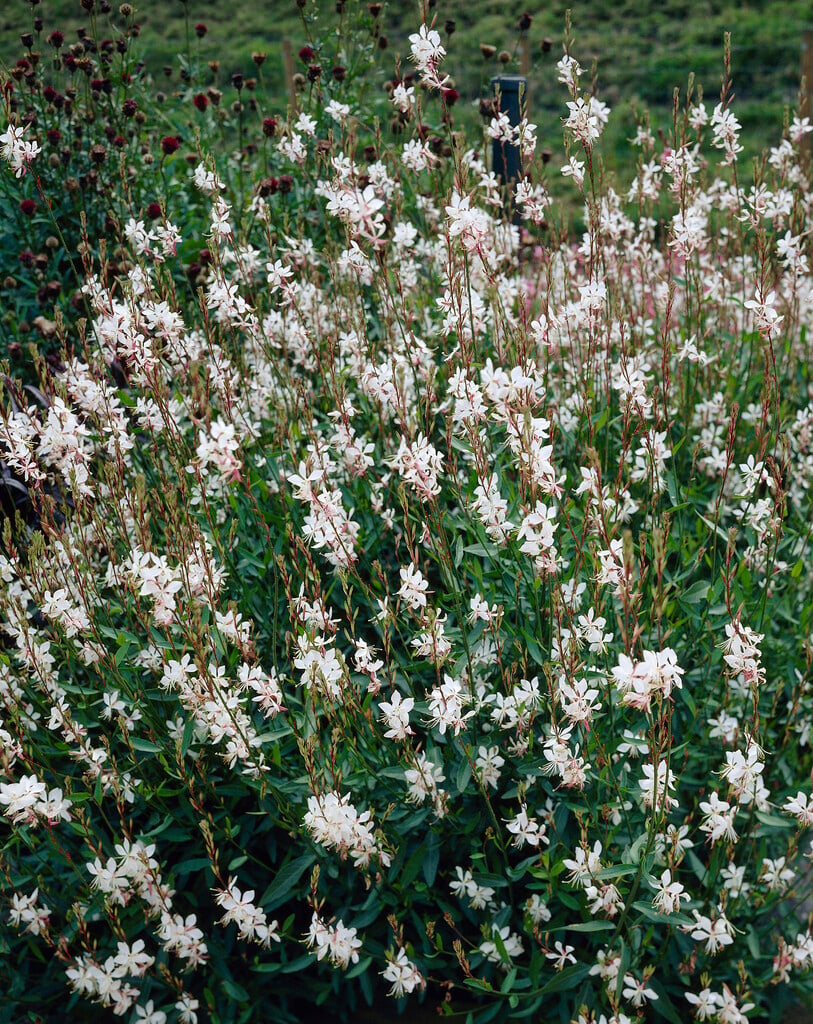
Flowering continuously from early summer until the first frost, if deadheaded regularly, Oenothera lindheimeri produces a mass of white delicate flowers float atop wiry stems, resembling a cloud of butterflies. We give some of our plants a in May to stagger the flowering time. With its delicate, airy presence, this oenothera pairs beautifully with the mounded shapes of lavender, cistus and santolina .

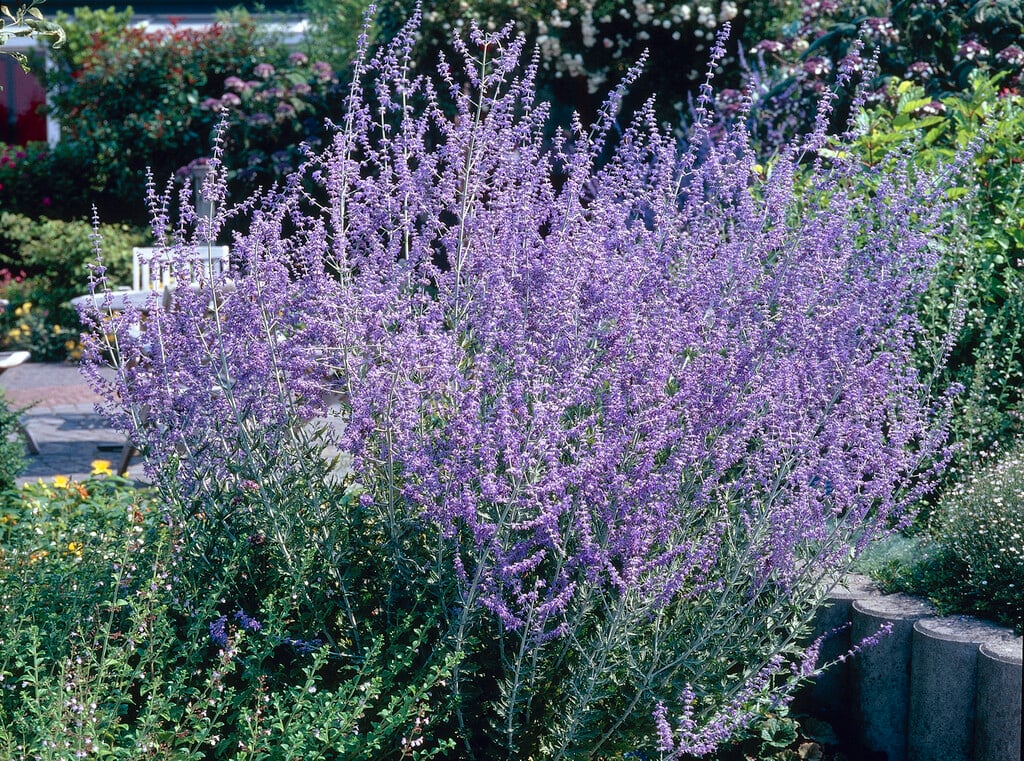
Salvia ‘Blue Spire’ creates a striking vertical among dome-shaped plants, adding colour to the garden from mid to late summer. Euphorbia , wallflowers, agapanthus and hylotelephium provide complimentary splashes of colour across the seasons.
Even after flowering, the bare, white, slender stems continue to offer structure and interest throughout the winter. Beth preferred S. ‘Blue Spire’ surrounded by a low groundcover, allowing the stems to rise out of a void. Creeping thyme and lamb’s ear make excellent evergreen choices for carpeting the ground.

Ornamental grasses bring softness, texture and movement to the borders. With its airy flowerheads, golden oat grass Stipa gigantea creates a beautiful see-through effect, making it an excellent choice even for smaller spaces. It looks especially striking when backlit by the sun. Cistus , lavender, creeping thyme and catmint make great companions.

Much smaller in stature than the popular V. bonariensis , this variety creates a low, hazy effect. A mass of wiry stems rise about the basal foliage - leaves emerge sumptuously bronze-purple in spring, taking on a greener hue in summer, then deepening in colour again - carrying slender spires of tiny violet-pink flowers. Verbena Bampton pairs beautifully with grey-leaved companions and the wispy texture of Stipa tenuissima .

Ferns are an indispensable group of hardy plants, and there’s one for almost any situation. While Osmunda regalis , the royal fern, favours damp conditions, the soft shield ferns such as Dryopteris setiferum ‘Herrenhausen’ are excellent choices for areas of dry shade beneath trees and shrubs, where the look wonderful alongside Solomon’s seal , hosta and groundcovers such as tiarella or pachyphragma . They also make good container plants.

Geranium macrorrhizum is a tough evergreen perennial, useful for carpeting the ground. Although its main flush of flowers appears in late spring or early summer, it will often produce the odd bloom later in in the season. The flowers of G. macrorrhizum ‘Album’ are not the pure white one would expect, but instead a delicate shell-pink. ‘Bevan’s Variety’ is a showier selection with vivid magenta flowers, while the soft lilac-pink ‘Ingwersen’s Variety’ is my personal choice for underplanting evergreen shrubs such as the sweetly scented sarcococca (Christmas box) or Skimmia ‘Kew Green’ .

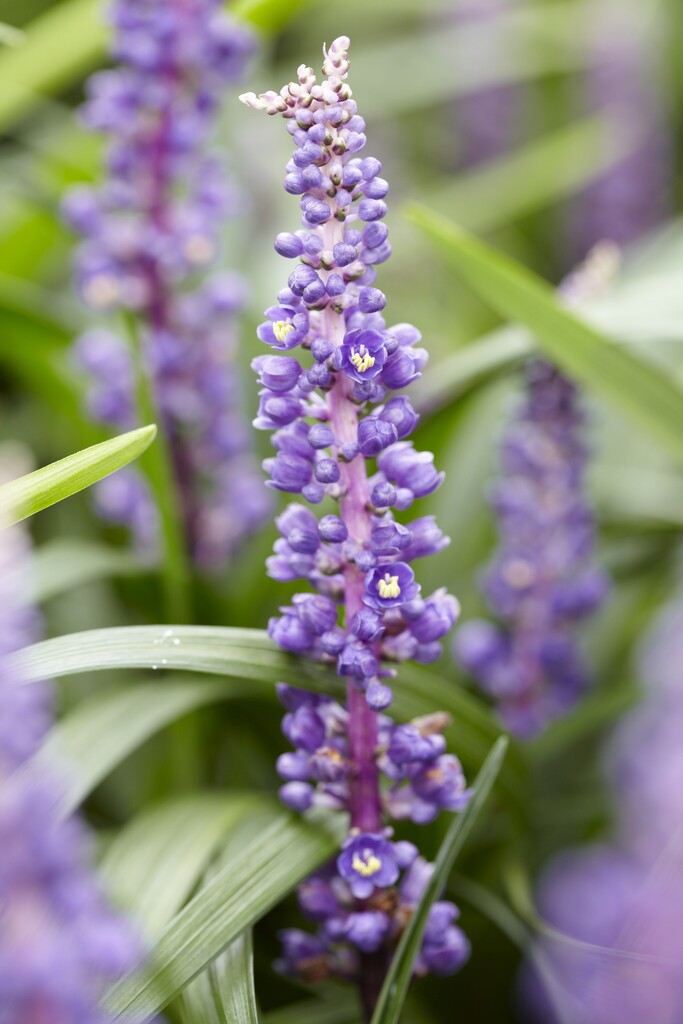
Clumps of narrow, dark evergreen leaves form a neat base for Liriope muscari . In autumn, spikes of violet-blue flowers rise above the foliage, like delicate grape hyacinths. Remarkable drought tolerant and tough. If the foliage looks a little tired after the winter, a quick trim encourages fresh leaves. Pair with colchicum and Anemone hupehensis var. japonica ‘Pamina’ for a lovely autumn display.

This lovely grass can be slow to establish but is worth the wait. Once it has got it feet firmly rooted into the ground, you’ll find Melicauniflora f. albida exceptionally tolerant of dry shade. In early summer it produces delicate-looking flowers resembling tiny grains of rice, which hover above clumps of fresh green foliage. Cut back straight after flowering to promote fresh foliage and potentially a second, sparser flush of flowers. For continuous interest through summer and autumn add hardy fuchsias, hostas, lirope, Japanese anemones and ferns.
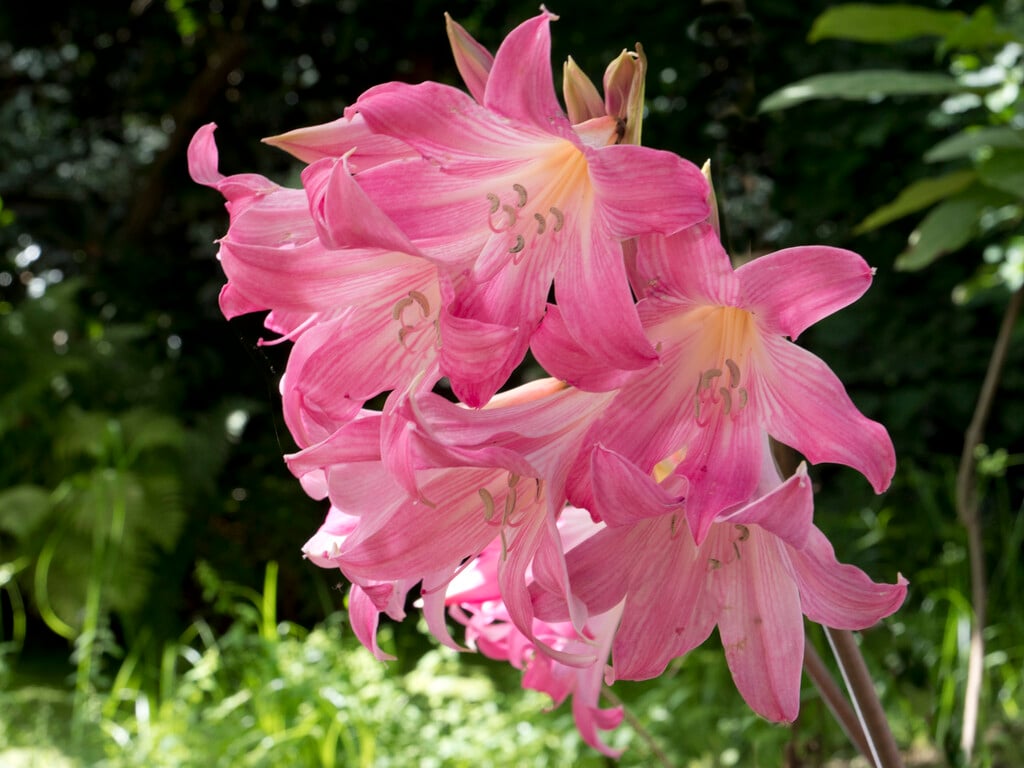
If I had more space, I would include a layer of bulbs which are an excellent way to extend the season of interest. For a drought resistant scheme, consider scilla , species tulips and alliums to bring colour in spring. For autumn interest try nerines , the less commonly seen sternbergia and Amaryllis belladonna.
For planting beneath shrubs or trees that cast dry shade in the summer, winter aconites, snowdrops and daffodils are ideal choices. Colchicum can be added for autumn colour in borders with dappled shade. In deeper shade they tend to become leggy, so pairing them with a low, dense groundcover will help support their stems.