Getting Started
Make your own horseradish sauce from the taproots of this easy-to-grow herb. Horseradish thrives in sun or partial shade, in most soil types, and is fully hardy in the UK.
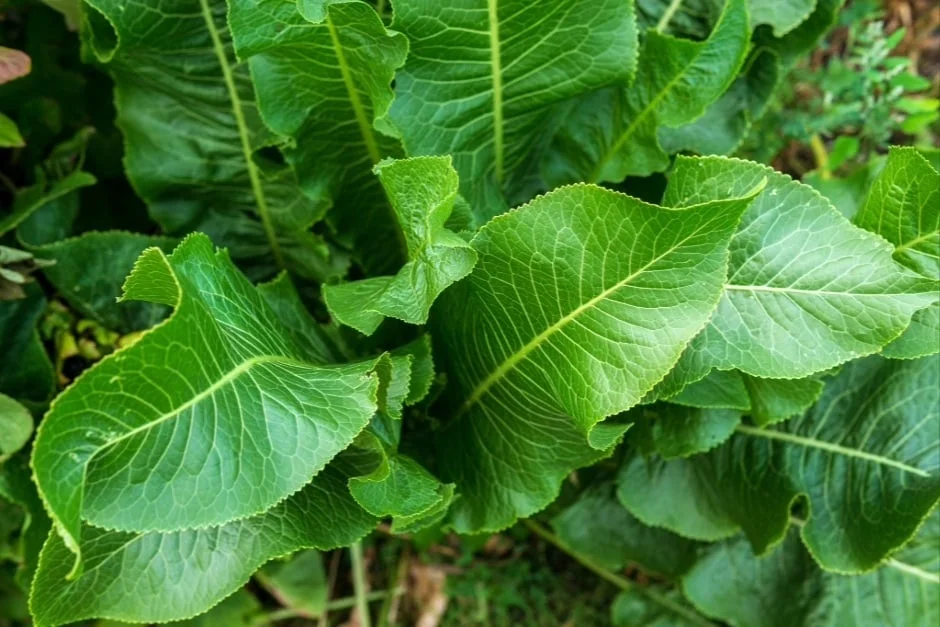
Horseradish (Armoracia rusticana) is a long-lived perennial and a member of the cabbage (Brassicaceae) family, related to mustard and wasabi. It goes dormant over winter, the leaves dying down in autumn then re-sprouting from the roots every spring. The long, thick roots are harvested and grated raw to make horseradish sauce.
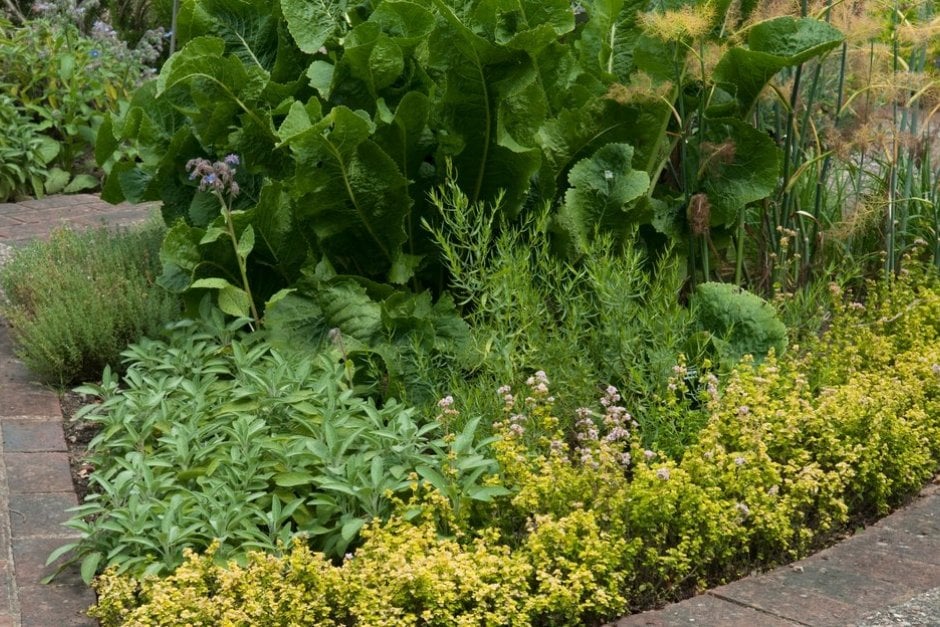
Horseradish forms a large leafy clump, growing up to 90cm (35in) tall. spread by horizontal roots that grow outward from the main clump. It’s vigorous growth can make horseradish hard to control, but don’t let that put you off – simply grow it in a large pot. Then to harvest, just tip it out and take up to half the roots from the clump, and replant the rest back in the pot.
Jobs to do now
Harvest
Divide established plants
Month by Month
Sow
Plant
Harvest


Choosing What To Grow
There is only one species of horseradish widely available to buy – Armoracia rusticana. The variety 'Variegata', with irregular pale cream , is also available. It's slightly less vigorous than the straight species and its large cream-splashed leaves add interest to a herb garden.
What and where to buy
Horseradish is sold as plants, typically in pot sizes from 9cm (3.5in) up to 2 litres. Many garden centres and online retailers stock young plants in spring and summer. It's also sold as long pieces of root (thongs), available in spring from online veg and herb plant suppliers. Both will establish quickly and should be large enough to harvest from their second year onwards.
Seeds are occasionally available, but these take longer to form an established clump – it’s much quicker and simpler to plant roots or young plants.
Recommended Varieties

Sowing
Horseradish seeds aren't widely available, so this herb is usually grown from pieces of root or young plants, which are easier and quicker options (see Planting below). But if you do track down seeds, sow them in a container outdoors in spring. It’s best not to sow in open ground, as horseradish forms deep-rooted clumps that are hard to remove. Choose a container that’s at least 30cm (12in) wide and deep, place in a warm, sunny spot, then fill with peat-free multi-purpose . Scatter the seeds thinly, cover lightly with compost and water well.
Planting
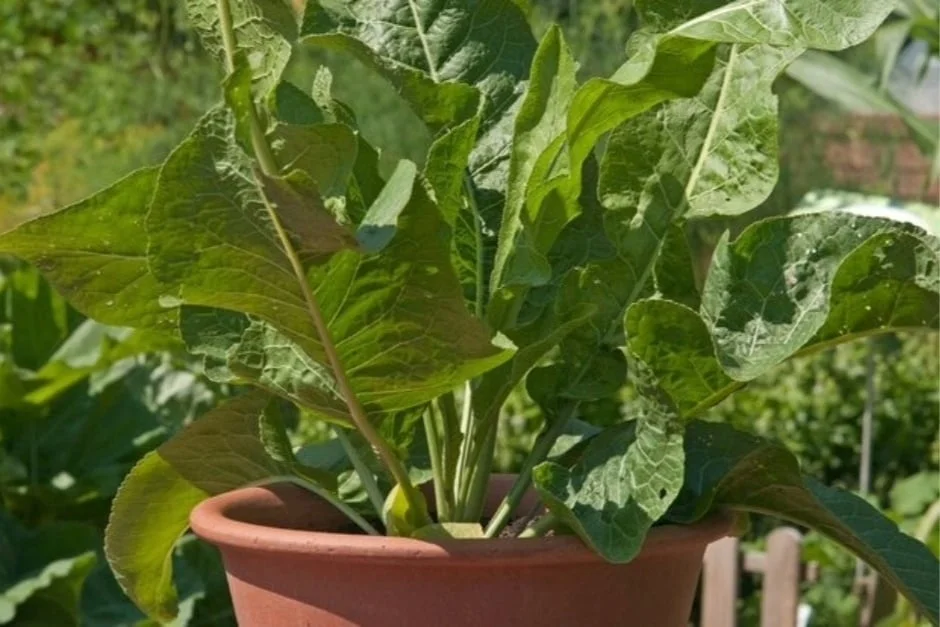
Horseradish is easy to grow from young potted plants or long pieces of root (thongs). These should be planted in spring or early summer in a large, deep container positioned in sun or partial shade. Planting horseradish in open ground isn’t recommended, as it forms a vigorous spreading clump that can be hard to control or remove – it will root in deeply and re-grow from sections of root left in the ground.
Planting horseradish is simple – choose a container measuring at least 30cm (12in) wide and deep, and fill with peat-free multi-purpose . Then plant one young plant in the centre, or up to three roots. To plant a root, make a deep hole with a or trowel handle, insert the root vertically so the top is 5cm (2in) below the surface, then cover with compost and water well.
If you're happy for horseradish to spread, you can plant it in the ground. It grows well in most soil types, but roots will rot in soil and they won't develop well in very dry conditions. Soil preparation isn't usually necessary, but if your soil is poor, mix some well-rotted organic matter into the soil you remove from your planting hole and use this to backfill after planting. Alternatively, if you’re practising no-dig, the surface with well-rotted organic matter and plant directly into the mulch.
Plant Care
Once established, horseradish is vigorous, robust and low maintenance, although plants in containers will need watering during the . Regular harvesting helps to control the spread of clumps in pots and in the ground. Cut back the faded leaves once they die down in late autumn, or before new growth starts in spring.
Watering
When grown in a container, horseradish will need watering during the , especially in warm, dry weather. The leaves may flop if the plant gets too dry. Add enough water to keep the evenly moist. You can reduce watering by moving pots to a shadier spot in hot, sunny weather.
Water horseradish planted in the ground during dry spells in its first year. Once established, horseradish growing in the ground shouldn't need any additional watering.
Mulching
Horseradish grown in the ground benefits from mulching in late winter or early spring. Apply a 5–7.5cm (2–3in) layer of well-rotted organic matter, such as garden compost, around the clump. Mulching will improve your soil, help to retain moisture and suppress weeds.
Feeding
Plants in containers will benefit from an organic-based, general purpose liquid fertiliser applied every few weeks from mid-spring to late summer, or a general-purpose granular feed sprinkled on the in spring. Horseradish grown in the ground shouldn't need any additional feeding.
Propagating
One horseradish plant is usually enough for most needs, but you may want to make new plants to share with friends. There are a couple of easy ways to propagate horseradish.
- Simply take off pieces of root, about 15cm (6in) long, when harvesting in autumn, then pot them up (see Planting above)
- Divide established clumps in spring or autumn. Pot up divisions that have a few taproots and healthy growing points at the tops of the roots
Harvesting
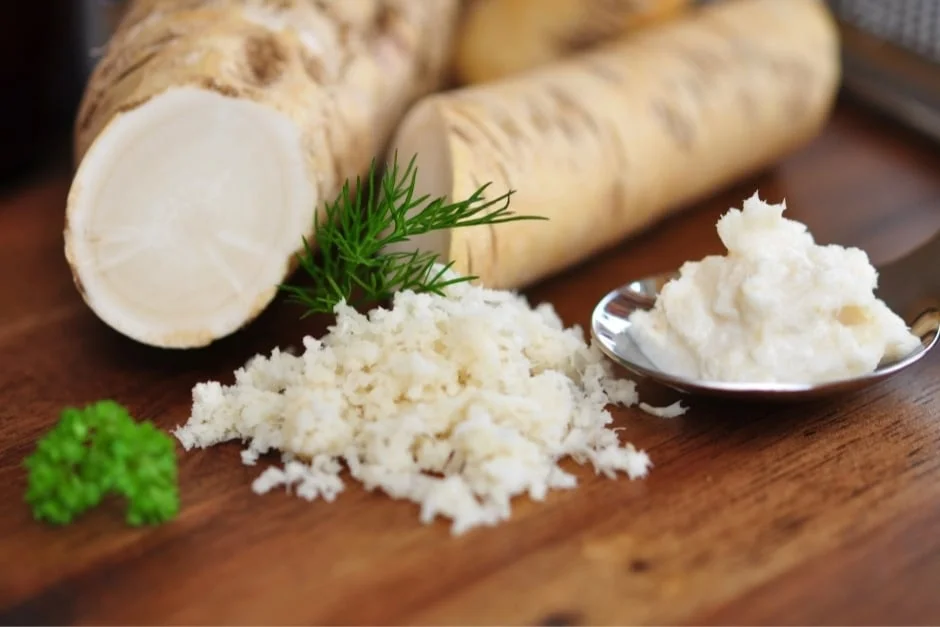
Horseradish roots are best harvested in autumn or early winter. They are generally considered to have a better, stronger flavour after being exposed to frost. Roots can also be harvested in spring and summer, but the disturbed root system may need extra water to re‑establish during the drier months. Young, new plants can be lightly harvested in their second autumn.
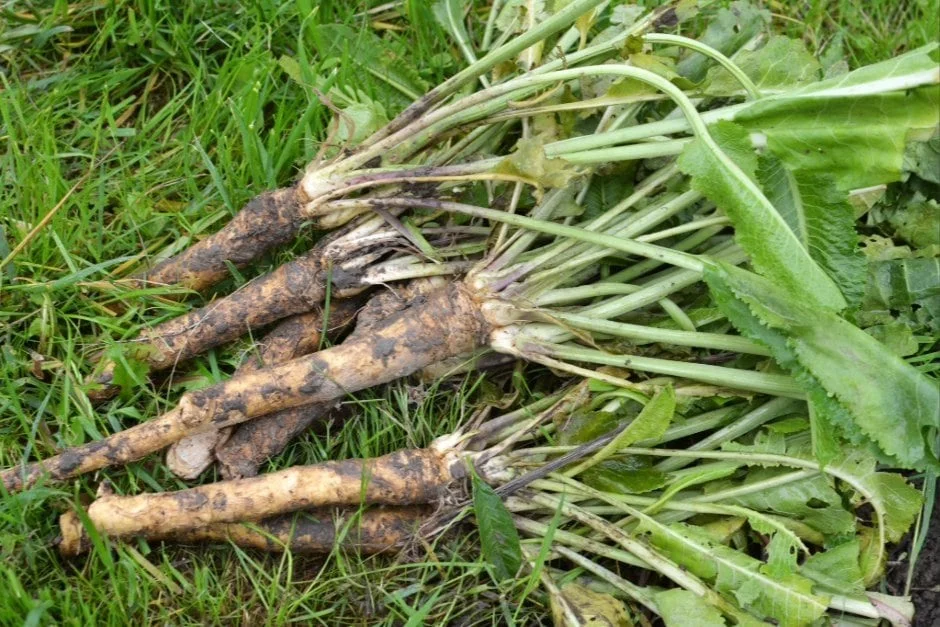
To harvest horseradish roots, tip the plant out of its container and remove up to half of the slender white taproots. Replant the remaining roots back in the container, using fresh peat-free potting . If your horseradish plant is growing in the ground, simply lift what you need with a garden fork. Harvesting some of the roots annually helps to control the spread of this very vigorous plant.
Horseradish roots will add a fiery punch to many dishes. Simply peel the root and grate it to make horseradish sauce, or add it to coleslaw, salad dressings and dips. It can be used as a replacement for wasabi too. Horseradish is best used raw, as it loses much of its flavour when cooked.
Once grated, horseradish should be used quickly as it will discolour and the flavour may fade. Whole roots store well in a cool, dark, frost-free place – bundle them together in a wooden box or tray and cover with damp sand. Alternatively, store in an airtight container in the fridge for up to several months.
Fresh young leaves can also be harvested in spring and summer. They have a similar taste to the roots and can be added fresh to salads or cooked as a leafy vegetable.
Problem Solving
Horseradish is a tough, hardy and vigorous plant that is rarely troubled by any diseases or insects. The only issue is that it can be overly vigorous, so it's best grown in a container. Horseradish can be hard to control in open ground, as the roots go very deep and growth spreads outwards. It will re-grow from any pieces of root left in the soil.
