Pittosporum tenuifolium 'Wendle Channon' (m/v)
tawhiwhi 'Wendle Channon'
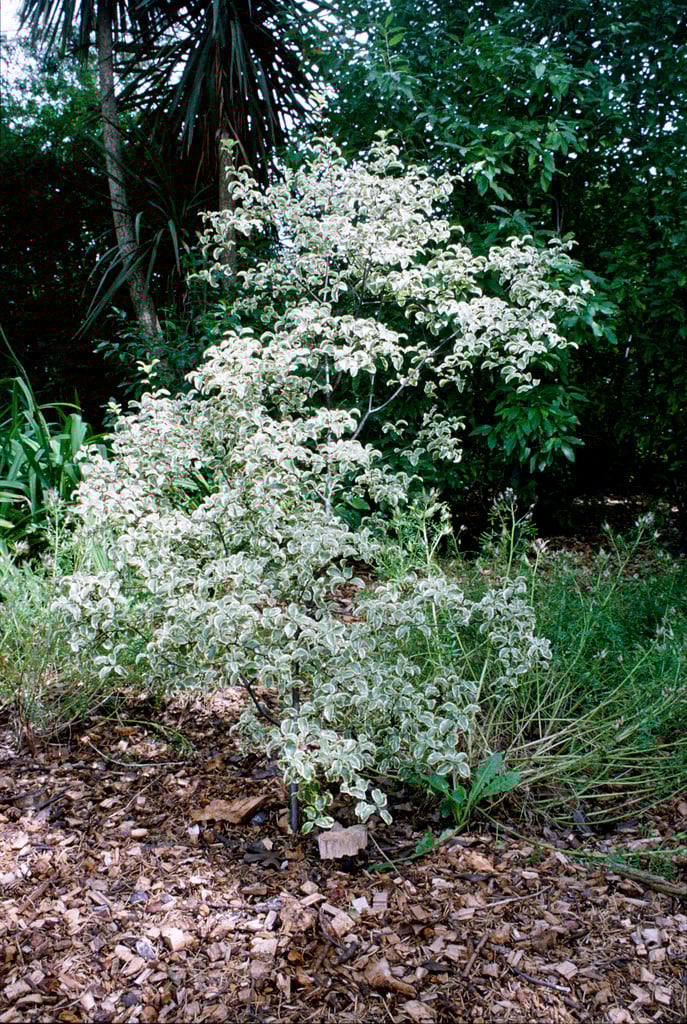
A bushy evergreen shrub, up to 4m high, with a compact, rounded shape, black stems, and small to medium-size pale grey-green leaves with slightly wavy yellow margins that fade to cream. Male, scented, dark brown-maroon flowers appear in late spring or early summer
Size
Ultimate height
2.5–4 metresTime to ultimate height
10–20 yearsUltimate spread
1.5–2.5 metresGrowing conditions
Moisture
Moist but well–drainedpH
Acid, Alkaline, NeutralColour & scent
| Stem | Flower | Foliage | Fruit | |
| Spring | Black | Brown Red | Cream Green Grey Silver Variegated | |
|---|---|---|---|---|
| Summer | Black | Brown Red | Cream Green Grey Silver Variegated | |
| Autumn | Black | Cream Green Grey Silver Variegated | ||
| Winter | Black | Cream Green Grey Silver Variegated |
Position
- Full sun
- Partial shade
Aspect
West–facing or South–facing or East–facing
Exposure
Sheltered Hardiness
H4Botanical details
- Family
- Pittosporaceae
- Native to GB / Ireland
- No
- Foliage
- Evergreen
- Habit
- Bushy
- Genus
Pittosporum are evergreen shrubs or trees with simple, leathery leaves and small, often fragrant, 5-petalled flowers, followed by spherical, woody fruits splitting to reveal seeds embedded in sticky pulp
- Name status
Accepted
How to grow
Cultivation
Grow in fertile, moist but well-drained soil, in full sun - will grow in partial shade, but the leaves will be most colourful and wood will ripen better in an open sunny position. Grow in the open in milder areas and in coastal gardens with shelter from the worst cold, drying winds, while in colder gardens grow in a sheltered position such as a south- or west-facing wall, and protect roots in winter with a deep dry mulch
Propagation
Propagate by semi-ripe basal cuttings in summer, by basal hardwood cuttings in late autumn, or by layering or air layering in spring
Suggested planting locations and garden types
- Coastal
- Cottage and informal garden
- City and courtyard gardens
- Mediterranean climate plants
- Low Maintenance
- Hedging and screens
- Wall side borders
Pruning
Pruning group 1; if grown as a hedge, trim in spring and midsummer
Pests
May be susceptible to glasshouse red spider mite, aphids, cushion scale and pittosporum sucker
Diseases
May be susceptible to powdery mildews, leafspot and honey fungus (rarely)
Get involved
The Royal Horticultural Society is the UK’s leading gardening charity. We aim to enrich everyone’s life through plants, and make the UK a greener and more beautiful place.