Getting Started
Sweet potatoes are tropical climbing plants grown for their edible tubers. Planted as in spring, they grow vigorously in warm conditions in a greenhouse or under cloches, producing their harvest by early autumn.
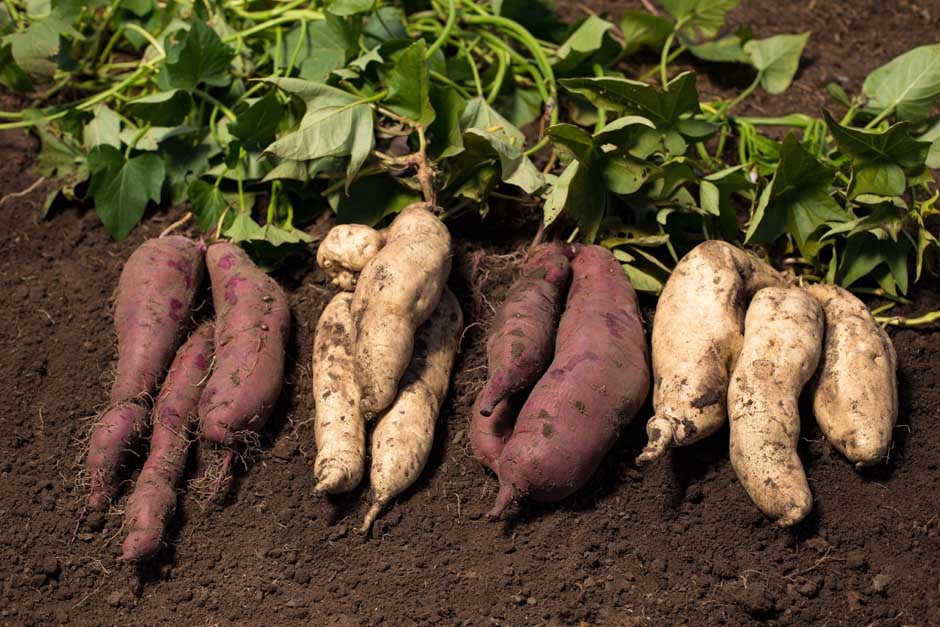
Sweet potatoes (Ipomoea batatas) are close cousins of morning glory and only distantly related to traditional potatoes. The plants are tender, so must be protected from frost, and they like heat, full sun and regular watering. They crop best at temperatures of 21–26°C (70–80°F), so are ideal for growing in a greenhouse, either in large tubs, grow bags or the ground. They only crop successfully outdoors in very warm, sheltered sites and are best protected with cloches or plastic-free fleece in all but the most favourable locations.
Unlike traditional potatoes, which are grown from tubers, sweet potatoes are started from cuttings (known as slips) or in spring. These must be kept indoors in the warm to get well established, then can be moved to their final growing position in early summer.
Sweet potatoes produce trailing or climbing stems that easily reach 1.5m (5ft) or more in length. These can be grown vertically up a trellis or wigwam of canes to save ground space, or can be allowed to sprawl. The tubers are harvested in early autumn. The shoots and leaves can be used like spinach.
Jobs to do now
Keep well watered
Harvest
Month by Month
Plant
Plant Out
Harvest


Choosing What To Grow
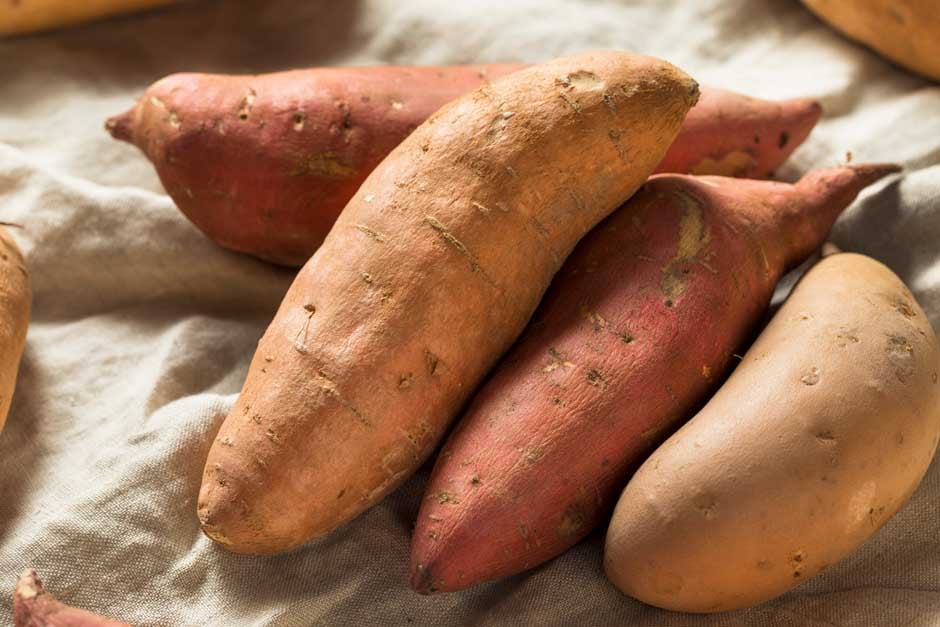
There are numerous varieties of sweet potato to choose from, producing tubers of various sizes, shapes and colours, including orange, purple, red and white. With some varieties the foliage is particularly attractive, sometimes tinged with purple. The size of crop will depend on how much sun, warmth and moisture the plants receive, and the length of the – most varieties need at least four to five months. Make sure you buy a variety suitable for growing in the UK, and if you’ll be growing the plants outdoors, select one of the hardiest, such as ‘Beauregard’.
What and where to buy
Sweet potato (known as slips) and (rooted cuttings) are available from late April onwards from online veg plant suppliers. Young plants may also be available in garden centres.
Recommended Varieties

Planting
Sweet potatoes are usually grown from in spring, rather than from seeds. You can buy cuttings from online suppliers.
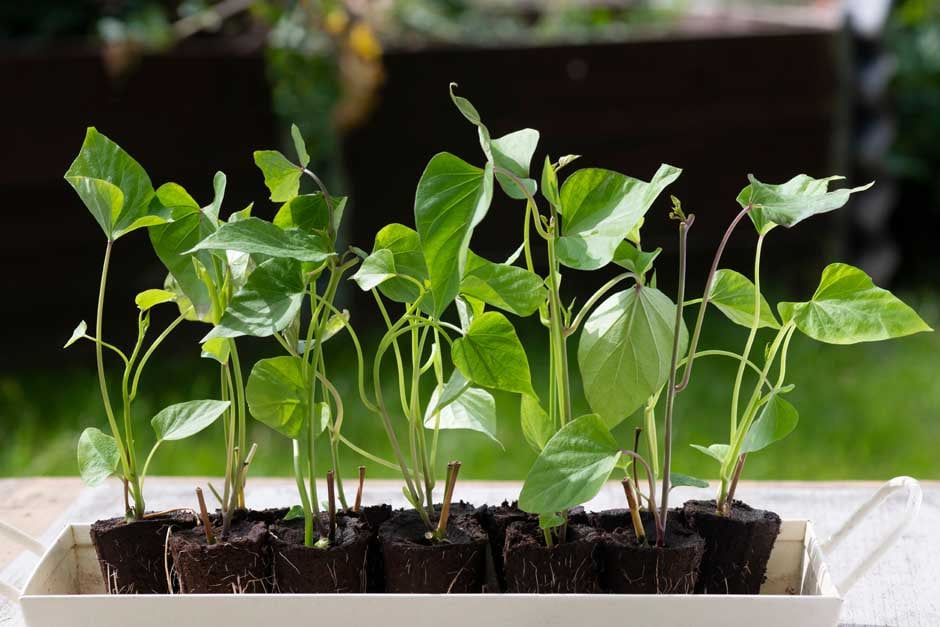
Cuttings and plug plants
Both unrooted (known as slips) and rooted cuttings ( ) are easy to grow if kept warm, in good light and watered regularly. When your cuttings or plug plants are delivered, plant them immediately into small pots of peat-free multi-purpose . Slips should root quickly and easily. Alternatively, you can stand the slips in a glass of water – they will soon produce roots and can then be planted into pots.
Place the newly potted slips or plugs in a or cover with a clear plastic bag, to maintain high , until the plants are growing strongly. Keep them somewhere warm and bright, in consistently moist compost. Move them into slightly larger pots as they grow, watering them with tepid water.
Taking cuttings
You can take from tubers you grew the previous year, if they were stored well and are still in good condition in spring. To grow your own cuttings:
- In spring, place sweet potato tubers in moist sand in a warm or airing cupboard to encourage sprouting
- Once the leafy shoots are 5–7.5cm (2–3in) long, cut them off at the base with a sharp knife
- Insert the cuttings into small pots filled with peat-free multi-purpose or cuttings , then place in a propagator to root (see Planting cuttings and , above)
Planting in final position
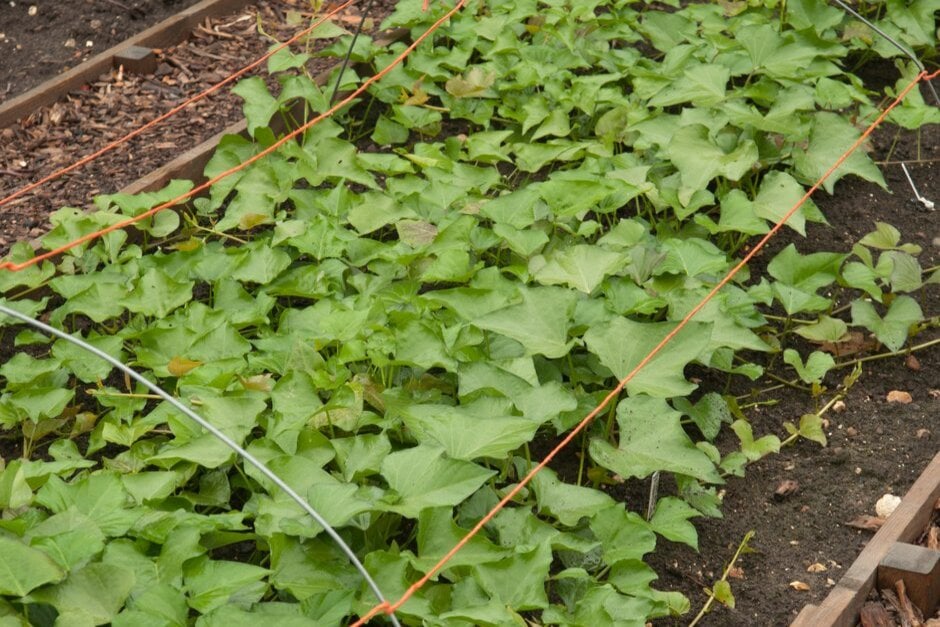
In late spring or early summer, once your young sweet potato plants have plenty of roots and are growing strongly, you can move them to their final growing site, in a greenhouse, mini-greenhouse or coldframe. If you don’t have these options, you can try planting them outdoors in a very warm, sunny spot, ideally keeping them under cloches or plastic-free fleece.
Harden off the young plants first, to gradually acclimatise them to cooler conditions. You can plant them in a large container, grow bag or in the ground, as follows:
- To plant in a container – choose a pot at least 30cm (1ft) wide and fill with peat-free multi-purpose , then position one plant in the centre. Set it at the same depth it was previously growing, firm in gently and water well. Alternatively, plant one in a grow bag. Keep in a greenhouse or coldframe or in a very warm, sunny, sheltered spot outdoors.
- To plant in the ground – ideally plant them in the ground inside a greenhouse or coldframe. If planting outdoors, choose a very warm, sheltered location in full sun, with moisture-retentive, free-draining soil. Prepare the soil by forking in lots of home-made garden compost or well-rotted manure, about two bucketfuls per square metre/yard. Alternatively, if you're practicing no-dig, the surface and plant directly into the mulch. If growing outside – cover the ground with cloches or plastic-free to warm the soil for a few weeks before planting. Plant the young plants at least 30cm (1ft) apart, at the same depth they were previously growing, firm them in and water generously.
Plant Care
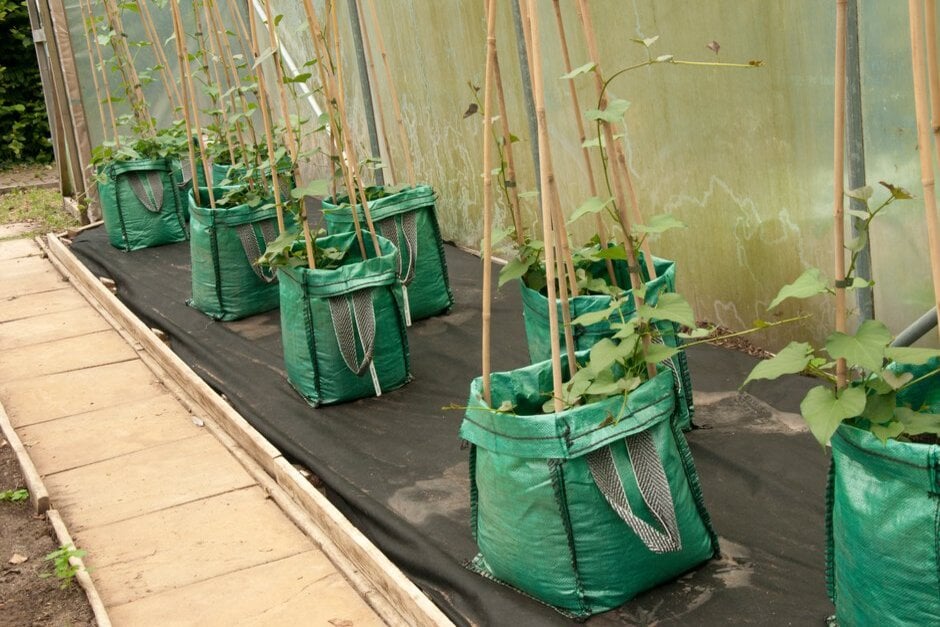
Sweet potato plants will grow vigorously in warm conditions in a greenhouse or under cloches, needing regular watering and either plenty of space to sprawl or sturdy supports to climb up if grown vertically.
Watering
Sweet potatoes are thirsty plants and need regular watering in dry weather and when growing in a container. Aim to keep the soil or potting consistently moist. During hot weather, plants in containers may even need watering daily. If they go short of water, the tubers won’t swell.
Top tip
Sink a plant pot into the ground beside each sweet potato plant, then water into it, so the moisture goes straight down to the roots. It also shows you where to water, as it can be hard to tell once there is lots of sprawling leafy growth.
Use rainwater from a butt whenever possible, and on hot days water early in the morning or in the evening if you can, so the moisture doesn’t simply evaporate. For more water-saving tips, see our guides below.
Mulching
When growing sweet potatoes in the ground, apply a thick mulch of well-rotted manure or garden compost over the soil surface to keep weeds at bay and hold moisture in the soil.
Feeding
Sweet potatoes growing in prepared ground (with added organic matter) shouldn't need feeding, but to get a good crop from plants grown in containers, it's best to feed regularly. Apply a high potassium organic liquid fertiliser every 14 days throughout summer.
Weeding
Keep young plants weed-free, to reduce competition for light, water and . Once established, sweet potato vines grow vigorously and should shade out most weeds.
Supporting plants
If ground space is limited, grow these climbing plants up vertical supports, such as a wigwam of canes about 1.8m (6ft) tall. Plants in containers can also be positioned against a sunny wall or fence, fitted with horizontal wires or trellis to support the stems. Inside a greenhouse, they can be grown up canes or vertical strings hung from the roof.
Pruning And Training
Sweet potatoes don’t need pruning, but if they outgrow their allotted space, you can trim back any overly vigorous stems to keep them within bounds. You can cook and eat the young stems and leaves you remove, much like spinach and other leafy veg. If you are growing sweet potatoes up a support, you will need to tie-in some of the stems to encourage them to grow upwards.
Harvesting
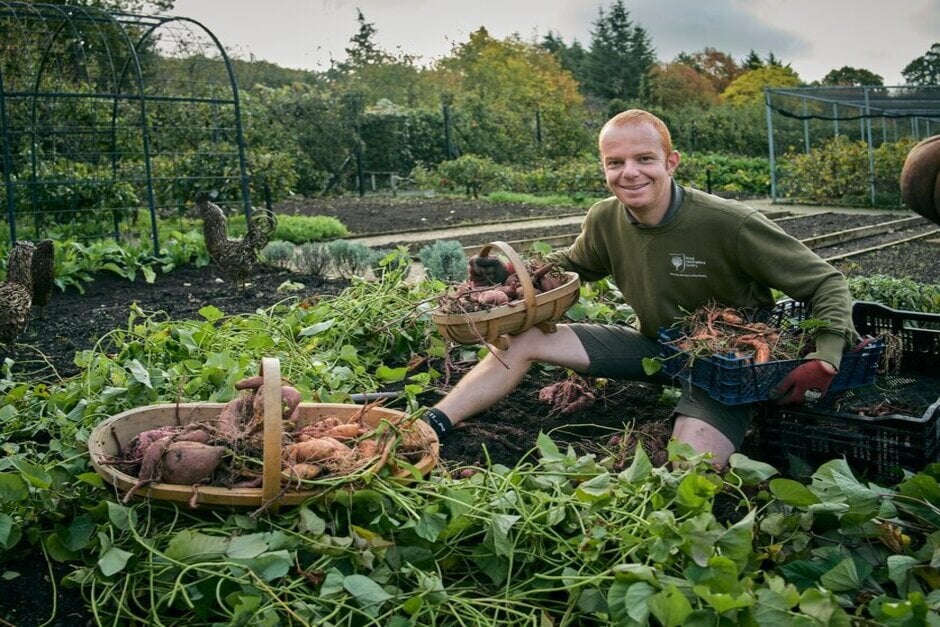
Harvest sweet potato tubers after four to five months, once the leaves turn yellow and die back in early autumn, before any frost. Simply tip the plant gently out of its container or lift it from the ground with a garden fork – take care not to damage or bruise the tubers, as they have a delicate skin. Any damaged tubers should be used straight away. The size of harvest will depend on the amount of warmth and moisture these tropical plants received, and the length of time they’ve been growing.
Leave harvested tubers in warm sunshine for a few days to dry out the skin, to improve storage. But even then, they’ll generally only keep for a few weeks, so it’s best to harvest only one or two plants at a time. If storing tubers, check them regularly for signs of deterioration or rot.
Problem Solving
Sweet potatoes are generally vigorous and healthy plants, but they need very warm, moist conditions to crop successfully – which in the UK usually means growing them in a greenhouse and watering regularly. They can sometimes be affected by red spider mite or whitefly – see Common problems below for more details.
Common Problems

Glasshouse red spider mite
Glasshouse red spider mite is a common sap-feeding mite that can cause mottled leaves and early leaf loss on a wide range of greenhouse and garden pla...

Glasshouse whitefly
Glasshouse whitefly is a common sap-feeding insect, mainly of house-plants and greenhouse plants. They excrete a sticky substance (honeydew), which al...
