Help hoverflies as dramatic declines revealed
New data reveals Britain has lost around a third of its hoverflies in the last eight years, prompting a call for action amid risks to ecosystem health
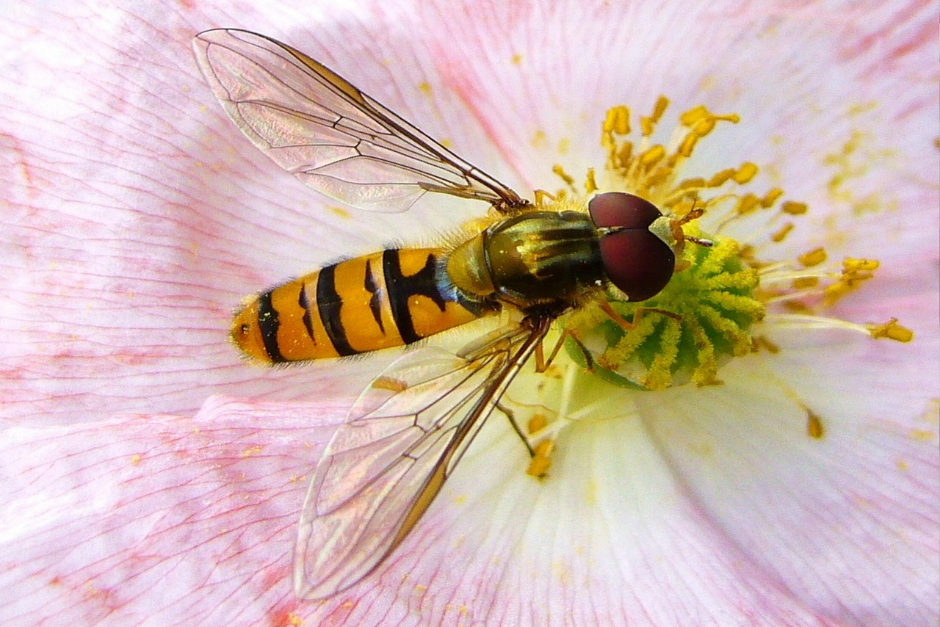
As well as being prolific pollinators, hoverflies help to keep aphids in check and break down and recycle waste organic material, making these often-overlooked insects a vital part of the garden ecosystem. Hoverflies were the theme of the 2025 RHS and Wildlife Trusts Wild About Gardens campaign, Be a Hoverfly Hero.
Now, official statistics released on 25 June from the UK Pollinator Monitoring Scheme reveal that hoverfly numbers in Great Britain have declined by around a third in just eight years.
This figure applies to both hoverfly abundance (total number of individuals) and the number of different species recorded. Such a decline signals potential risks to the health of our ecosystems.
Hoverfly larvae eating aphids on a cabbage leaf
What does the data show?
The UK Pollinator Monitoring Scheme (PoMS) is a citizen science programme coordinated by the UK Centre for Ecology & Hydrology (UKCEH), running since 2017 and recording the abundance of up to 18 insect groups.Hoverflies, a key target group for the scheme, have showed the most consistent declines, with numbers falling by 26–37% from 2017 to 2024.
Total numbers of all insects, as well as total numbers of bumblebees in particular, both showed declines in two of the three survey categories. Solitary bees didn’t show particularly notable changes either way.
Within this eight-year window, honeybees, beetles and non-hoverfly flies all increased in the survey category that mostly covered gardens, highlighting the role of gardens in providing an important refuge for many of these insects.
How can I help?
RHS Senior Wildlife Specialist Helen Bostock says: “We’d love for all gardeners to take up this call for action and become ‘hoverfly heroes’. Hoverflies are generally quite small, so just a few French marigolds (single-flowered, not double) or poppies in a container can make all the difference.“They don’t sting, do an excellent job of pollination, keep aphids in check, and are fascinating to watch with their hovering, zig-zag flight. So helping them is an easy sell to gardeners. Declines of this scale can’t go on – we all have to do our bit.”
1. Plant hoverfly-friendly plants
Hoverflies have short tongues compared to many other pollinators, such as butterflies, moths and long-tongued bumblebees. This means they enjoy open, accessible flowerheads that provide relatively flat landing platforms and nectar within easy reach – such as guelder rose, achillea, cow parsley and daisies like Erigeron and Aster or Symphyotrichum. Flowering ivy, flowering brambles and heather are also top choices.
![]()
Hoverflies find open, flat flowerheads easiest to access
Hoverflies find open, flat flowerheads easiest to access
Many hoverfly larvae naturally live in leaf-filled pools or, for example, the little pools of water that accumulate in rotting tree stumps. A few simple steps can turn an upcycled container, such as a milk bottle, into a perfect mini hoverfly breeding site to give these pollinators a helping hand in whatever outdoor space you have. Find out how to make a hoverfly lagoon here.
3. Welcome aphids
Aphids are an important part of a healthy, biodiverse garden ecosystem. While they generally don’t harm your plants, especially outdoors, they’re a vital food source for garden wildlife – not just hoverfly larvae but also lacewing larvae, ladybird larvae and birds such as blue tits, particularly young chicks. Next time you spot aphids on your roses or broad beans, take it as a sign that your garden is working and providing – and allow nature to take its course. Where numbers build and begin to affect long-term plant health, simply squash clusters on the shoot tips to keep plants thriving while retaining this valuable food source.
4. Take part in PoMS
The new statistics from PoMS were collated from nearly 3,500 sites across Britain’s countryside and gardens, with more than 3,000 volunteers contributing data. If you’d like to contribute valuable data to help pollinators from your own outdoor space, find out how you can get involved here.
Dr Claire Carvell, UKCEH pollinator ecologist and lead for UK PoMS, said: “This new data on insect numbers provides key evidence on the health of our pollinators, especially for the less conspicuous hoverflies, other flies and smaller bees that provide amazing ecological value, yet have largely gone unnoticed except by entomologists. The mix of survey approaches in PoMS means almost anyone can get involved, engaging up close with plants and pollinators in new ways.”