Getting Started
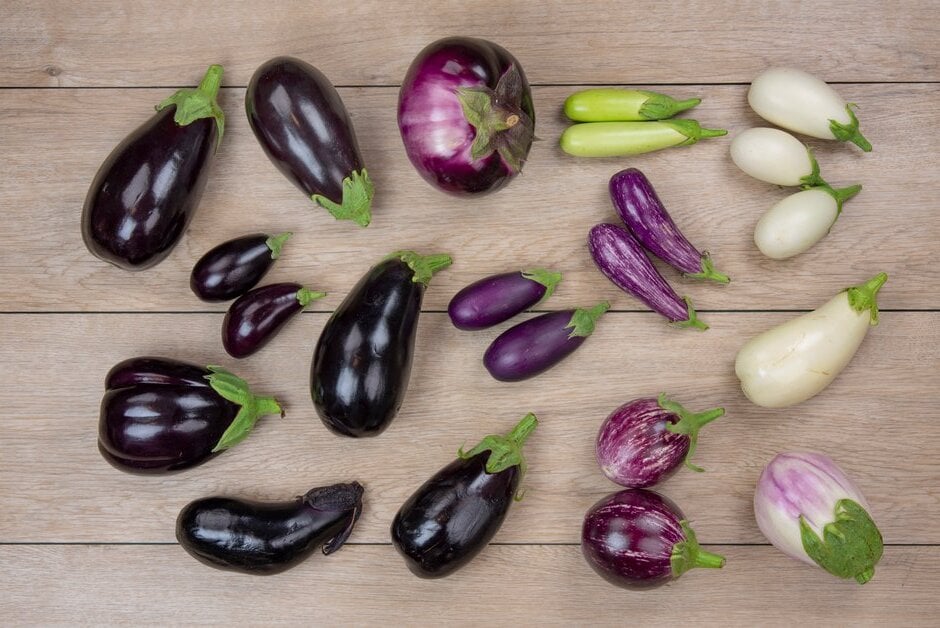
Aubergines, also known as eggplants and brinjal, are tender plants that need lots of warmth to crop successfully, so they’re best grown in a greenhouse, but can fruit outdoors in very mild locations or in long, hot summers. There is an increasing range of varieties available to grow, producing fruits of various colours, shapes and sizes, including newer, smaller-fruited options that cope better with the UK climate.
Aubergines (Solanum melongena) are closely related to tomatoes and peppers, so if you can grow these successfully, then aubergines are well worth a try. They can be grown from seed indoors or bought as young plants, and are happy in containers and growing bags, as well as in the ground.
Jobs to do now
Water as needed
Harvest
Remove new fruits
Cover outdoor crops
Month by Month
Sow
Plant
Harvest


Choosing What To Grow
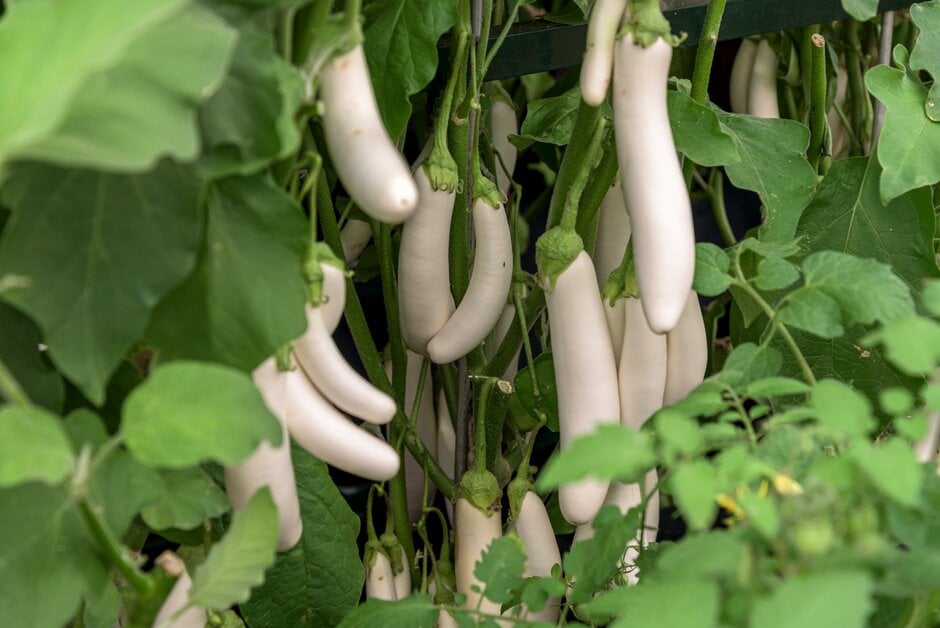
There are many varieties of aubergine to choose from, producing glossy fruits in an attractive array of colours, from dark purple, through mauves and pinks, to white or green, and various sizes and shapes, from round or oval to long and thin.
For the best chance of a good harvest, look for varieties with an RHS Recommended: Award of Garden Merit (AGM), which shows they performed well in trials – see our list of AGM fruit and veg (135kB pdf) and our Recommended Varieties below. It’s also worth visiting the veg plots in the RHS gardens, where you can see many crops, including aubergines, being grown. It’s a great way to compare different varieties and growing methods, and pick up useful tips and inspiration.
What and where to buy
Aubergine seeds are widely available in garden centres and from online seed suppliers. Be sure to buy early though, so you’re ready to sow in late winter or early spring.
If you don’t have the time or space to grow from seed indoors, you can buy and young plants from many gardening retailers in spring and early summer, although the choice of varieties will be more limited. Grafted aubergine plants are also available, mainly from online suppliers – these are more expensive, but are more vigorous, robust plants that should cope better with cooler conditions outdoors, producing a larger crop.
Recommended Varieties


Sowing
Sow aubergine seeds indoors, usually from February onwards, as they need warmth and a long . If the plants will be growing in a heated greenhouse or warm conservatory, you can start them earlier, in January. If they’ll be growing outdoors, delay sowing indoors until early March, as these tender plants mustn’t be moved outside until after the last frost.
Aubergine seeds need at least 21°C (70°F) to germinate, either in a or in a warm location indoors. You can even germinate seeds in an airing cupboard, but check daily and move to a warm, bright windowsill as soon as they appear. Keep young plants in good light at 16–18°C (60–64°F) and water regularly, as needed. Once they have their first set of true leaves, prick out your seedlings, moving them into their own 7.5cm (3in) pot or into individual in a tray.
Planting
Plant young aubergine plants, either grown from seed or newly bought, into their final growing position at the following times:
- in April for growing in a heated greenhouse
- in early May for growing in an unheated greenhouse
- in late May/early June (after the last frost) for growing outdoors
Make sure to harden off before planting them outdoors or into an unheated greenhouse, to avoid a check in growth. Plant them at the same depth they were growing in their pot, and insert canes for support. If planting outdoors, choose a really warm, sunny, sheltered spot, such as by a sunny wall or south-facing patio, and cover plants with cloches or plastic-free fleece for a couple of weeks to get them off to a good start.
To plant in containers
Choose a pot at least 30cm (1ft) in diameter and fill with peat-free multi-purpose , then plant one young aubergine in the centre. Or plant two in a standard growing bag.
To plant into the ground
Start warming the soil with cloches two weeks before transplanting and enrich the soil with plenty of garden compost or well-rotted manure. Alternatively, if you're practising no-dig, the soil and plant directly into the mulch. Space plants 60cm (2ft) apart.
Plant Care
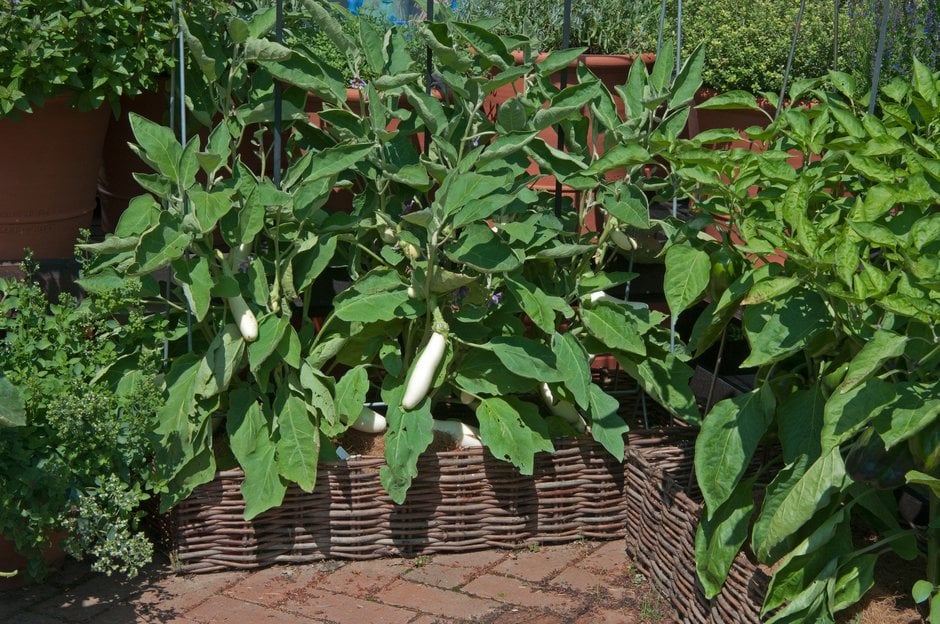
Aubergine plants need some regular attention to produce a successful crop. Some plants develop small spines on the stems, so take care when tending them.
Watering
Aubergine plants need a steady supply of moisture to grow and crop well. Plants in containers are particularly susceptible to drying out and may need watering daily in hot weather. An automated drip irrigation system can be useful to ensure consistent watering.
In addition, mist the leaves of greenhouse plants regularly (ideally twice daily) with tepid water to discourage red spider mites and improve fruiting. Or, on hot days, damp down the greenhouse in the morning so the water evaporates during the day, raising the .
Mulching
After planting, apply a thick layer of , such as garden or well-rotted manure, around aubergine plants growing in the ground or a greenhouse border. This helps to hold moisture in the soil and deter weeds.
Feeding
Feed aubergines in containers every two weeks with an organic high-potassium liquid fertiliser once the first flowers appear. This helps to encourage further flowering and good fruiting.
Plants growing in the ground in enriched soil may not need regular feeding, though it can help to increase yield.
Pinching out shoot tips
When aubergine plants are around 30cm (1ft) tall, the tip of the main stem to encourage side-shoots. This creates bushier plants that should produce more fruits.
Supporting plants
Aubergines can form large, top-heavy plants, so insert a sturdy bamboo once they are in their final container and tie in the main stem as it grows. You may need to add more canes to support the side-shoots once fruits start to form, particularly if you have a heavy crop or a large-fruited variety.
Improving your crop
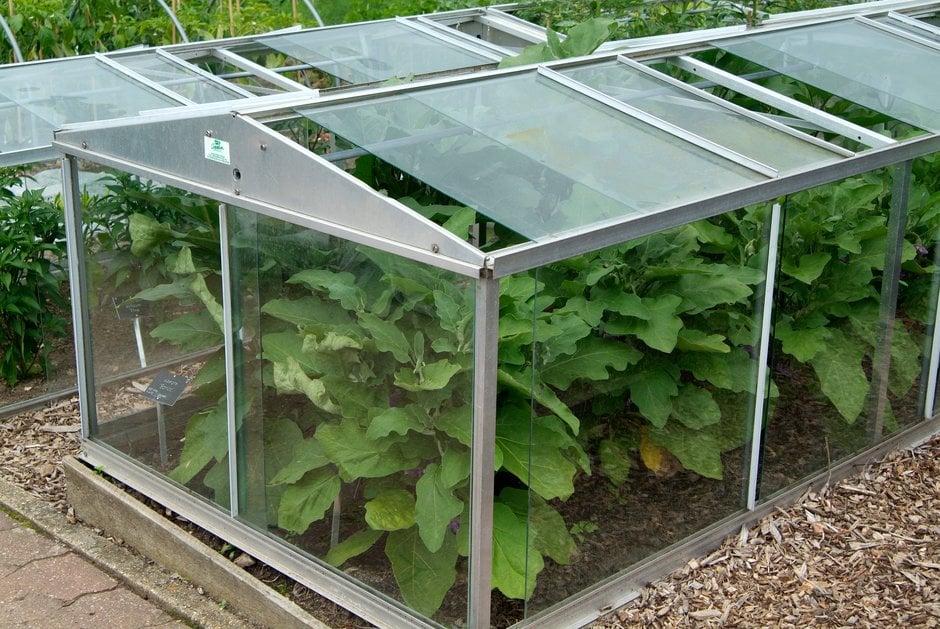
To ensure successful in a greenhouse or coldframe, open the door and vents on warm days when plants are in flower, to allow access for pollinating insects. Misting the flowers also aids pollination, or you can hand pollinate flowers with a small paintbrush.
With larger-fruited varieties, once five or six fruits have started to form, remove any further flowers. Varieties with small fruits can be allowed to produce many more.
To encourage fruits to ripen towards the end of the season, remove any new fruits that start to form after late summer, as they are unlikely to ripen. Protect outdoor plants with a plastic-free crop cover if the fruits aren’t ripe by late September, or move potted plants indoors before overnight temperatures drop.
Harvesting
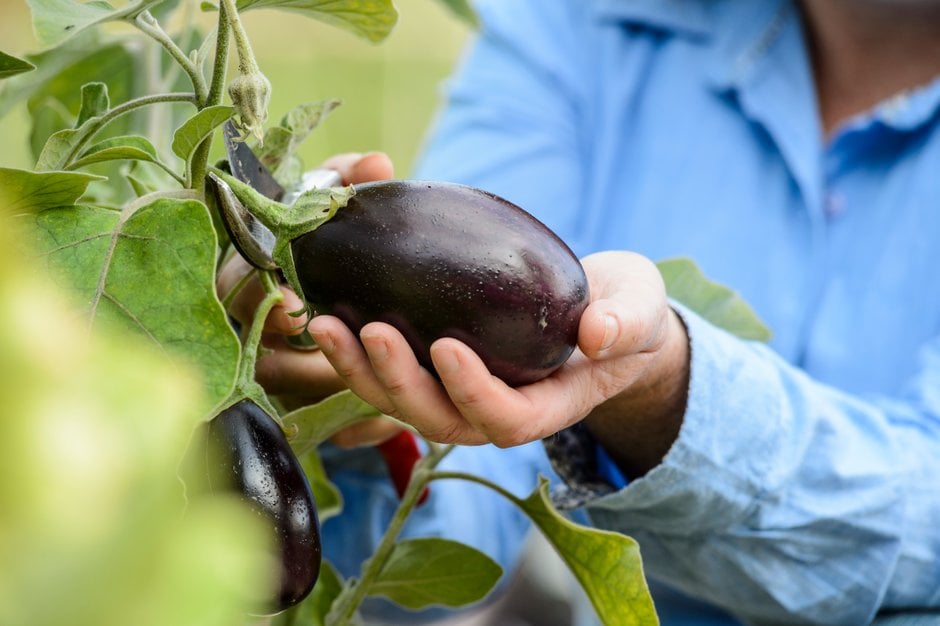
You can usually start harvesting aubergines from August onwards. Pick individual fruits as soon as they’re full sized, ripe and well-coloured, with a glossy skin. Once the skin becomes dull, the fruit is probably over-ripe and may be bitter. Pick the fruits regularly to encourage more to develop and ripen. Some plants have small spines, so take care when harvesting.
Problem Solving
Aubergines are tender plants that need lots of sun and heat to crop well. Lack of fruit may be due to poor summer weather or a location that is too cold, especially when grown outdoors. They need the hottest, sunniest position and a long – at least five months from sowing to harvesting. Aubergines also need a steady supply of moisture throughout the summer to fruit successfully.
Several -sucking insects like to feed on aubergine plants, so check for them regularly – see Common Problems below.
Common Problems


Glasshouse red spider mite
Glasshouse red spider mite is a common sap-feeding mite that can cause mottled leaves and early leaf loss on a wide range of greenhouse and garden pla...

Glasshouse whitefly
Glasshouse whitefly is a common sap-feeding insect, mainly of house-plants and greenhouse plants. They excrete a sticky substance (honeydew), which al...
