Quick Facts
An easy-to-grow climber
1
Flowers in late summer and autumn
2
Plant from autumn to early spring
3
Vigorous, so needs a large sturdy support
4
Prefers full sun, in a sheltered spot
5
Prune in late winter to keep it within bounds
6


Before you get started
What is campsis?
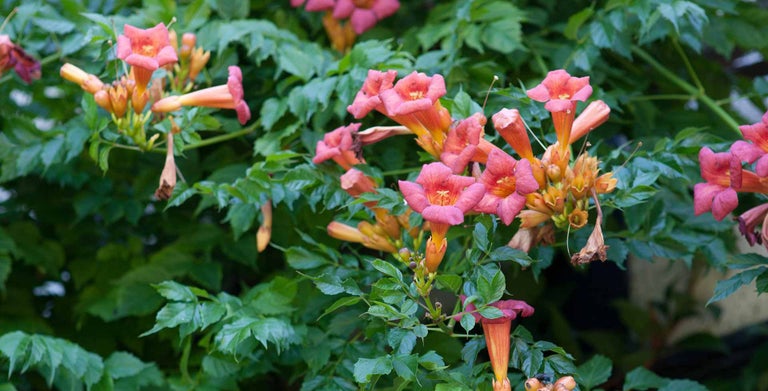
Campsis is a vigorous long-lived climber, also known as the trumpet vine. It puts on a striking floral display in late summer, with large clusters of showy orange-red or yellow blooms. It is fast growing, forming a woody framework after a few years, and is self-clinging, using aerial roots to grip onto vertical surfaces. It flowers best in full sun, in a warm sheltered spot.
How and what to buy
Campsis is widely available all year round, from garden centres and online suppliers, including RHS Plants. Plants are usually in fairly large containers, ready for immediate planting.
There are several species and cultivars, with flowers in various fiery shades. Popular choices include:
- Campsis radicans – with bright orange-red flowers
- Campsis grandiflora – with dark orange-red flowers
- Campsis x tagliabuana 'Madame Galen' – with pink-red flowers
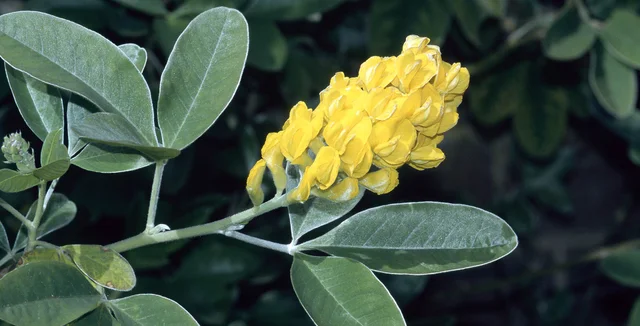
- Campsis radicans f. flava – with deep yellow flowers
These are all , losing their leaves over winter, and are similarly vigorous, reaching an ultimate height of up to 10m (30ft) after ten years, if given free range. Plants can be pruned annually to keep them within bounds.
Despite looking exotic, campsis is hardy, although it prefers a warm sheltered location with fertile well-drained soil.
To work out if you have the right conditions in your garden, see our guide to assessing your microclimate.
Where to get ideas and advice
Go to RHS Find a Plant and search for 'campsis' to browse photos and plant descriptions, and find out where to buy them.
RHS members can use the free personal gardening coach at My RHS.
Planting
Where to plant
Plant campsis in a border at the base of a large wall, pergola or other sturdy structure. It can also be planted near a large tree to grow up through it. Campsis is a vigorous climber, so the support must be at least 4m (13ft) high.
Although hardy, campsis needs shelter from cold winds, and full sun in order to ripen the wood so it flowers freely.
It does well in any moderately fertile, moist but well-drained soil.
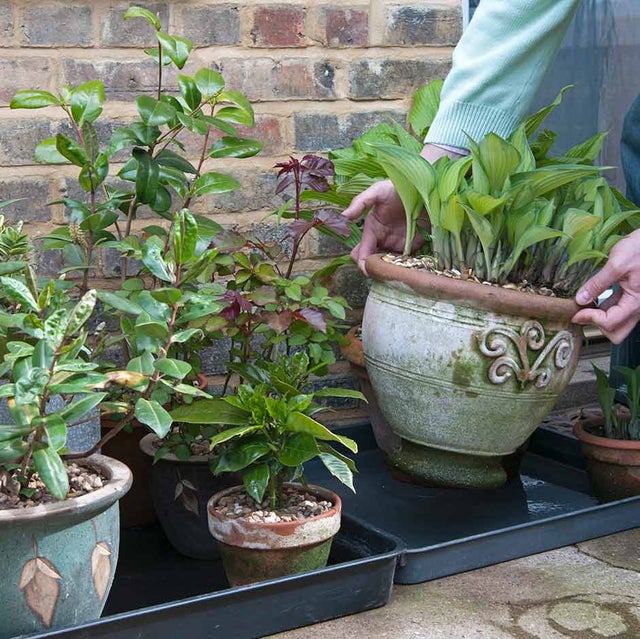
Campsis can also be grown in a large container against a wall or other robust support. Fill the container with loam-based, peat-free potting , such as John Innes No 2, or multi-purpose compost. Extra grit may be added to improve drainage.
When to plant
Plant campsis between autumn and spring, as long as the ground isn’t frozen or .
How to plant
Campsis is very easy to plant – see our step-by-step guide to planting climbers.
Ongoing Care
Watering
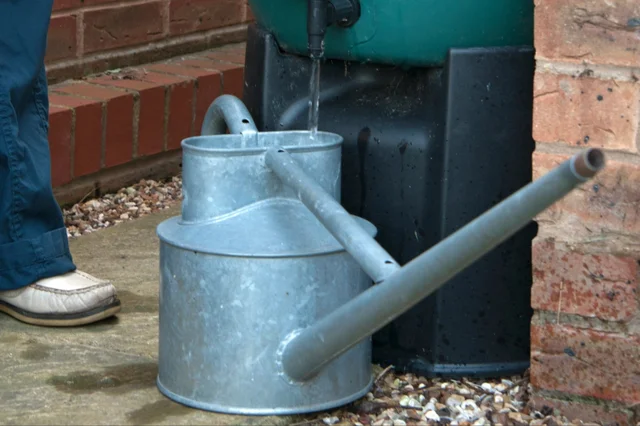
Campsis is fairly drought tolerant, but when newly planted or when growing in a container, it should be watered as needed in dry spells. Even well- will perform better if watered during prolonged droughts.
Feeding
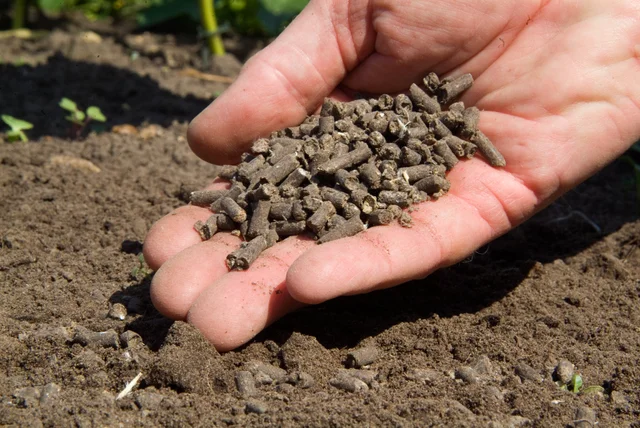
Campsis generally does well without additional feeding, unless grown in a container.
Container-grown plants can be fed with potassium-rich liquid feed, such as tomato fertiliser, to encourage flowering. Follow the dose rate and frequency recommended on the packet.
Mulching
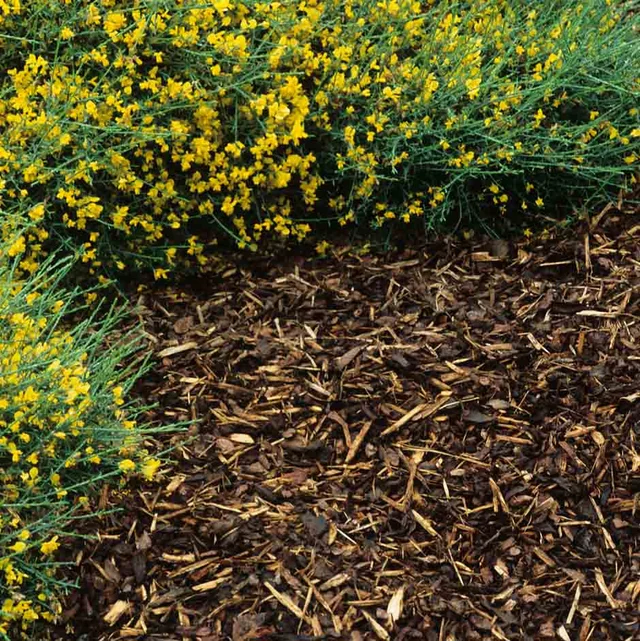
Lay a thick layer of , such as garden compost, over the plant's root zone every spring or autumn, to help hold moisture in the soil.
Caring for older plants
Older plants can grow very large (up to 10m or 30ft high), so are best pruned annually to keep them to a manageable size. Overgrown plants can be cut back hard. See our pruning advice below.
Pruning and Training
Campsis is a self-clinging climber, using aerial roots along its long stems to grip onto vertical surfaces. Campsis grandiflora, however, is best tied in to supporting wires.
It takes two or three years for a plant to establish a strong woody framework of branches, before it will begin to flower well.
Training a young plant
The aim is to produce a framework of stems from which flowering shoots emerge each year.
After planting, cut back all the stems to 15cm (6in) from the ground to stimulate new growth. Train the strongest of the resulting new shoots to fill the space – see our guide to training and pruning climbers on planting. Always remove weaker shoots.
Pruning an established plant
Once a framework is established, usually in two to three years, 'spur-prune' the sideshoots annually in late winter. This involves cutting back all the sideshoots to within two or three buds of the main stems. Remove any weak growth and cut back damaged stems close to their base.
Renovating an old plant
Hard pruning will reduce flowering, but can be used to renovate an overgrown plant.
Cut back all the shoots to within 30cm (12in) of the base in late winter, then train in the strongest of the resulting new shoots, as for a new plant (see above).
Propagating
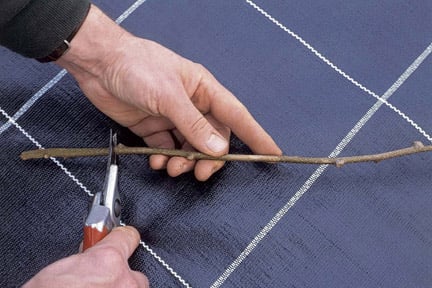
The easiest way to propagate campsis is by layering or by taking – semi-ripe, hardwood or root cuttings.
Rooted suckers that grow from the base can be severed from the parent plant and potted up on their own. Once large enough, they can be into the garden.
Campsis can also be grown from seed. Sow in autumn into small pots or trays of peat-free , then place in a coldframe to germinate and grow. Growing from seed can be a slow process though, as can take several months, and plants can then take a few years to reach flowering size.
Problems
As campsis is generally such a strong, vigorous plant, it tends to be relatively trouble free. However, low temperatures or dry soil can cause flower buds to be shed. So always grow campsis in a warm sheltered spot and water during dry spells until well established.
Few pests and diseases affect campsis, although you may occasionally spot:
Powdery mildew
Aphids
Mealybugs
Scale insects
Outbreaks rarely need treating on large, well- .