
Welsh–Arabic garden unites cultures through plants and design
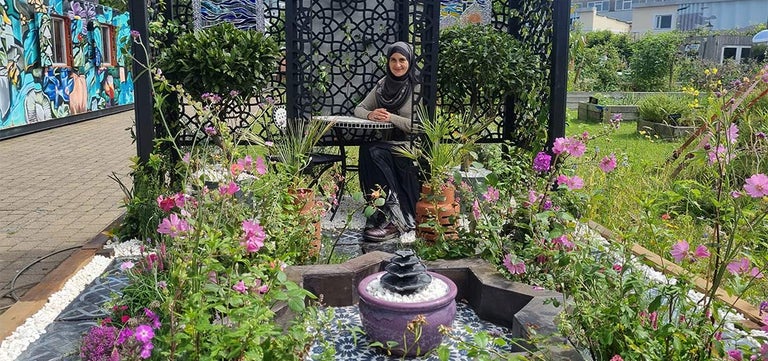
Drawing on the designer’s mixed heritage, Canon Lân – A Garden of Pure Heart is a space that speaks of peace, faith and connection with nature, aiming to engage all five senses

Incorporating Islamic geometry with a contemporary British plant palette, this Islamic garden is a ‘separation from the world’ but ‘a bridge-builder for communities’, says Lead Garden Designer Emma Clark
In the heart of the city, Cambridge Central Eco-Mosque features a unique and tranquil Islamic Garden for visitors in all seasons. As the garden springs to life and blooms throughout summer, visitors retreat from the busy world and delve into serenity.

A key feature of the garden, the octagonal water fountain, was designed in collaboration with water specialist Andrew Ewing. Deliberately placed as a central feature of the garden, it hints at the reference to rivers in heaven in the Islamic faith.
With a chahar-bagh layout, literally meaning ‘four gardens’ in Persian, the water fountain has four stone pathway routes to and from it, inspired by the four gardens mentioned in the Qur’an (55:46). The chahar-bagh is a common layout seen in many gardens across the world, including the Taj Mahal in India and the Generalife gardens next to the Alhambra Palace in Granada, Spain.
Emma Clark, who specialises in sacred art and Islamic gardens and wrote ‘The Art of the Islamic Garden’, collaborated with Adam Hunt of Urquhart & Hunt Landscape Design to design the garden.

Next to the fountain sit curved oak benches, designed by cabinetmaker Tom Zinovieff, where visitors can sit and enjoy the sound of the water, the shade of the trees and the fragrant plants.
One of the aims was to create a green space that welcomes not just Muslim worshippers, but the whole community. ‘People love it and they go there even if they're not going to pray. People who are not Muslims come too, and it's very important that it's open as a sort of bridge-builder, if you like’, said Lead Garden Designer Emma Clark.
The purpose of the garden is it being ‘a separation from the world one walked from’, said Emma.
"There is this sort of boundary that you step over, I think there's a separation that is not just a physical separation, but a mental, psychological, spiritual and emotional separation you could say."
‘I think one has to take things slowly. When you step away from the road into the garden, most people are going in there to pray, but quite a lot of people come and just visit the garden. It’s a way of separating yourself from the world, slowing down, and a little interlude of calmness and tranquillity to hopefully still the endless thoughts we have’.

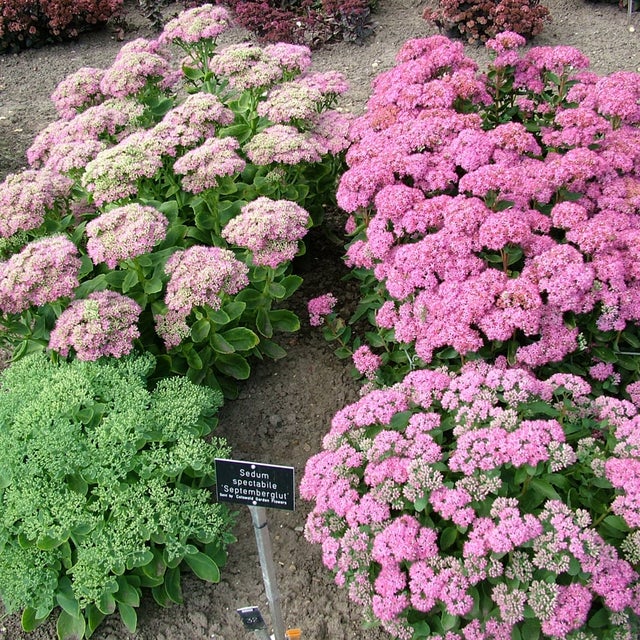
The plan for establishing the garden was based on needing to combine Islamic design with contemporary British plants, including roses, geraniums, salvias, iris, perovskia, origanum, teucrium and stipagigantea (giant oat), as well as flowering shrubs like myrtle, jasmine and daphne. such as iris, allium and tulip species fill the gaps during spring. Together, this variety of plants bring structure, colour and visual interest in the different seasons for a harmonious and balanced garden area.
A small group of volunteers maintain the garden by meeting once a week to keep the plants looking fresh and well-cared for, overseen by Head Gardener Helen Seal; a professional who has previously worked with the Cambridge University Botanic Garden.
‘There’s quite a lot of tweaking of the herbaceous material to keep it fresh, so we do a for example, and our shrubs, we also prune after flowering to stop them getting too large because it’s densely planted, so in order to keep the balance between the bulbs and herbaceous and the shrubs, the shrubs have to be kept smaller’.
Many of the plants that were selected have origins to, or grow well in, the Mediterranean and further East, but also grow well in the UK, so as to ensure their success.
Crab apple trees (Malus ‘Red Sentinel’) were chosen for their beautiful spring blossom and bright fruit and have been admired by visitors since the opening of the garden. ‘They’ve really grown and they flower and fruit magnificently, so they’re glorious’, said Head Gardener Helen Seal.
‘One of the interesting things we have is that the Muslim community are surprised that we grow something which isn’t edible. People always want to pick and eat the crab apples, which are too sour to eat but look beautiful!’.

‘When they’re in fruit, they look like these big juicy cherries, and people want to pick them’, agreed Nabila, who supports as a facilitator for the Mosque tour guides and garden volunteers. ‘But they are a huge success story. They were brought in as mature trees to new soil with limited depth, and they’ve survived, so we’re really grateful and happy’.
Other plants in the garden include some unusual species, such as:
During certain times of the year, the garden is allowed to grow wild, which is not only beneficial for the plants in the long-term, but also for pollinators and insects. Helen said, ‘some visitors are used to seaside bedding schemes, where the planting is very controlled and full of flower, and so sometimes, when the garden is in its greener phase, some of our visitors find it untidy, because everything isn’t cut back’.
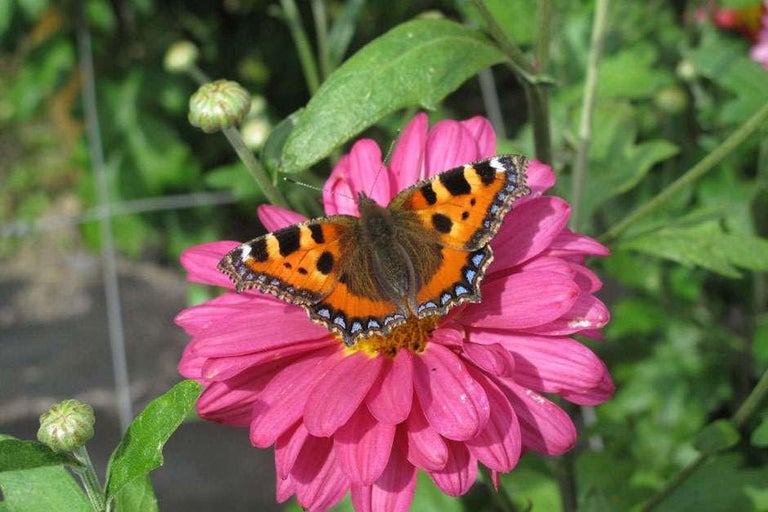
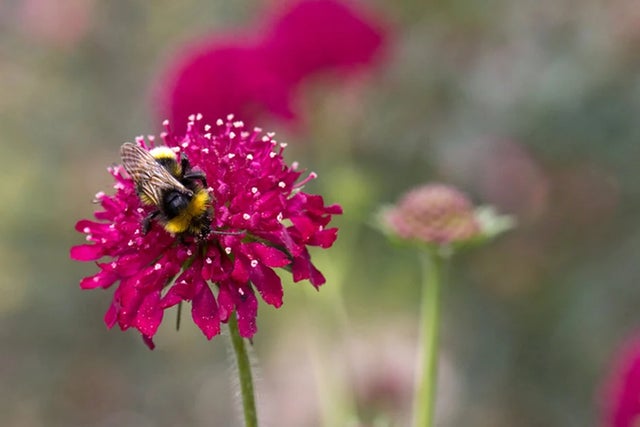
Bees, being some of the smallest workers that sustain the largest gardens, are key pollinators. In Islam, bees are referred to as female, as modern science shows worker bees are, and have a chapter in the Qur’an named after them (Al-Nahl, The Bee). Other pollinators are key for fruits mentioned in the Qur’an, including figs, dates and olives. The chapter dedicated to bees gestures toward the importance of pollinators and more generally, and the importance of nature in Islam.

"We keep seedheads on for winter interest and for the insects, so for some people it’s a different gardening aesthetic, but we try to explain that we don’t have to control plants all the time, and that it looks good in the end"
The garden volunteers have had to tackle challenges and find solutions where plants don’t thrive in the environment. ‘Occasionally we add new material if we see some plants struggling to survive. A couple of years ago we put in Althaea cannabina, and that’s good for later colour after the roses are finished’.
Helen also introduced Geranium phaeum ‘dusky maiden’ for the shadier areas in the bed to replace some of the Mediterranean plants that are not doing so well.
The garden volunteers include women originally from Bangladesh, Pakistan, Turkey, England, and South Asian Christian backgrounds. ‘Our volunteers reflect the demographic we have here in Cambridge’.
Alongside the garden volunteers from diverse backgrounds, there are also neighbours and residents who help to maintain the garden, Nabila said. ‘Some are not Muslim or mosque attendees, but the garden is something that brings everyone together. We share tea breaks and talk about the garden and get to know one another. Gardening can be quite solitary, which is lovely, but when you work with others you realise you have so much in common, so it’s a nice space to bring people together to enjoy the garden and share the love we have for it’.
"Gardens and nature hold humanity together"
‘The community beds, which are outside the Islamic Garden by the bus stop, are enjoyed by visitors, with frequent requests for . It’s a small greened up space in an urban area that has a big impact on people’s wellbeing’.
‘The fact that the garden is at the front and not at the back of the grounds, is a great way to attract the general public in to have a look around and explore not just the garden but the building too’, Nabila said.

Planting trees is an act of charity in Islam, and one that brings about great reward. Prophet Muhammad (peace be upon him) said, ‘No Muslim plants a tree or sows a seed and then a bird, or a human, or an animal eats from it but that it is charity for him’.
The Islamic Garden was nominated for the Society of Garden Designers ‘Community Garden Award’, in the end being runners-up to RHS Wisley in 2024.
‘When the garden was being planned and designed, no one ever thought we would be nominated for awards, so that’s been a lovely surprise, and it continues to be. And that shows a lot about our community relationships’.