How to be self-sufficient in your growing space
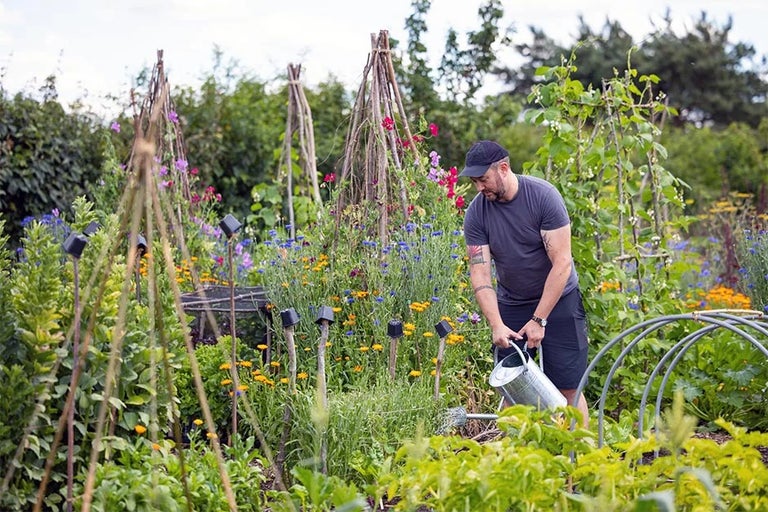
On her allotment plot in Surrey, RHS Garden Wisley horticulturist Elizabeth Mooney grows all of the fresh fruit and vegetables in her diet. Here she shares her tips to get the most out of your growing space, whether you have a couple of pots on a balcony, or want to grow more of your own food at home
How many teenage girls spend their weekends shovelling barrowloads of horse manure on the family allotment? I’m prepared to bet it’s not many, but as a youngster in Newcastle-upon-Tyne, I was one of them. That early introduction to growing food sparked a lifelong passion that eventually became my career. Today, as a horticulturist on the Edibles Team at RHS Garden Wisley , growing fruit and veg has become my job, but it remains my hobby and passion, and something I love to share.
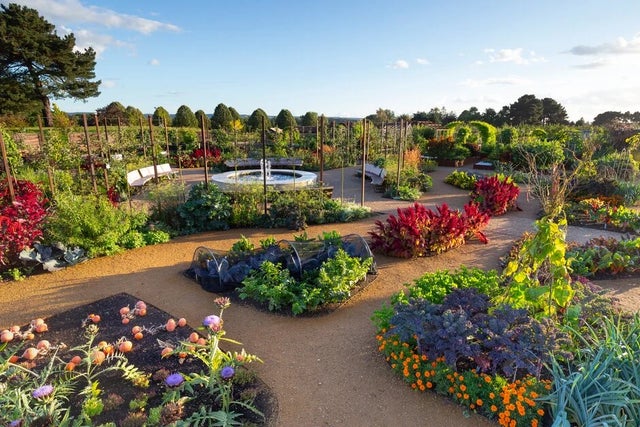
A few years ago I decided to set myself a challenge: could I take my growing efforts to the next level and become fully self-sufficient in fresh fruit and vegetables? In other words‚ could I eat only what I grew myself? I’ve never looked back. On my 13 x 18m allotment plot in Surrey, where I mainly garden at weekends‚ I grow all the fresh produce I eat throughout the year, occasionally supplemented by crops I’ve grown at work. While that space isn’t tiny, many of the techniques I use to grow my own food, vertical growing, careful crop choices, succession sowing and preserving, can be adapted to much smaller areas, whether you have a compact garden, a balcony or just a few pots outside your door.
I garden without fertiliser or chemicals, and on a no-dig basis, mulching only every other winter. I don’t follow a strict crop rotation system as the healthy no-dig soil means I don’t have any major issues.

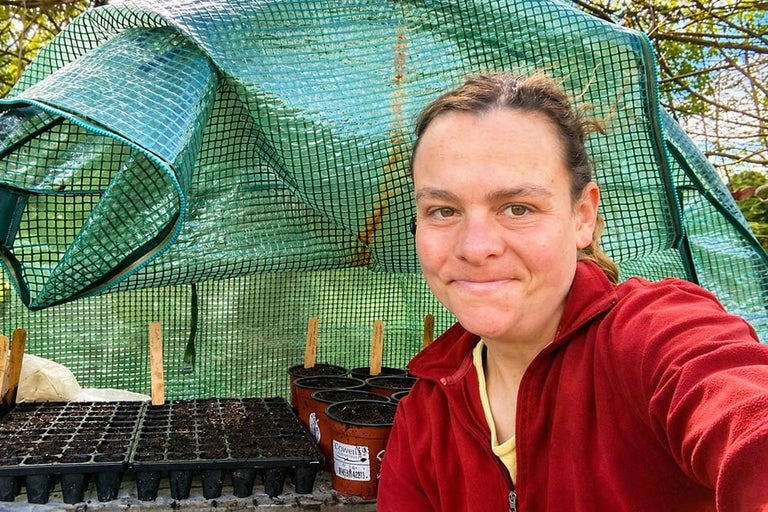
Liz Mooney, a horticulturalist in the edibles team at RHS Wisley, on her village allotment
Getting started with growing your own food
Of course, some crops inevitably fail‚ so protecting what you can with nets, covers and choosing resilient cultivars helps reduce losses, such as prioritising blight-resistant tomatoes and root-fly resistant carrots. But gardening always involves some compromise when one crop struggles, another often performs better than expected.
Self-sufficiency isn’t realistic for everyone, but anyone can experience the satisfaction of growing some of their own food. Even a pot of herbs on your windowsill can bring joy.
When starting out on your grow your-own journey, a cropping plan can be incredibly useful. I keep a list of what crops are suitable to sow and when‚ then at the start of each month pull out the relevant seed packets and either sow directly into the ground or into pots and to plant out into any available space when they’re ready.

A trug of freshly picked produce, including ‘Bon Bon’ squash
I’ve found that I don’t have to particularly plan in order to be self-sufficient through summer and autumn, but I do have to make sure I’m growing enough crops to eat in winter and spring. Storage crops such as squash, potatoes and beetroot, along with frozen produce and preserved tomatoes, help bridge the hungry gap until new harvests begin. is key to avoiding gluts and maintaining steady harvests.
"Two or three small sowings several weeks apart are far more useful than one large sowing all at once."
Catch crops are also worth using, particularly in spring‚ making use of quick-growing plants that are ready to harvest before slower crops such as winter squash grow into that space.
Top crops for self-sufficiency
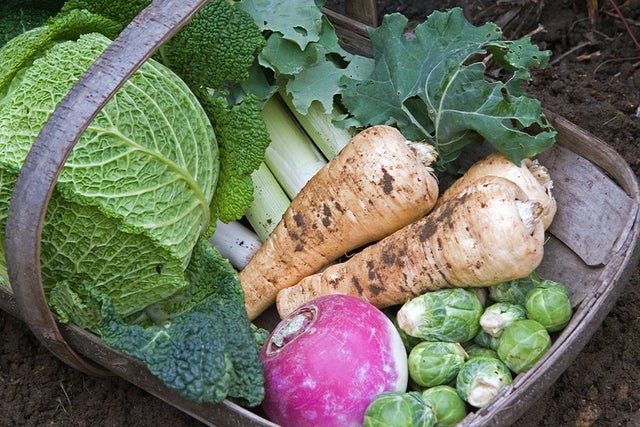
Only grow something if you will want to eat it, not just because someone else has told you it’s good to grow. Having said that, these are the crops that I’d not be without.

Winter squash
Probably my favourite crop to grow, especially Cucurbita maxima‘Crown Prince’‚ ‘Queensland Blue’ and Cucurbita ‘Bonbon’. They’re tasty, versatile and store well through winter. I’m known for decorating my flat with around 100 winter squashes in autumn for use until May.

Potatoes
I mainly grow first and second earlies, including Solanum tuberosum‘Lady Christl’ and ‘Charlotte’‚ as they’re harvested before blight risk. For maincrop, ‘Sarpo Mira’ is a good, blight-resistant cultivar.

Lettuce
A classic of the allotment that I eat daily through spring and summer. I prefer crisp iceberg and cos types over cut-and-come-again‚ with Lactuca sativa‘Lobjoit’s Green Cos’ being a particular favourite.

Tomatoes
I focus on blight-resistant cultivars such as Solanum lycopersicum‘Crimson Cherry’or‘Merrygold’, and enjoy eating them fresh through the summer and preserving surplus as sauce for use out of season.

Swiss chard
I love growing this easy crop – most reliable are Beta vulgaris subsp. cicla var. flavescens‘Bright Lights’ and ‘Bright Yellow’. A couple of sowings in late spring to early summer can provide 12 months of repeat harvests if the winter is mild.
How to grow more food in a small space
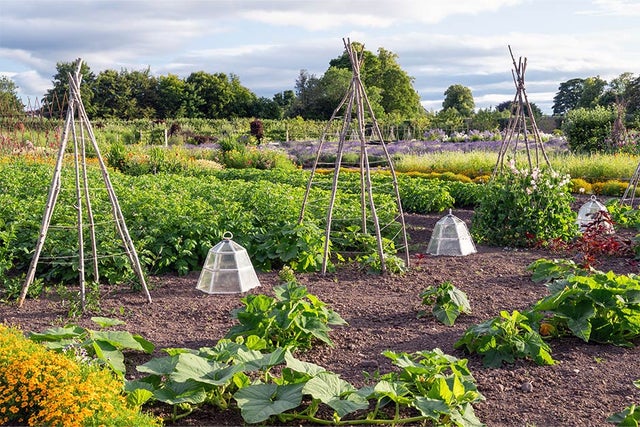
Growing vertically is a good way to maximise cropping in a small space. I favour climbing beans over dwarf beans and tomatoes over bush ones‚ allowing other crops to grow underneath them.
The simplest approach is to create an A-frame or wig-wam structure made from bamboo canes or hazel poles. French beans are my favourite for growing this way, one plant per pole, but runner beans are another popular choice. If you have a more permanent, heavy-duty obelisk you could grow the Hablitzia tamnoides (Caucasian spinach) for low-maintenance repeat harvests, and training winter squashes upwards can save a lot of space on the ground.
Walls, fences and trellis can all be used to grow fruit in trained forms, most commonly into a fan, or cordon shape. This allows you to fit more into a small space. Apples, pears, gooseberries, or redcurrants are all suitable depending on available sunlight and shelter.
In the spirit of making use of all available space, I plant squashes into my heap every year. They thrive in the rich growing medium that the heap provides and often my most productive plants.

The compost heap on Liz Mooney’s village allotment
Perennials and herbs
Perennial vegetables and herbs have sustainability benefits over and require less maintenance once established‚ but they usually produce less food per square metre than annual crops. They’re good for harvests in the hungry gap, but if self-sufficiency is your aim a larger space would be needed. I grow asparagus, caucasian spinach and skirret and a few favourite herbs – namely chives, wild rocket, coriander and lovage . I also grow mint in pots for making herbal teas.
Preserving your crops
Preserving allows you to enjoy harvests year-round and helps bridge the hungry gap – that period in early spring when you’ve harvested the last of your winter crops but the spring-sown ones are not yet ready

Storing
I harvest beetroot and potatoes on sunny days, let them dry for a few hours, then store them in hessian sacks in a cool place. Last year, I harvested potatoes in June and was still eating them the following April.

Jamming
I often have more autumn raspberries than I can use‚ so I make chia seed jam by mixing shop-bought chia seeds with raspberries and a little sweetener. It only lasts a week in the fridge, so I freeze it in ice cube trays to defrost as needed.

Freezing
Each year, I fill my freezer with crops such as broad beans, French beans, and sweetcorn‚ portioning them before freezing for convenient use through winter.

Pickling, fermenting and drying
These are all also really good ways of preserving crops from your allotment, but are not techniques I use. It comes down to taste – if you love eating kimchi, then have a go at making it.

Saucing
I only preserve tomatoes this way‚ and the sauce freezes well for winter. Last year, I grew around 40 tomato plants – far too many, filling the freezer before they stopped cropping. This year I am growing 10–15 plants, which should be plenty for fresh use and preserving.
Growing crops in pots
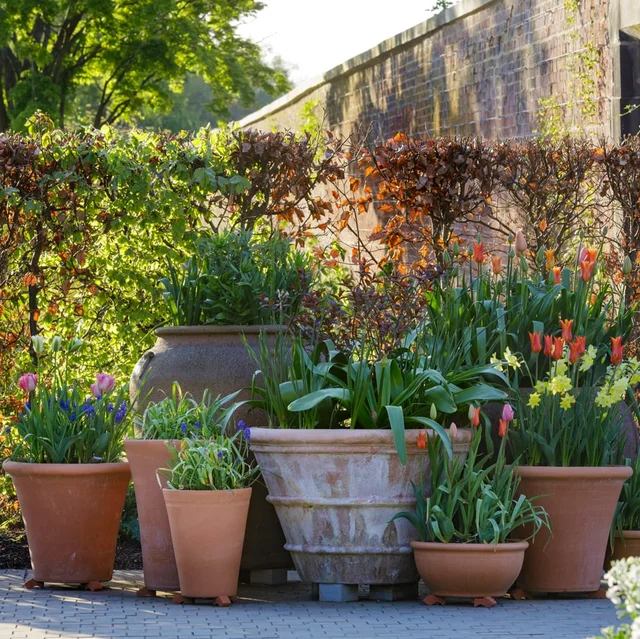
If all you have space for is a few plants, then self-sufficiency is an unrealistic ambition, but you can still enjoy growing your own food. Pots generally require regular watering and feeding because in compost are quickly used up. I’d use a balanced seaweed feed weekly for pots. A lot of crops will work well in pots. Here are a few that I especially enjoy.

Mixed herbs
Even in a single pot you can combine multiple types, such as upright chives with curly parsley and fluffy dill. If left to flower, these can look beautiful, attract pollinators, and provide attractive garnishes for your dishes.

Bush tomatoes
I’ve found cordon tomatoes struggle getting enough nutrients when grown in pots, though they will crop. Indeterminate, bush tomatoes are more successful, my favourite being ‘Tumbling Tiger’, which produces a slightly elongated and stripy fruit.

Marigolds and basil
I use these in pot displays at RHS Wisley‚ placing them in the greenhouse as companion plants for the tomatoes and cucumbers. Tagetes patula ‘Honeycomb’ is one I grow every year, but ‘Fireball’ is also great. For basil, I recommend the red-leaved type.

Blueberries
They need acidic soil so are often best grown in a pot. My favourites are Vaccinium corymbosum‘Duke’, ‘Spartan’ and ‘Elizabeth’. Repot every few years to refresh the soil, and underplant with a crop of wild strawberries or creeping thyme.
Follow RHS edibles expert Liz Mooney’s weekly allotment diary as she shares a weekly glimpse into life on her allotment. From what to sow and harvest to the challenges of the hungry gap, pick up timely tips and practical inspiration for your own growing space.