Coastal gardens to explore – and the lessons they can teach us
Nine RHS Partner Gardens demonstrate how to work with, rather than resist, coastal conditions, showing that a challenging environment can become a landscape rich with horticultural possibility
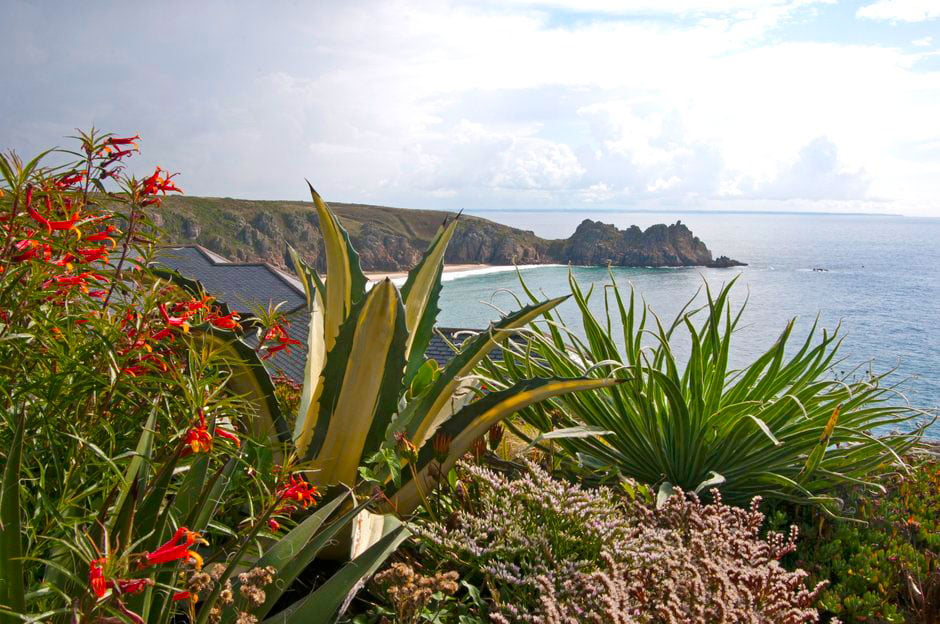
Coastal gardens are often imagined as places where plants battle against the wind. However, their relationship with the sea is much more subtle and usually woven throughout the planting choices. We’ve selected nine RHS Partner Gardens that owe much of their character to the influence of the coast, revealing how these conditions are both an ally and a challenge.
Join the RHS and enjoy free access to more than 240 gardens in the UK and around the world at selected times >
Walmer Castle and Gardens, Kent
Walmer Castle is one of England’s finest coastal fortresses
However, the site is still exposed to challenging conditions. In winter, strong winds sweep around the castle and damage plants, while in summer the breezes tend to dry out plants very quickly.
To help protect the garden, William Pitt the Younger established a shelterbelt around the grounds in the early 1800s, much of which is now woodland. In the jungle moat, large-leaved plants are further sheltered by evergreens strategically positioned where the wind funnels around the castle.
- Free days out for RHS Members in 2026: Thursdays–Fridays, 20 February–30 October; Saturdays–Sundays, 1 November–20 December
- Find out more at Walmer Castle and Gardens
Glenwhan Botanic Garden, Scotland
Glenwhan Botanic Garden benefits from the close proximity of the Gulf Stream
Carved out of moorland by owner Tessa Knott Sinclair and creatively developed since the 1970s, the site benefits from being close to the Gulf Stream, which allows many tender and exotic plants from around the world to flourish. Over four decades, Glenwhan has been transformed from bog, rushes and gorse into an award-winning garden. The splendid views and peaceful ambience offer visitors a place to immerse themselves in a tranquil atmosphere.
- Free days out for RHS Members in 2026: Saturdays, when open
- Find out more at Glenwhan Botanic Garden
Cambo Gardens, Scotland
Cambo Gardens offers a natural gateway to the wider coastline
Being adjacent to Fife Ness, a well-known site for rare migrant birds, Cambo plays host in spring and autumn to a wide range of scarce European migrants, including red-backed shrikes and wrynecks, as well as rarities from further afield with regular sightings of Pallas’s warblers.
- Free days out for RHS Members in 2026: Wednesdays and Thursdays, when open
- Find out more at Cambo Gardens
Coleton Fishacre, Devon
Both the historic house and the landscape influence the garden experience at Coleton Fishacre
The planting scheme is also strongly influenced by the surrounding coastline and natural habitats. Plants
- Free days out for RHS Members in 2026: Friday–Saturday, when open (excluding Good Friday)
- Find out more at Coleton Fishacre
Mothecombe Gardens, Devon
Mothecombe Gardens is sheltered from the prevailing south-westerly salt-laden winds
Mature trees and carefully positioned hedges create sheltered pockets where more delicate plants can flourish, while exposed areas are planted with species naturally suited to the landscape. Every plant has earned its place and by working in harmony with the conditions, the garden has developed a distinctive character that feels entirely at home on this stretch of the South Devon coast.
- Free days out for RHS Members in 2026: When open (Tuesdays only)
- Find out more at Mothecombe House and Gardens
East Ruston Old Vicarage, Norfolk
East Ruston Old Vicarage is arranged as a series of interconnected garden rooms
Extensive shelterbelts protect the garden from strong coastal winds, creating a network of microclimates that support everything from subtropical and Mediterranean plantings to drought-tolerant species.
The Desert Wash area is entered through a striking monolithic gateway known as the Pharaoh’s Gate, leading visitors into a dry, heat-loving landscape where a wide range of plants, particularly those from South Africa, are grown and assessed for their suitability to the garden’s conditions.
The surrounding landscape has also influenced the garden’s development. Historic field boundaries, ponds and hedgerows have been restored to provide shelter, enhance
- Free days out for RHS Members in 2026: Wednesday–Sunday in October, when open
- Find out more at East Ruston Old Vicarage
Jardin Botanique de Vauville, France
Different microclimates shape the very design of the Botanical Garden of Vauville
Rather than resisting the elements, the garden works with them. Its 22 distinct garden rooms are sheltered by a carefully crafted network of living windbreaks. Towering specimens of Cupressus macrocarpa form protective walls against Atlantic gales, while dense plantings of bamboo create flexible, rustling screens. Architectural species such as Phormium tenax and Eryngium pandanifolium provide additional shelter, their robust foliage thriving where more delicate plants would struggle.
These layers of protection create a succession of microclimates, each offering conditions suited to plants from different regions of the world. As visitors move from one garden room to another, they discover a landscape shaped by both botanical ambition and maritime reality. The result is a unique coastal garden where the wind is not an enemy to be excluded but a force that has inspired creativity, structure and beauty.
- Free days out for RHS Members in 2026: When open
- Find out more at Jardin Botanique de Vauville
Mount Stewart, Ireland
Mount Stewart is surrounded by seawater on three sides
“This is one of the warmest areas in Ireland, giving us the ability to grow an abundance of tropical plants that you wouldn’t normally expect to see thriving outdoors in our climate,” said Head Gardener Robert Wilson.
The garden also benefits from its historic sea plantation, established in the early 19th century to reduce wind speeds and protect the estate from salt-laden sea spray. Together with the waters of Strangford Lough, it creates the sheltered conditions that allow everything from giant Himalayan lilies to exotic late-summer displays to flourish.
“However, this comes with its challenges,” Robert continued. “In recent years we’ve experienced more frequent winter storms, while higher winter rainfall is creating a more challenging environment for the team. Some of our historic plants and collections have to be managed in different ways now and in some cases we’re having to completely rethink how we garden.
As climate change continues to influence coastal landscapes, the National Trust is helping the garden adapt by restoring and expanding the historic sea plantation, monitoring the effects of changing weather patterns and using nature-based approaches to strengthen the resilience of this remarkable garden for future generations.
- Free days out for RHS Members in 2026: When open
- Find out more at Mount Stewart
Upton Castle Gardens, Wales
Upton Castle sits within a rich mosaic of woodland and water
Although this is not a true coastal garden, the movement of the tide and the presence of nearby saltmarshes help define the character of the setting. This creates a unique growing environment in which a wide range of ornamental planting thrives within the protection of the valley, while still reflecting the influence of the wider coastal landscape.
- Free days out for RHS Members in 2026: April–20 September, Tuesday and Friday when open
- Find out more at Upton Castle Gardens