Appearance
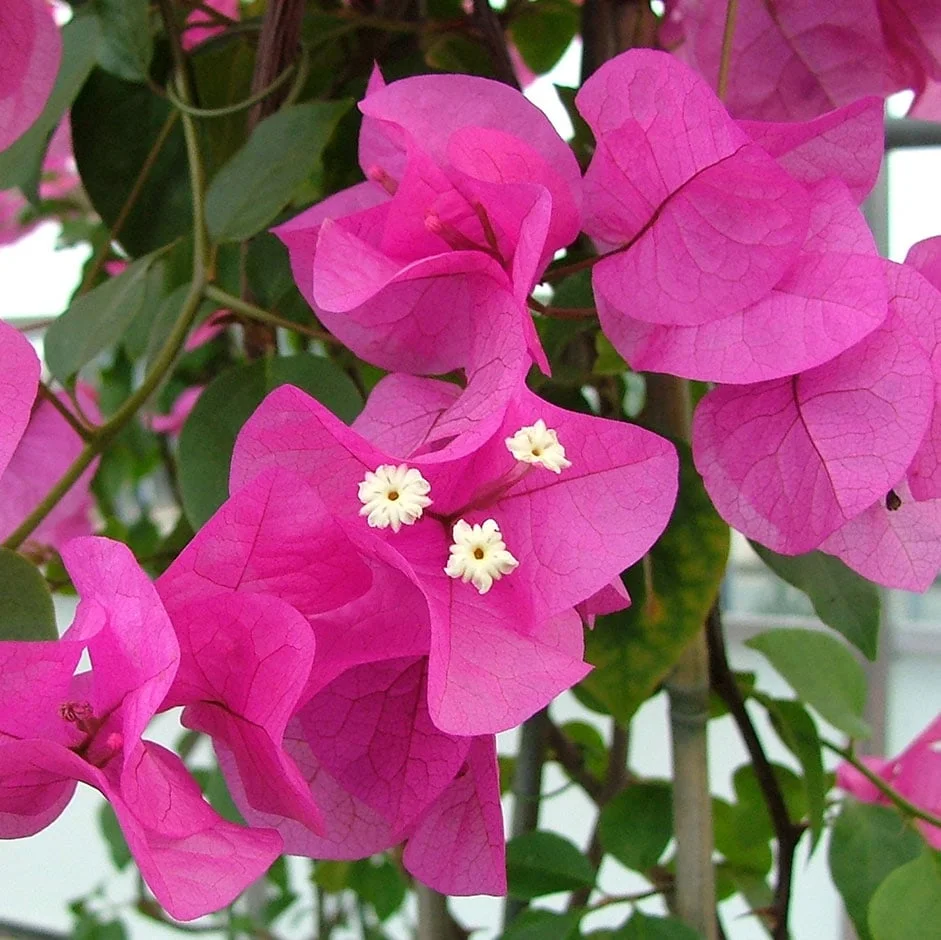
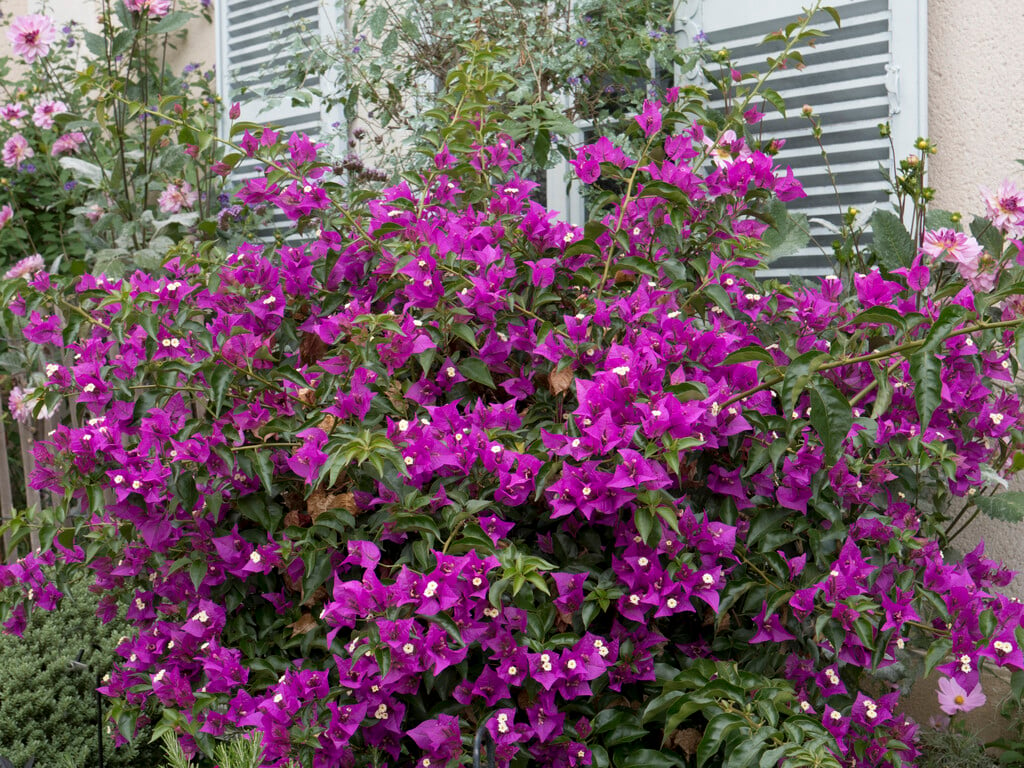
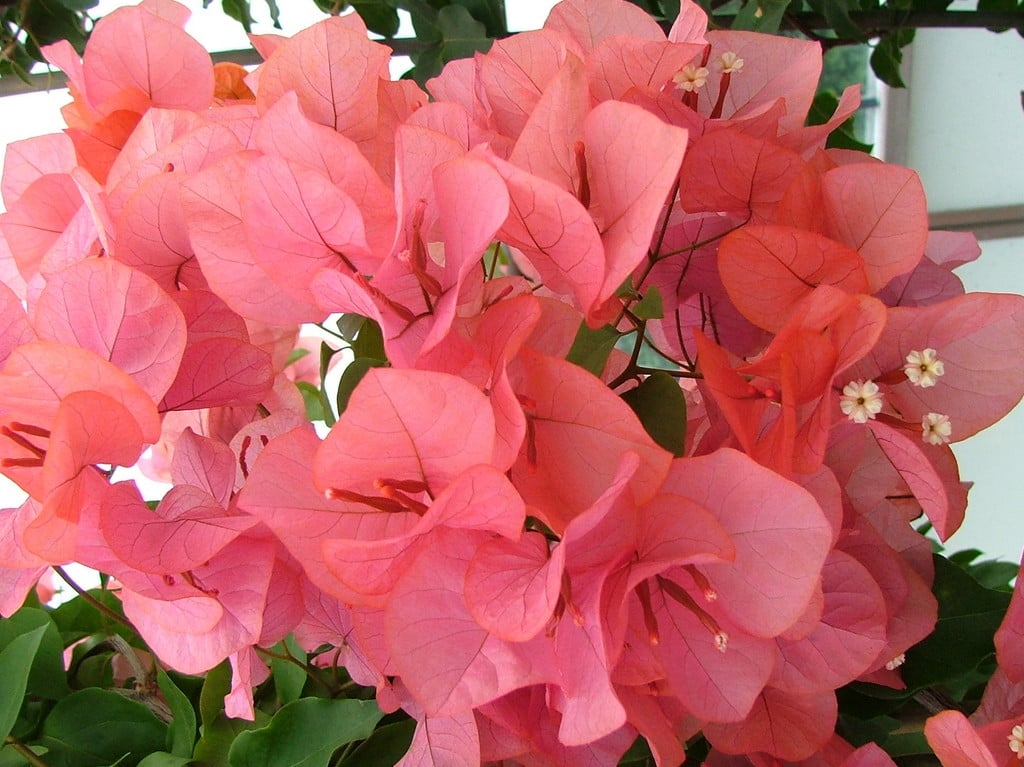
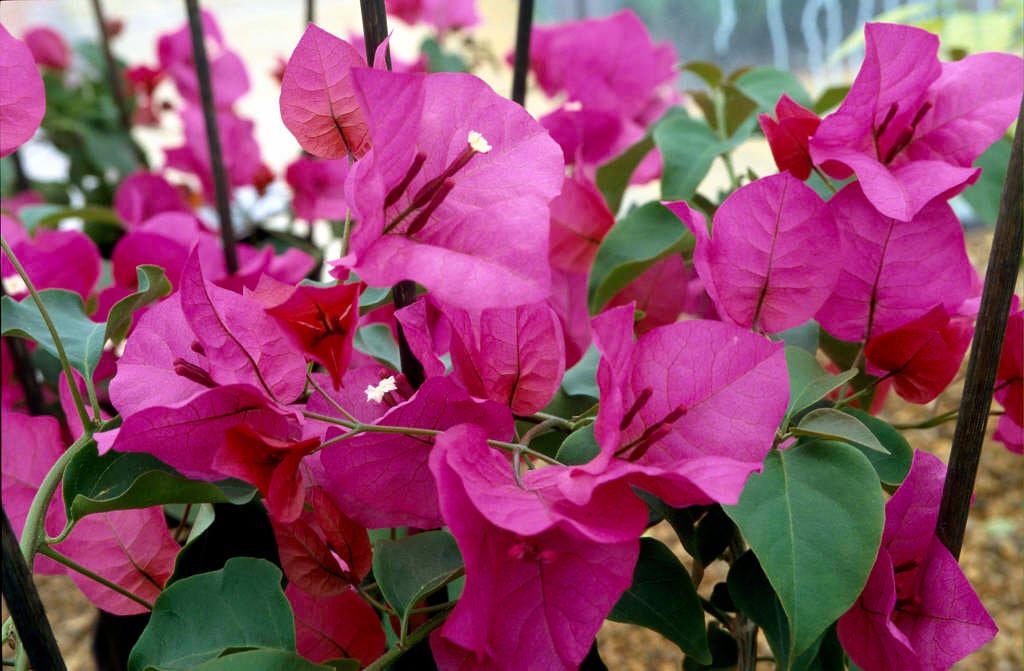
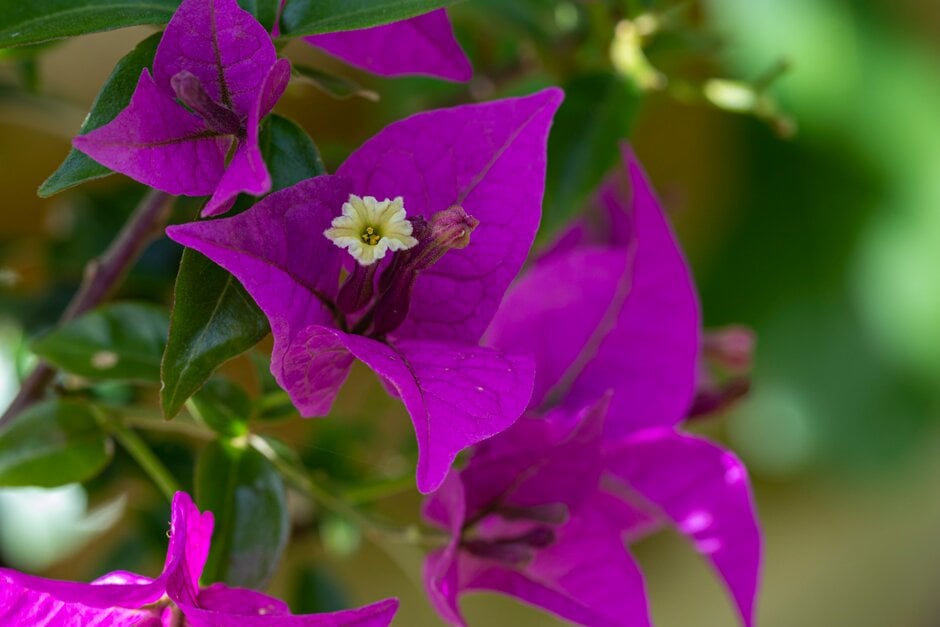
Bougainvillea is renowned for producing an abundant display of colourful bracts, stealing the show with generous trusses in dazzling shades of purple, pink, red, orange and yellow. Some varieties also have variegated foliage. Plants have thorns to help them climb and can grow up to 10m tall if left unpruned.
Preferences
They need a warm spot such as a south- or west-facing windowsill, heated greenhouse or conservatory, with at least six hours of sunlight per day. Ideally, use a loam-based growing medium, such as peat-free John Innes No 3. Keep it consistently moist through the growing season, with only occasional watering over winter. Annual pruning keeps plants compact and encourages fresh growth lower down.
Dislikes
Bougainvillea may need protecting from intense sunlight through glass, which can scorch the foliage. They dislike poor drainage, which can lead to root rot. Plants can tolerate short spells as low as 5°C but tend to drop their leaves and go dormant if temperatures fall below 10°C.
Did you know?
Bougainvillea is named after the 18th-century French explorer, Louis Antoine de Bougainville, who led the first French naval force to circumnavigate the globe. The colourful ‘flowers’ are in fact modified leaves known as bracts. These perform the same job as petals, attracting insects to pollinate the three small, inconspicuous true flowers in the centre.

Introducing Bougainvillea
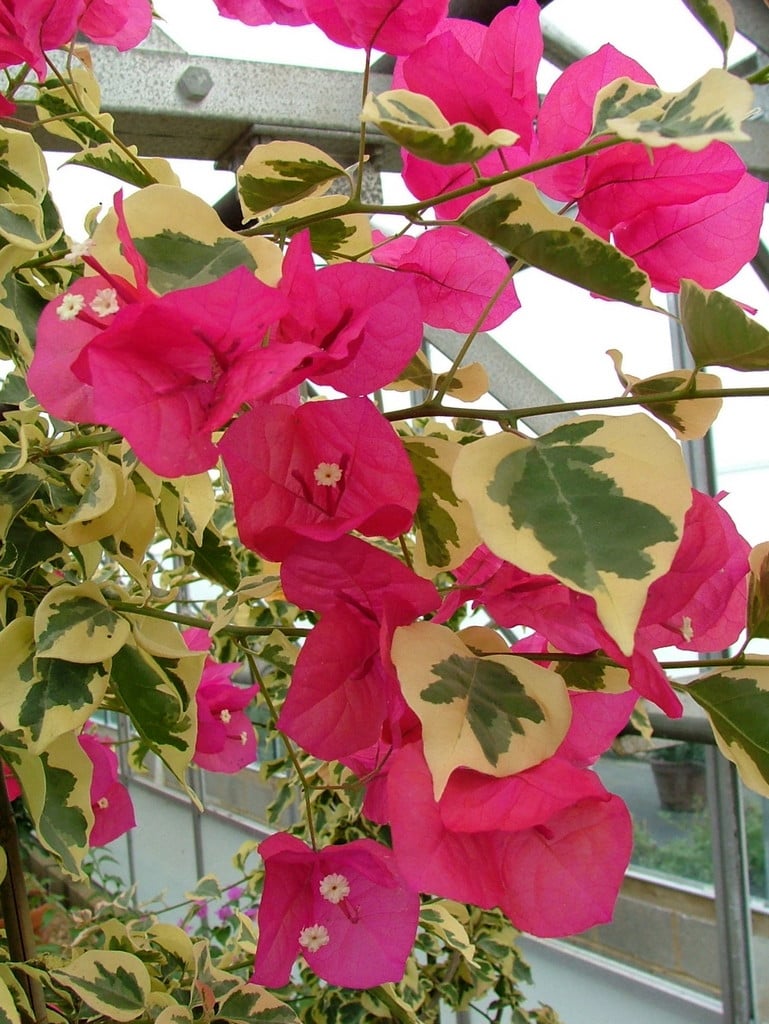
Bougainvillea × buttiana 'Raspberry Ice' (v)
bougainvillea 'Raspberry Ice'
- Height
- 4–8 metres
- Width
- 2.5–4 metres
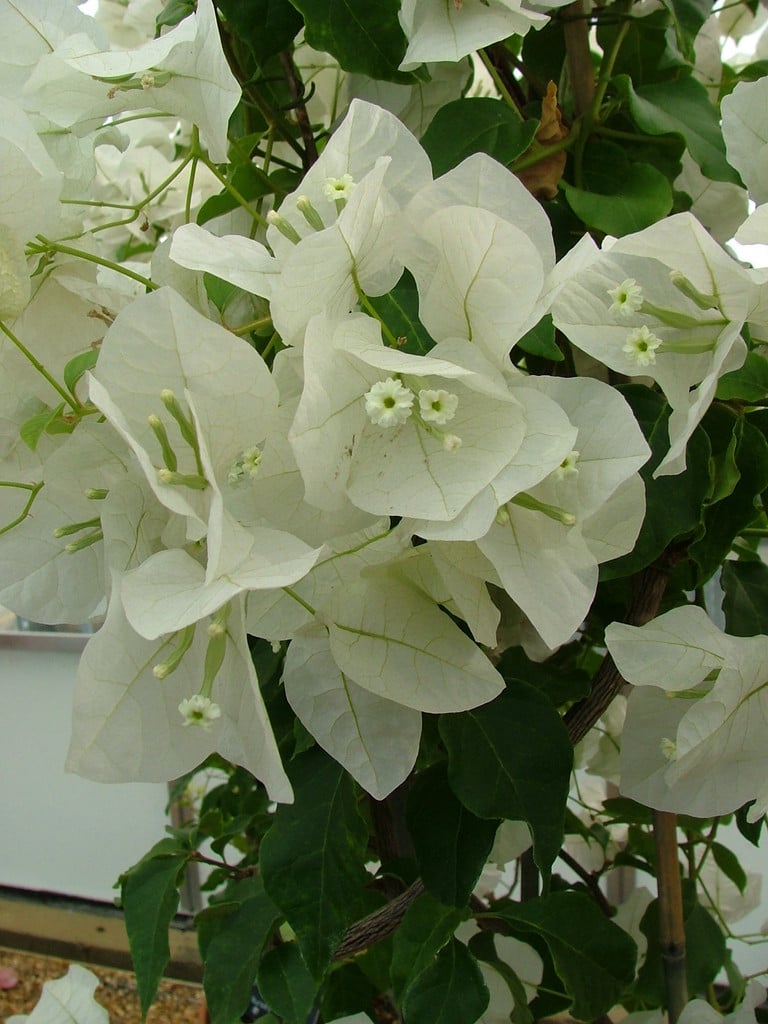
Bougainvillea (Spectoperuviana Group) 'Mary Palmer's Enchantment'
bougainvillea 'Mary Palmer's Enchantment'
- Height
- 4–8 metres
- Width
- 2.5–4 metres
x of x
Showing
x to x
of x