Getting Started
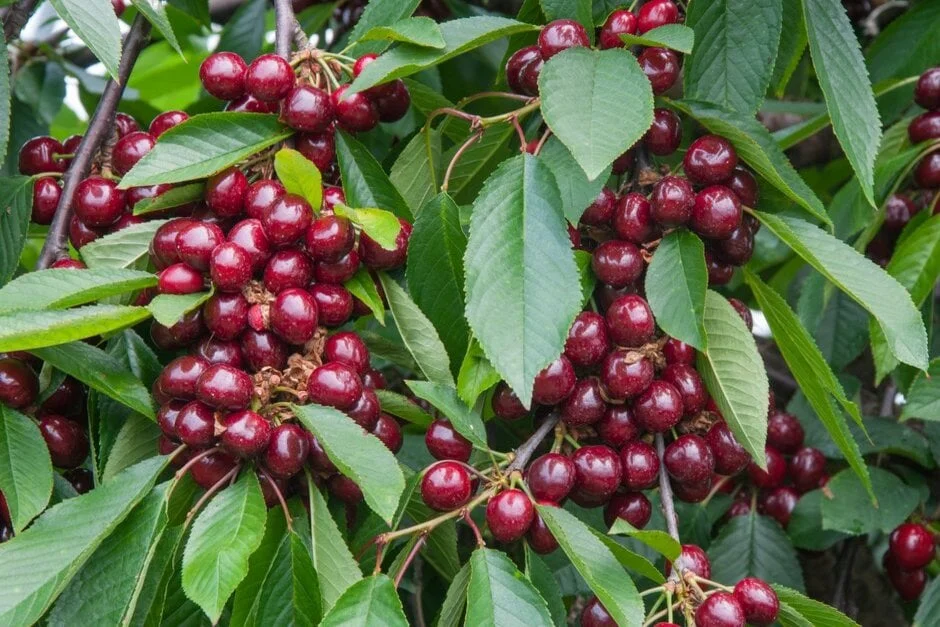
With their pretty spring flowers that attract pollinators, delicious fruits and bright autumn foliage, cherry trees are an asset to any garden. Producing either sweet cherries for eating fresh or acid cherries for cooking, the trees come in various sizes to suit most gardens – if space is tight, you can grow a fan-trained cherry flat against a wall or fence, or even a compact tree in a large container.
Cherries grow well in fertile soil that doesn’t get or dry out for long spells. For the sweetest fruits, plant in a sunny spot, although acid cherries will also crop well in partial shade. Many modern varieties are self-fertile, which means you only need one tree for a good crop. Just bear in mind that birds love cherries, so it’s best to net the tree or grow it in a fruit cage if you want the whole crop for yourself.
Jobs to do now
Water if needed
Month by Month
Plant
Harvest


Choosing What To Grow
There are two main types of cherry: sweet cherries (derived from Prunus avium), which are delicious eaten fresh and best grown in a sunny position, and acid cherries (derived from Prunus cerasus), which are excellent for cooking and grow well in sun or partial shade.
There are many varieties of each type, producing either red, near black or yellow fruit, from early to late summer. Acid cherries are self-fertile, so you only need one tree. Many modern varieties of sweet cherries are self-fertile, while others need a ‘ partner’ (another cherry nearby that flowers at a similar time) to ensure a good crop – see our guide to fruit pollination. Most fruit nurseries will be able to advise on a suitable partner variety. Even self-fertile trees usually produce a larger crop when there’s a compatible pollination partner nearby. But if you only have room for one tree, be sure to buy a self-fertile variety.
When choosing a variety, look for those with an RHS Recommended: Award of Garden Merit (AGM) – these are recommended by RHS fruit experts, as they performed well in trials – see our list of AGM fruit and veg (135kB pdf). You'll find fruit trees at the RHS gardens, so you can compare different varieties and pick up useful growing tips.
If you want a reliable crop of delicious cherries, it’s worth investing in a good-quality grafted tree of your chosen variety, bought from a reputable supplier. There are also several species of cherry tree that produce fruit suitable for cooking or jam making, as well as for attracting wildlife – see our guide to hedgerow fruit.
Cherry tree sizes
Cherry trees sold commercially are usually grafted onto the roots (rootstock) of a different variety that controls the tree’s size and vigour. Ungrafted cherries grow into large trees that aren’t suitable for smaller gardens. The most popular cherry rootstocks are:
- ‘Gisela 5’ – semi-dwarfing rootstock, restricts trees to 3–4m (10–13ft) tall, so suitable for smaller gardens and containers; trees trained as fans will reach about 1.8m (6ft) tall and 3.5m (12ft) wide
- ‘Colt’ – semi-vigorous rootstock, producing trees 6–8m (20–26ft) tall, or when 2.5m (8ft) tall and 5.5m (18ft) wide. Acid cherry trees, which are less vigorous, reach about 3.5m (11ft) on this rootstock
What and where to buy
Cherry trees are sold either (without soil around the roots) or in pots. Bare-root trees are only available while dormant, from late autumn to early spring, usually from specialist suppliers. Container-grown trees are available all year round and are sold by most gardening retailers. Specialist fruit nurseries offer the widest choice of varieties, usually by mail order. If you want to grow a fan-trained tree, decide if you want to train it yourself starting with a one-year-old tree ( ), or buy an older, already trained tree from a specialist nursery.
Choose a tree with a well-balanced shape and three to five good shoots growing from the central stem. You can then train and prune it into any of the popular tree forms if you wish – see Pruning and Training, below.
Recommended Varieties


Planting
Where to plant
You can plant cherry trees either in an open area, such as a lawn, or trained against a wall or fence. Choose a warm, sheltered location that isn’t prone to late frosts as these can damage the flowers. A sheltered site will aid too, as insects will have easier access to the flowers. Sweet cherries like a sunny spot, such as against a south- or south-west-facing wall, while acid cherries will tolerate some shade, so are suitable for a north-facing wall. Cherries grow particularly well in southern and central England. All cherries prefer deep, fertile, well-drained soil that is slightly acidic, with an ideal of 6.5–6.7. They grow less well in shallow or sandy soil. Poorly drained conditions can cause the roots to rot.
How and when to plant
Cherry trees are easy to plant, and this is best done while they are dormant, between November and March. trees are only available during this period. Container-grown trees are available all year round and can potentially be planted at any time, but will settle in best from late autumn to spring, and planting in hot, dry conditions should be avoided. Prepare your tree for planting by giving it a good watering if it’s in a container or by standing it in a bucket of water for half an hour if it’s a bare-root tree.
If planting in a lawn, remove a circle of grass at least 1m (3¼ft) in diameter, so the tree’s roots don’t have to compete with the grass for water and as they get established. If your tree is going to be trained against a wall, plant it at least 25–35cm (10–14in) away from the wall.
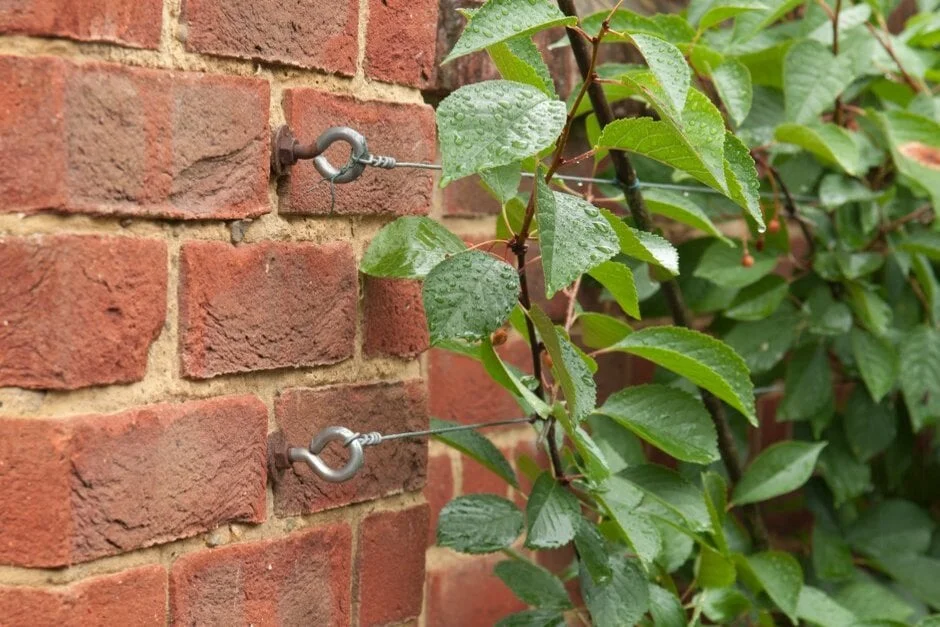
No soil preparation is generally needed before planting. However, if your soil is poor or you are planting near a wall, dig a bucketful of organic matter, such as garden compost or well-rotted manure, into the soil you remove from your planting hole and use this to backfill after planting. This minimises soil disturbance and helps your tree get off to a strong start. See our guides below for more information on tree planting and staking.
Planting in a container
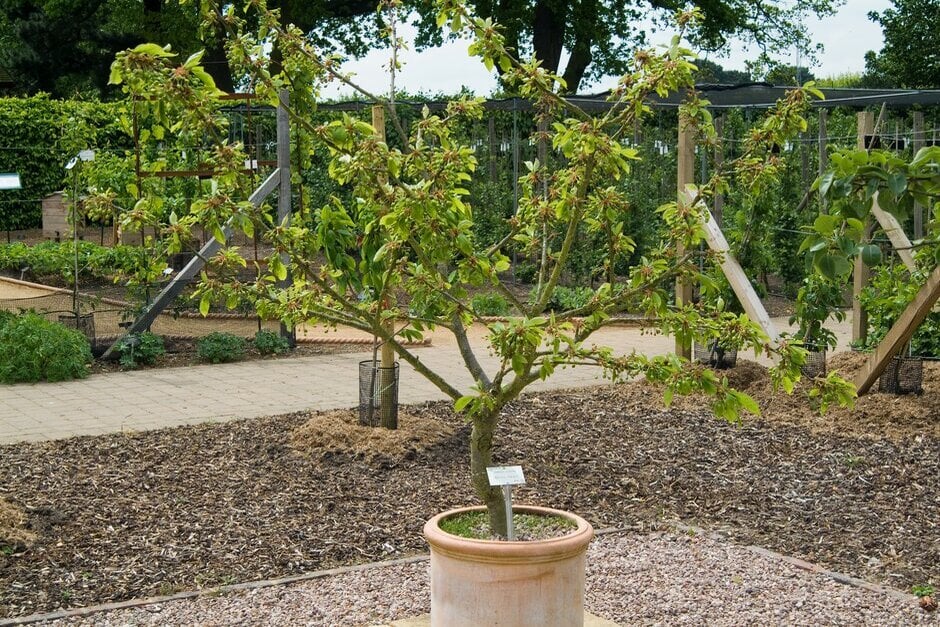
Cherry trees crop best in the ground, but if you don’t have suitable soil or an available site, you can plant in a large container. Choose a tree on a semi-dwarfing rootstock (‘Gisela 5’ ) – acid cherries are naturally less vigorous, so are better suited to growing in pots. The container should be at least 45–50cm (18–20in) wide and deep – terracotta pots or half-barrels are suitable options. Use a good quality loam-based such as peat-free John Innes No 3, or a peat-free multi-purpose compost mixed with some horticultural grit.
Plant Care
Newly planted cherry trees and those growing in containers need some regular attention to ensure they establish well and produce a good crop. Once established, trees in the ground need little ongoing maintenance other than pruning.
Watering
Established cherry trees in open ground shouldn’t need watering. Young cherry trees and trees grown in pots will need some additional watering throughout the . Those trained against a wall may need some additional water.
- Newly planted cherry trees should be watered during dry spells for at least the first year
- Trees in containers need a steady supply of moisture throughout the growing season, so water regularly in dry spells, aiming to keep the evenly moist. But never leave them standing in water, especially in winter, as roots in saturated compost can rot
- Fan-trained cherry trees may require some additional watering if they’re in a rain-shadow – where the wall or fence reduces the amount of rainfall they receive
Be careful not to overwater in summer though – too much watering or very wet weather can cause ripe fruits to split.
Mulching
Apply a of well-rotted organic matter, such as garden , around cherry trees in late winter or spring. Mulching will improve your soil, help to retain moisture and suppress weeds.
Feeding
Cherry trees growing in regularly mulched soil shouldn't need any additional feeding. However, if harvests are particularly poor, or your tree is showing signs of nutrient deficiency, apply a granular fertiliser to the soil in early spring. Use our page on nutrient deficiencies to work out what is lacking and apply the recommended feed, following instructions on the packet.
Cherries growing in containers benefit from regular feeding. Either apply an organic, high potassium liquid fertiliser every fortnight during the (April to August), or sprinkle a granular, general-purpose fertiliser onto the each spring.
Protecting blossom and fruit
Cherry blossom is susceptible to frost damage, which can reduce the crop. So if your tree is small enough, cover plants with /reused or an old bedsheet to protect the blossom overnight if frost is forecast, then remove during the day so pollinating insects can reach the flowers. Potted trees can also be moved into a greenhouse, porch or other sheltered location to avoid frosts when in blossom.
Birds love to eat cherries, so before the fruit starts to colour up, it’s worth protecting some or all of the crop if your tree is small enough.
- Netting will help to deter birds – either cover the whole tree or individual branches with plastic-free or reused netting. Raise the netting above the fruits using bamboo canes or wood, such as hazel or chestnut poles. Ensure the netting is taut and fastened securely so birds and other wildlife don’t get entangled in it.
- Trees trained against a wall are much easier to protect with netting than free-standing trees
- A fruit cage is a great option to protect small cherry trees
- Trees in containers could be moved temporarily into a greenhouse, conservatory or other protected location while in fruit
Propagating
Cherry trees are generally propagated by or budding, which are both quite skilled techniques but worth a try.
Growing cherry trees from seed or is not usually worthwhile, as the resulting trees will grow into much larger trees than those grafted onto a rootstock (which limits their size) and will be slower to start fruiting. There are also risks associated with growing from the seed of supermarket-bought fruit, so this should be avoided.
Pruning And Training
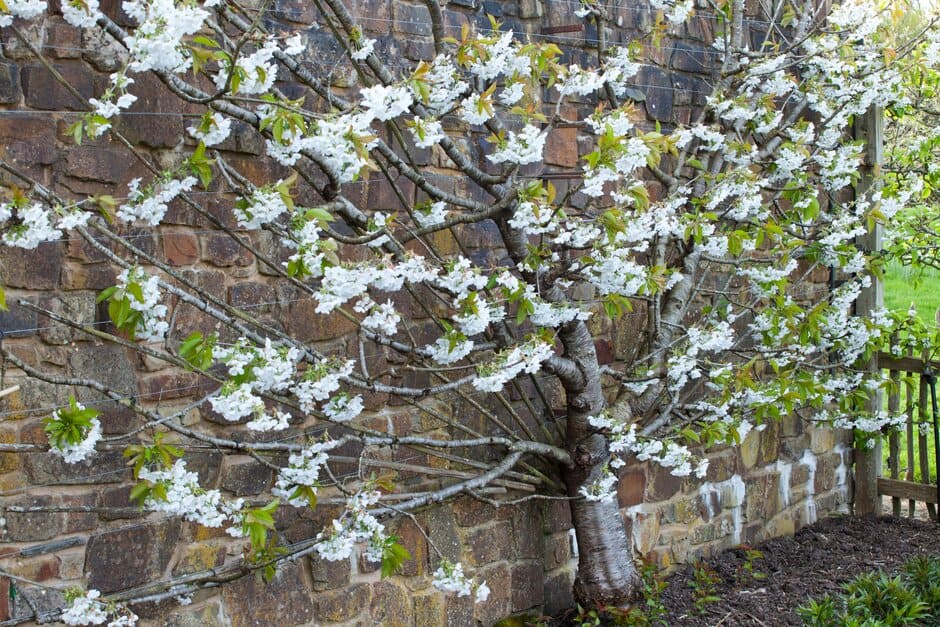
Cherries are usually grown as small open-centred trees (known as bush trees), larger pyramid trees, or as fans trained flat against a wall or fence. All need regular pruning to keep them in good shape and fruiting well. Cherries are too vigorous to be trained as espaliers or cordons. If you’re new to pruning or need a refresher, check out our beginner’s guide to pruning.
Pruning should be carried out annually, as soon as harvesting is finished – usually in late July or August, when the risk of silver leaf disease and bacterial canker is lower. Some formative pruning of young trees can be done in early spring. Prune on a dry day, when dry weather is forecast for at least the next two days.
Annual pruning keeps cherry trees more compact, so they take up less space and the fruit is easier to pick and to protect from birds. Pruning also ensures there is a good balance of older fruiting wood and younger replacement branches. Acid cherries, for example, bear almost all their fruit on the previous year’s shoots, so if left unpruned the crop would be produced at the ends of overlong branches.
Cherries should be pruned in the same way as plums – see our guides below for details.
Harvesting
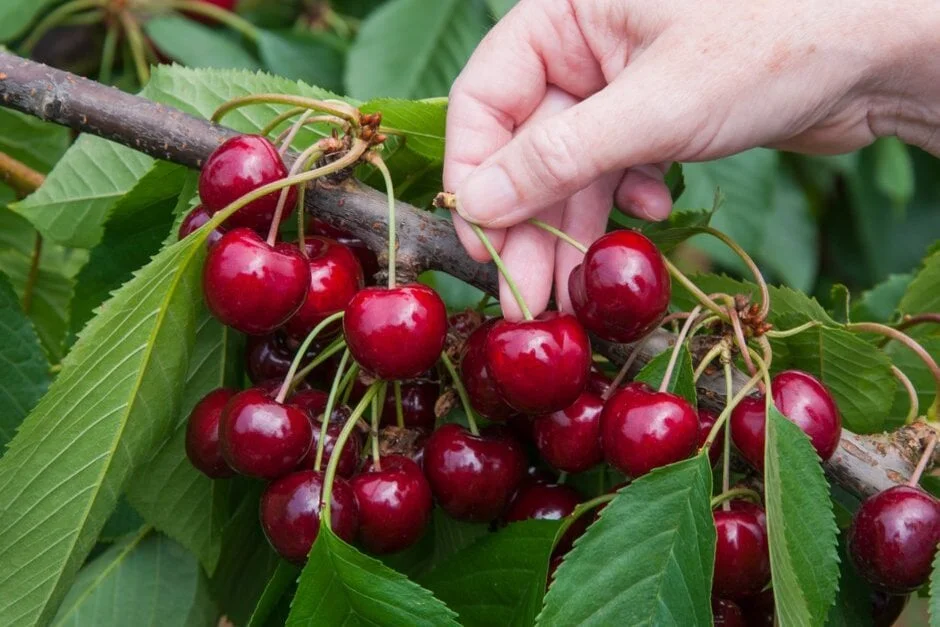
Cherries ripen from early summer onwards, depending on the variety. Pick during dry weather if possible, and hold the stalk rather than the fruit, which bruises easily.
Problem Solving
Cherry trees are usually vigorous and productive. However, poor growing conditions or certain diseases can sometimes cause problems. These include:
- Immature fruits being shed in early summer – this can be due to poor pollination, lack of water when fruits are developing, or other adverse weather conditions. Correct pruning and of young fruit can reduce the problem – for more information see our guide to cherry fruit drop
- Split fruit – too much rain or overwatering just as the fruit is ripening can cause the skin to split. Harvest before any heavy rain if possible
- Die-back of branches and discoloured leaves – this can be caused by the fungal disease silver leaf (see below). To avoid infection, prune in summer after harvesting
- Dead patches of and small holes in leaves – these can be signs of bacterial canker (see below), which may eventually result in branches or whole trees dying
Birds love cherries and can quickly devour the crop unless the tree is covered with netting before the fruits start to colour up. See the Protecting blossom and fruit section, above.
Common Problems

Cherry fruit drop
In some seasons, sweet cherries loose much of their fruit before it ripens. This loss is called cherry fruit drop or run off and, in severe cases, it...

Bacterial canker
Bacterial canker is a disease of the stems and leaves of Prunus, especially plums and cherries, but also apricots, peaches and ornamental Prunus speci...

Blossom wilt
Blossom wilt is a fungal disease of apples, pears, plums, cherries and related ornamental trees. It kills blossoms, spurs and small branches. The prob...