Getting Started
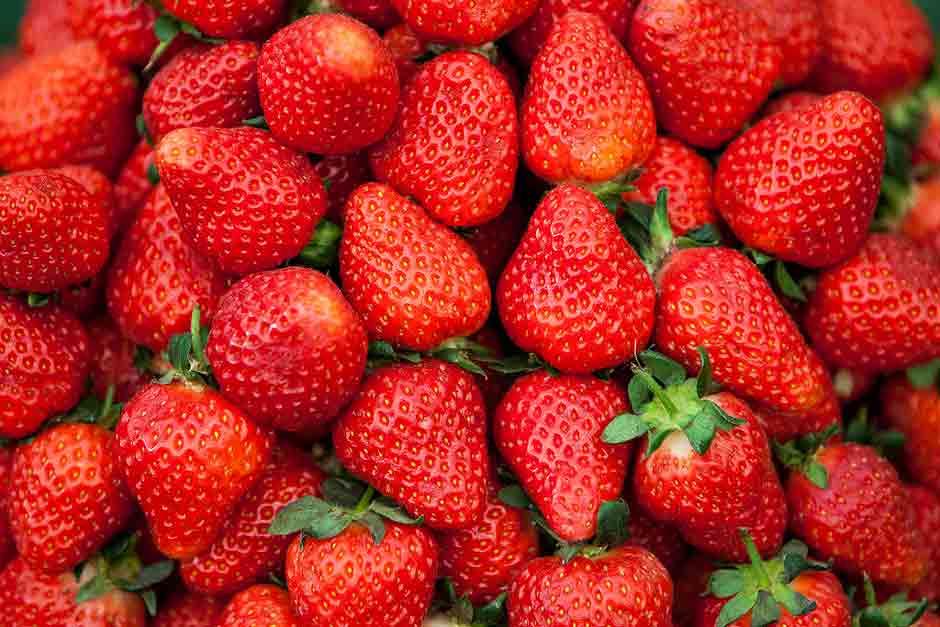
Sweet, juicy and delicious, strawberries (Fragaria × ananassa) are easy and rewarding to grow. Make your own strawberry patch if you have room, or just add a few plants to the front of a border. Alternatively, they grow well in containers and even hanging baskets.
There are summer-fruiting, perpetual and alpine (Fragaria vesca) types to choose from, with many delicious varieties of each. If you plant several different types, you can have home-grown harvests from early summer through to autumn. Many strawberries even produce new plantlets (runners), so you can easily increase your plants every year or use them to replace older plants that are past their best.
Jobs to do now
Plant
Harvest ripe fruit
Month by Month
Plant
Harvest


Choosing What To Grow
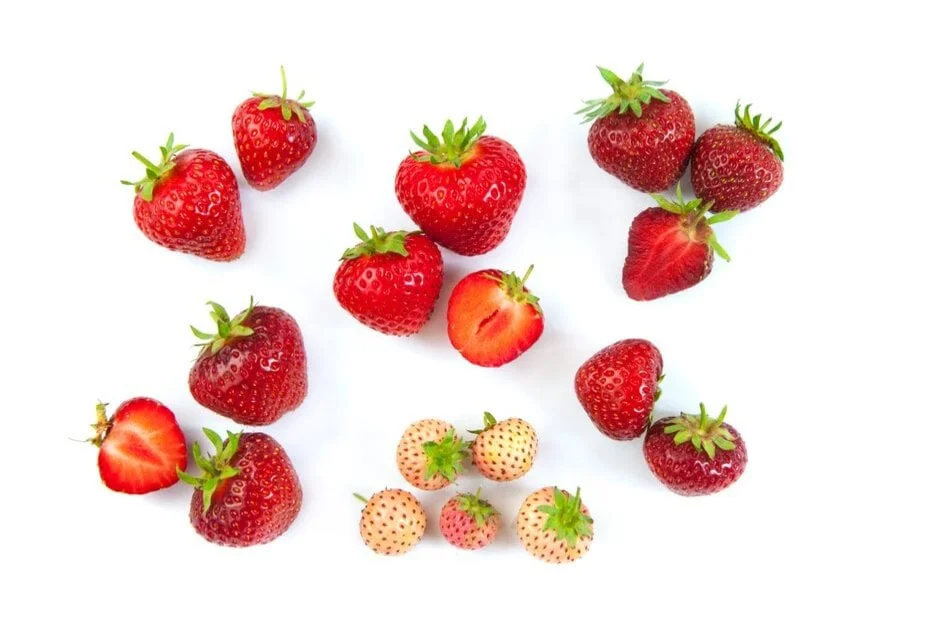
There are three main types of strawberries, each with different characteristics:
Summer-fruiting strawberries – these are the most popular type and produce the largest fruit. They have a short but heavy cropping period of two or three weeks. There are early-, mid- and late-fruiting varieties, cropping from early June to early August. If covered with cloches or grown in a greenhouse from late winter, they will provide even earlier harvests.
Perpetual strawberries (everbearers) – these produce small flushes of fruit over a long period, from early summer until early autumn, and in some cases up to the first autumn frosts. The crops are not as large as summer-fruiting varieties, the fruits are smaller and plants are less likely to produce runners.
Alpine strawberries – also known as wild or woodland strawberries, these dainty plants produce small crops of tiny, aromatic berries intermittently over the summer. These are usually red but a few varieties have white or yellow berries. Planted in sun or light shade, they can be left to fend for themselves. Some produce runners (plantlets on long stems), spreading to form low ground cover, others don’t produce runners so make well-behaved edging plants for veg beds and borders.
There are many different varieties of all three types, with variations in flavour, sweetness, fruit size and colour, disease-resistance, harvest time and even flower colour. Look in particular for varieties with an RHS Recommended: Award of Garden Merit (AGM), which shows they performed well in trials – see our list of AGM fruit and veg (135kB pdf) and our Recommended Varieties below.
What and where to buy
Summer-fruiting and perpetual strawberries can be bought as potted plants or plantlets known as runners, while alpine strawberries can also be grown from seed.
- Young plants in pots or packs of are normally on sale from late spring onwards
- Runners look like little clumps of roots with very few leaves. Don’t be alarmed, this is how they should look. You can buy runners in late summer/early autumn or early spring
- Cold-stored runners are available from spring to early summer – these specially prepared runners can fruit about two months after planting
- Alpine strawberries can be bought as young plants or grown from seed sown indoors in spring or autumn
Always buy strawberry plants from a reputable supplier, so that the variety is true to type and plants are disease free. They are readily available in garden centres and from online suppliers.
Recommended Varieties


Preparing The Ground
Before planting, weed the site thoroughly, then improve the soil by digging in two bucketfuls of well-rotted organic matter, such as garden compost, per square metre/yard. Ideally do this a few weeks before planting, to allow the soil to settle. Alternatively, if you're practising no-dig, the surface of the soil ahead of planting directly into the mulch.
Many gardeners grow strawberries through weed-suppressing membrane (ideally or reused), put in place before planting. This prevents weed growth, holds water in the soil and stops soil splashing onto the fruit. Simply lay it over your planting area, pinning it in place with U-shaped pieces of wire, then cut holes in it to plant into the soil underneath.
Sowing
While summer-fruiting and perpetual strawberries are grown from runners or young plants, alpine strawberries can also be grown from seed indoors, although can be slow and patchy. Sow in spring or autumn, into trays of peat-free . Scatter the seeds thinly and lightly cover with . Seeds will germinate at about 18°C (64°F). Once germinated, prick out the and pot into small individiual pots. Plant in their final position when they have a good root system. They will often start fruiting in their first year.
Planting
Strawberries are traditionally grown in rows in a dedicated bed or strawberry patch. They also work well as an edging plant for veg beds or flower borders. Another good option is to grow them in containers, including large pots, growing bags, hanging baskets and window boxes. This avoids the problem of soil diseases building up in strawberry beds, and the fruits are less likely to be damaged by slugs or snails. However, vine weevils can be a problem.
Ideally, plant strawberries in spring, late summer or early autumn. Planting in August or September gives them time to get established before fruiting the following year. Cold-stored runners are available to buy from spring to early summer and should be planted immediately.
Strawberries like fertile, well-drained, slightly acidic soil. In poor or , it’s preferable to plant them in raised beds, which provide better drainage and increased rooting depth. They grow best and produce the sweetest fruits in a sheltered position in full sun but will tolerate some shade. Avoid planting strawberries in sites prone to late frosts, which can damage the flowers and cause strawberry black eye.
Planting in the ground
Dig a hole large enough to accommodate the roots and water well to soak the soil. When planting strawberries, trim the roots to 10cm (4in) if necessary, then spread them out in the hole. Replace the soil, ensuring that the base of the crown rests lightly on the surface, before firming in gently with your fingers. Planting at the correct depth is important – if the crown is planted too deeply it will rot, if it’s planted too shallowly the plant will dry out quickly. Space plants 35–40cm (14–16in) apart, in rows about 75cm (30in) apart. Water well to settle the soil around the roots.
Planting in containers
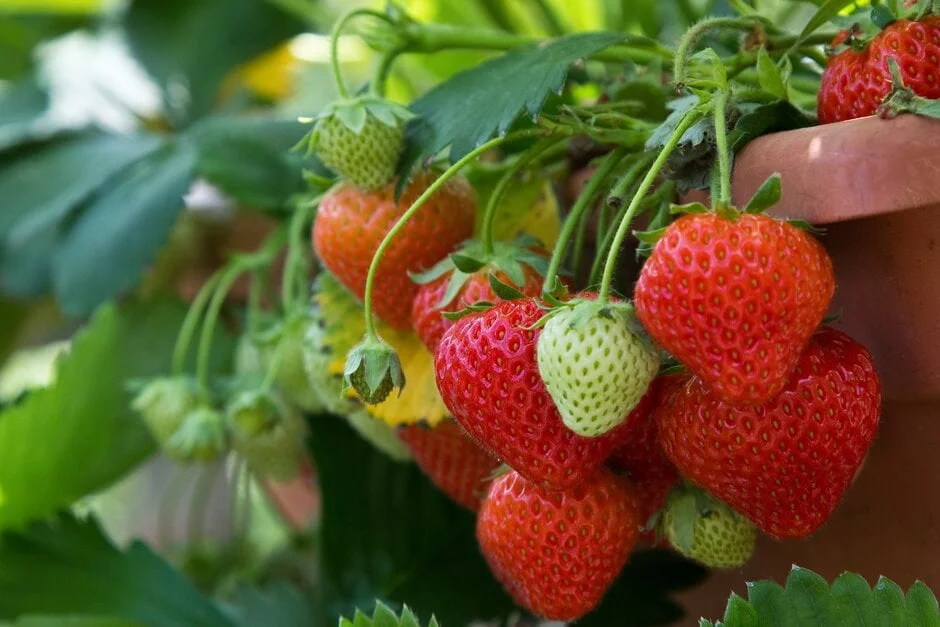
Strawberries are easy to grow in pots, growing bags, hanging baskets, troughs and tubs. Although traditional strawberry pots (with planting holes around the sides) look attractive, they can make it difficult to maintain healthy, productive plants. Simply fill a large container with peat-free multi-purpose or , and plant with the crown just level with the surface. Space plants about 20cm (8in) apart. Position the container in a sheltered, sunny spot and water regularly. See the video in the section below for a guide to planting strawberries in containers.
Growing in a greenhouse or under cloches
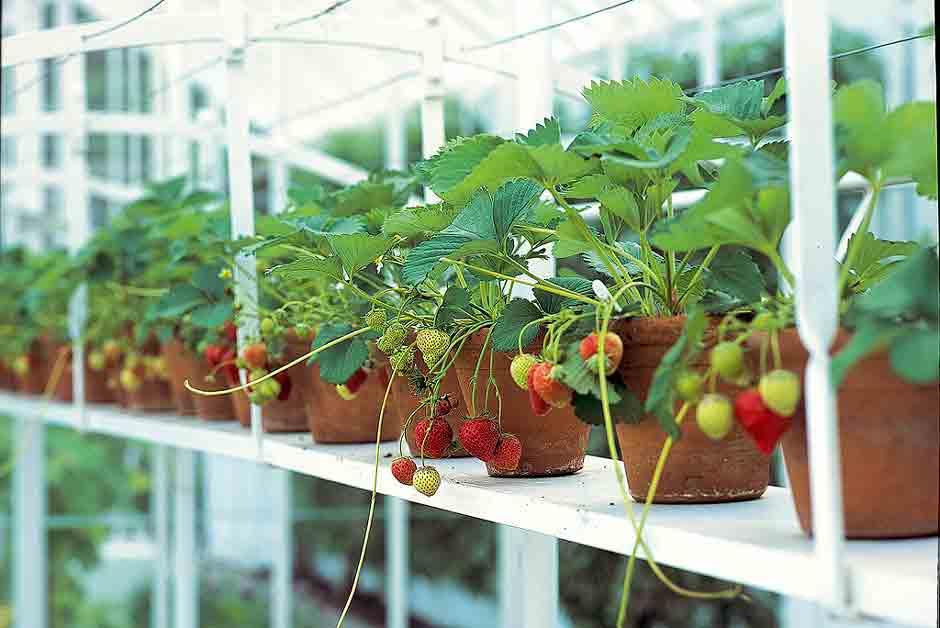
Strawberries can be grown in a greenhouse, coldframe or under cloches to produce an earlier harvest. Suitable varieties include ‘Cambridge Favourite’, ‘Honeoye’, ‘Rosie’, ‘Royal Sovereign' and ‘Tamella’. Simply move potted strawberry plants into an unheated greenhouse or coldframe in February, or cover rows outdoors with cloches or a plastic-free or reused crop cover. Water to keep the soil/ slightly moist. Hand-pollinate the flowers with a soft paintbrush or remove the covers during the day while in flower to allow insects to pollinate them.
Cloches should give you fruits at least a week ahead of unprotected plants, and an unheated greenhouse about two weeks ahead, so you could be enjoying ripe strawberries in late spring. See the video below for more information.
Replanting
A bed of strawberries usually stays healthy and crops well for up to four years if planted into well-drained, fertile soil. To avoid disease build-up and ensure a good crop, replant every three or four years. Make a new strawberry bed in a different location to avoid issues caused by replant disorder.
Plant Care
Strawberry plants need regular attention to ensure you get the best possible crop. Keep them free of weeds, water in prolonged dry spells and protect the ripening fruit.
Watering
Water new plants regularly while they are establishing, and water all strawberry plants during prolonged dry periods in the . Plants in containers, especially hanging baskets, need regular watering, as the can dry out quickly.
When watering strawberries, try to avoid wetting the crown (centre) of the plant or the fruit, as this can lead to fungal problems, especially grey mould. It’s best to water in the mornings rather than the evenings, so if the plants or fruit do get splashed, they have plenty of time to dry out.
Feeding
Strawberry plants growing in decent, regularly mulched soil are unlikely to need any additional feeding. However, if harvests are poor, apply an organic high-potassium granular fertiliser in spring. If your plants are showing signs of nutrient deficiency, use our page on nutrient deficiencies to work out what is lacking and apply the recommended feed, following instructions on the packet.
Feed plants in containers or growing bags fortnightly during the . Start with with an organic general purpose liquid feed, then switch to an organic high-potassium liquid feed when the first flower buds form.
Mulching
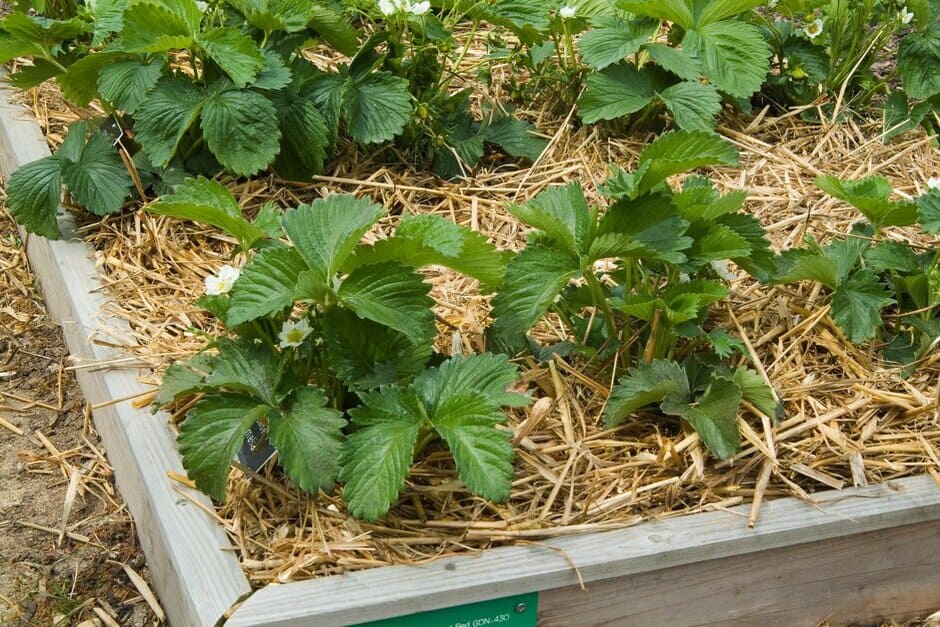
Mulching your strawberry bed in late winter or early spring with a layer of well-rotted organic matter, such as garden compost, will improve your soil, help to retain moisture and suppress weeds. can cause rotting if it’s placed over the crown, so leave a slight gap around the base of your plants.
Strawberry beds can also be mulched with dry organic matter, such as straw, when they start to develop fruits. This will keep the fruit off damp ground, so they stay clean and dry and are less likely to rot. Wheat straw is fine, although barley straw is softer. Remove the layer of straw in autumn, as it can become an ideal environment for fungal diseases, slugs and snails when damp. Alternatively, place mulch mats or re-usable strawberry collars around individual plants.
Removing flowers
Depending on the type of strawberry and planting time, removing the first flush of flowers can aid establishment and enhance long-term cropping.
Summer-fruiting strawberries planted in autumn or spring – the first flush of flowers should only be removed if growth has been slow and plants look weak.
Perpetual strawberries planted in spring – these will establish better if the first flush of flowers are removed. Those planted in late-summer or autumn should be sufficiently established, but if plant growth has been poor, remove the first flowers.
Cold-stored runners planted in spring to early summer – leave the flowers on. If given good growing conditions, these will produce strawberries about 60 days after planting, reverting to their natural cropping period the following year.
Protecting flowers and fruit
Frost – strawberry plants are hardy, but if frost is forecast while they’re in flower or have early fruits, cover the plants overnight with fleece, hessian or an old bedsheet.
Damp soil – unless your plants are growing through biodegradable membrane, protect developing berries from wet soil and potential rot by placing biodegradable plant mats or straw beneath the fruits as they begin to form (see Mulching above).
Birds and squirrels – to prevent birds from eating your fruit, build a framework over the plants using bamboo canes or wood, and cover it with plastic-free or reused netting before the berries ripen. Ensure the netting is taut and fastened securely so birds and other wildlife don’t get entangled in it. You can also use chicken wire, which will deter squirrels. Remove the protection after harvesting to allow birds to feed on any pests. Alternatively, grow your plants inside a fruit cage.
Propagating
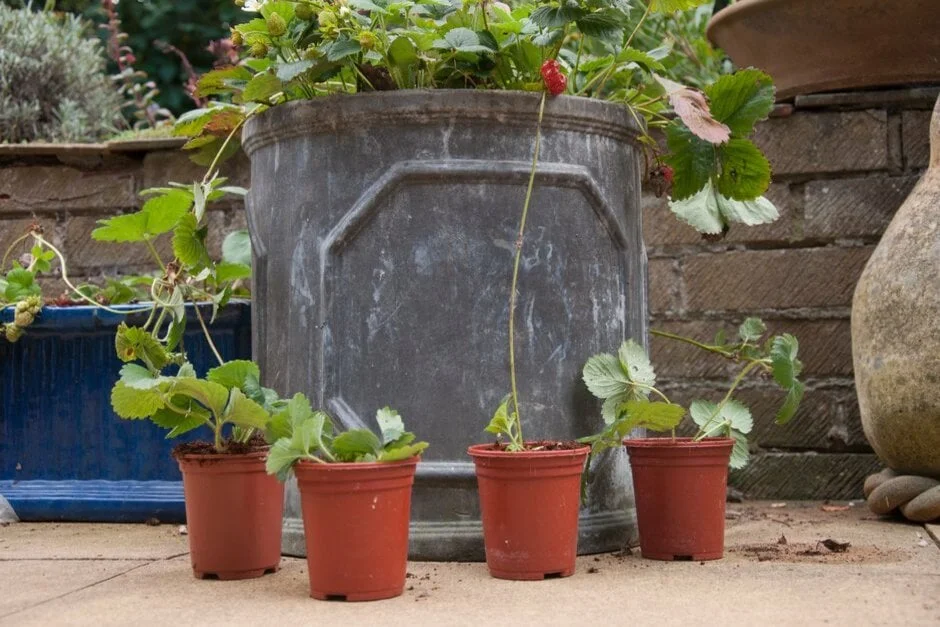
Strawberries can be propagated from runners (plantlets produced on long stems). Late summer is an ideal time to do this.
- Place 9cm (3½in) pots, filled with peat-free multi-purpose , beside your strawberry plants and insert individual runners into them
- Peg them down with U-shaped pieces of wire, about 15cm (6in) long
- Aim to keep the compost slightly moist to promote root growth
- Sever the new young plants from the parent plant when rooted
Perpetual strawberries produce fewer runners than summer-fruiting strawberries, so new plants often have to be bought in. If alpine strawberries are left unharvested, they may self-seed.
Harvesting
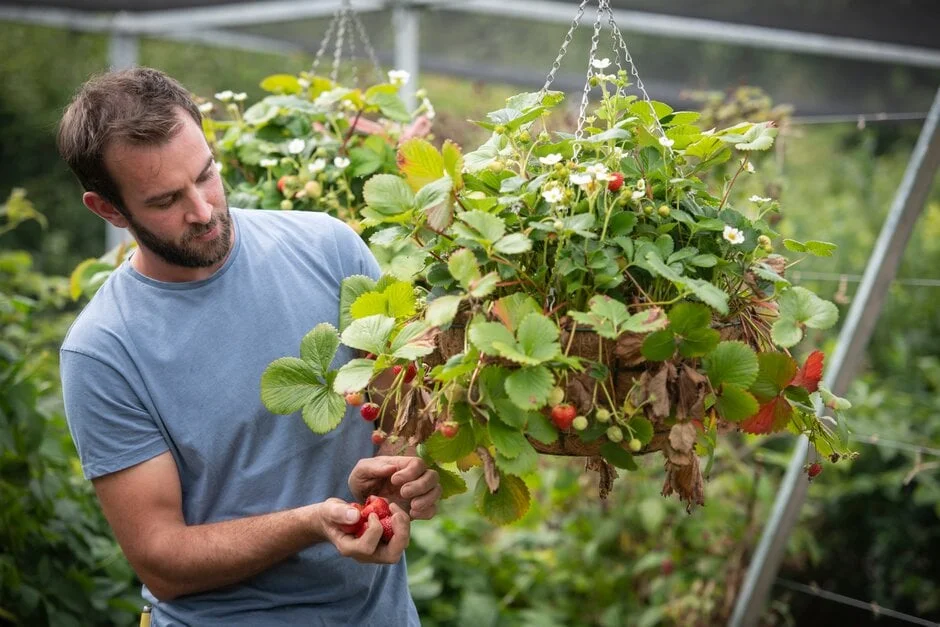
Strawberries ripen outdoors from early summer into autumn, depending on the variety. Pick them when they’re bright red all over, ideally during the warmest part of the day, as this is when they’re at their most tasty. Eat them as soon as possible – they'll taste better and they don’t keep long once ripe. You can freeze them but they don’t usually hold their shape when defrosted, although they’re still great in smoothies and desserts.
After harvesting
- Plant spare runners into any gaps in the row or use them to replace old plants. Remove any unwanted runners to prevent overcrowding
- Some gardeners prefer a continuous row in the second and third year, rather than spaced plants. The overall crop may be higher, but the quality of fruits may not be as good. Whichever method you use, keep a clear gap between the rows to give you access for weeding and harvesting
- With summer-fruiting strawberries, once cropping has finished, cut off the old leaves about 10cm (4in) above the crown to allow fresh leaves to develop. This isn’t necessary with perpetual strawberries – instead just remove any dead, damaged or diseased leaves during the end-of-season clear-up
Problem Solving
Strawberries can be affected by various problems. To ensure you get a good crop, protect the flowers from late frosts and protect ripening fruits from birds and squirrels. Vine weevil larvae are particularly fond of strawberry plants and pose a greater threat to those grown in containers, but they can be kept in check with biological controls. Several viruses, insects and diseases can also affect strawberries – see Common problems below.
Common Problems


Strawberry black eye
Black eye is the most recognisable form of frost damage on strawberries. Affected flowers will not set fruit.

Grey mould
Grey mould, caused by the fungus Botrytis cinerea, is a very common disease, causing a soft decay of plant tissues accompanied by a growth of fuzzy gr...