Getting Started
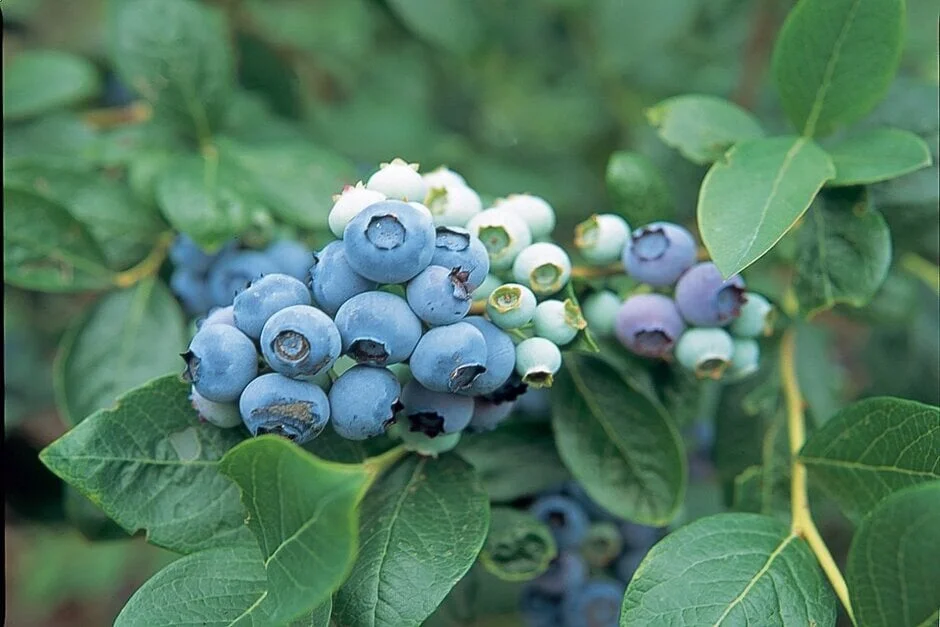
Blueberries (Vaccinium) are small to medium-sized shrubs that make a decorative and productive addition to any garden. They produce small white bell-like flowers in spring that are great for pollinators. Flowers are followed by small round blue berries in summer and sometimes into early autumn. Most varieties grown for fruit are , with leaves turning attractive shades of orange, red and purple before dropping in autumn.
The main thing to remember is that blueberries need , ideally with a level between 4.5 and 5.5. If you can grow azaleas, rhododendrons and camellias in your garden, blueberries should be successful too. Test your soil pH if you’re unsure – easy-to-use kits are widely available in garden centres and online. If your soil is unsuitable, simply grow blueberries in large pots of peat-free (acidic) . See our guide to soil pH below.
Blueberry bushes fruit well in a sunny position with moist soil, but they will produce a reasonable crop in partial shade. Birds love the berries too, so once they start to ripen, cover plants with plastic-free or reused netting, or grow them in a fruit cage.
Jobs to do now
Harvest
Water if needed
Feed plants in pots
Month by Month
Plant
Harvest

Choosing What To Grow
There are many blueberry varieties to choose from, fruiting at slightly different times between mid-summer and early autumn, or producing plants that grow to different sizes, from about 50cm (20in) up to 2m (6½ft). Less vigorous, compact varieties, such as ‘Bluetta’ and ‘Sunshine Blue’ are best for containers and small gardens. There are even varieties that produce pink berries, such as 'Pink Lemonade'. Also look for varieties with an RHS Award of Garden Merit (AGM), which shows they performed well in trials – see our list of AGM fruit and veg (135kB pdf) and our Recommended Varieties below.
Most blueberries are partially self-fertile, so you only need one plant to produce a crop. However, cross- plants produce larger harvests, so if you have room, plant two or preferably three different varieties.
What and where to buy
Blueberries are widely available in garden centres, fruit nurseries and from online stockists. They are sold as young plants in containers of various sizes, available all year round.
Recommended Varieties

‘Ozarkblue’
A late-season blueberry. Produces good yields of large berries with excellent flavour.

'Spartan' AGM
Height and spread of about 1.5m (5ft). Produces an early to mid-season crop of large, sweet blueberries.

'Duke' AGM
Flowers late but crops early, so suitable for colder/northern areas. Good crop of medium to large berries.
Preparing The Ground
Blueberries must be grown in acid ( ) soil or ericaceous potting , ideally with a of 4.5–5.5. Test your soil’s pH to make sure it’s suitable. Kits to test soil pH are available online and in garden centres, or you can pay for a soil analysis service through the RHS.
If you have , no soil preparation is generally needed before planting. However, if your soil is poor, dig a bucketful of low pH organic matter, such as pine needles, leafmould, composted conifer or bracken, into the soil you remove from your planting hole and use this to backfill after planting. This minimises soil disturbance and helps your plant get off to a strong start. Avoid using well-rotted farmyard manure or mushroom compost, as these can raise the pH of the soil.
If you have heavy clay, alkaline or only slightly acidic soil, grow blueberries in large containers or raised beds filled with ericaceous soil or peat-free ericaceous potting compost. See Planting in a container, below.
Planting
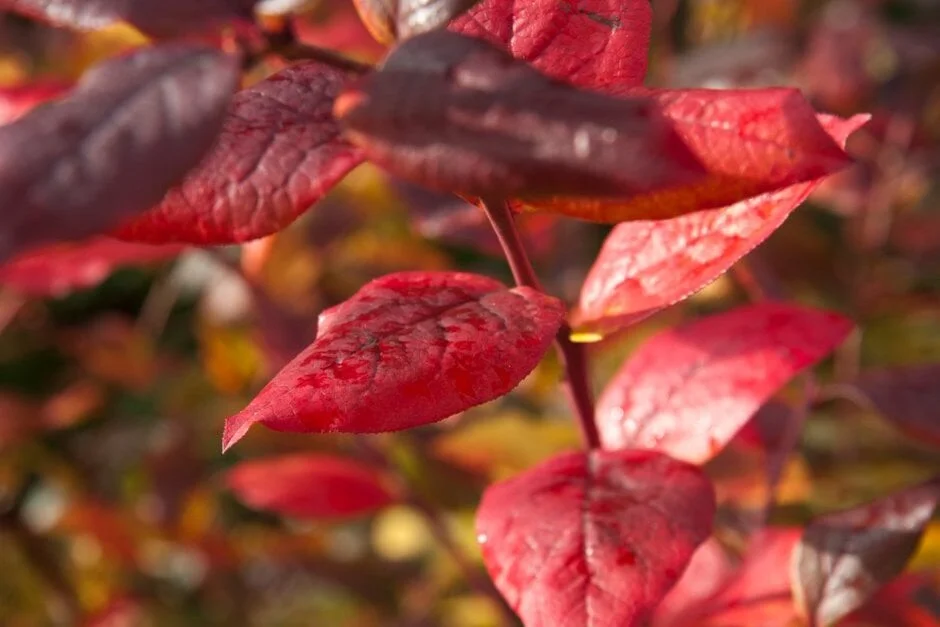
Blueberries can be planted in the ground (in ) and in containers of peat-free . They will settle in best if planted while dormant, between mid-autumn and early spring, although they can be planted at any time of year, except in hot, dry weather or into frozen ground. Choose a sheltered planting site in sun or light shade, with moisture-retentive soil that doesn’t dry out in summer or get in winter. A sunny spot should give you a better crop and good autumn leaf colour.
Planting in the ground
Blueberries are simple to plant – see our step-by-step guide to shrub planting below. Plant blueberries so the soil is only just covering the roots, and space them 1-2m (3¼–6½ft) apart, depending on the variety’s ultimate size. After planting, apply a thick layer of , such as pine (composted or chipped) or leafmould, leaving a gap around the base of the stem.
Planting in a container
Compact varieties, such as ‘Bluetta’ or ‘Sunshine Blue’, are ideal for growing in pots. Use a soil-based, peat-free . The container should be at least 30cm (12in) in diameter for a young plant, and 45–50cm (18–20in) for a larger plant. Planting is easy – see our video guide below.
Plant Care
Watering
Blueberries should be watered well straight after planting and during any dry spells in their first year. Once established in soil with good organic matter content, they are only likely to require additional watering during prolonged dry spells, especially when the fruits are forming.
Plants in containers need regular watering to keep the slightly moist. Plants in raised beds will need watering during dry spells. Use rainwater from a butt, rather than tap water, unless you have no alternative in a drought. Tap water is usually alkaline, especially in hard water areas, so if used regularly it will increase the of the compost.
Feeding
Plants in the ground
Blueberries growing in regularly mulched soil shouldn't need any additional feeding. However, if harvests are particularly poor, or your plant is showing signs of nutrient deficiency, apply an granular fertiliser in early spring. Take care not to overfeed, as blueberries dislike excess fertiliser.
Plants in containers
Feed once every two or three weeks through the (April to August) with a liquid fertiliser specifically for ericaceous plants.
Mulching
blueberry plants in late winter or early spring with a 5–7.5cm (2–3in) layer of low organic matter, such as composted or chipped pine , composted bracken, composted pine needles or leafmould. This helps to keep the soil acidic. Avoid manure and mushroom , as they tend to be quite alkaline. Mulching will improve your soil, help to retain moisture and suppress weeds.
Winter protection
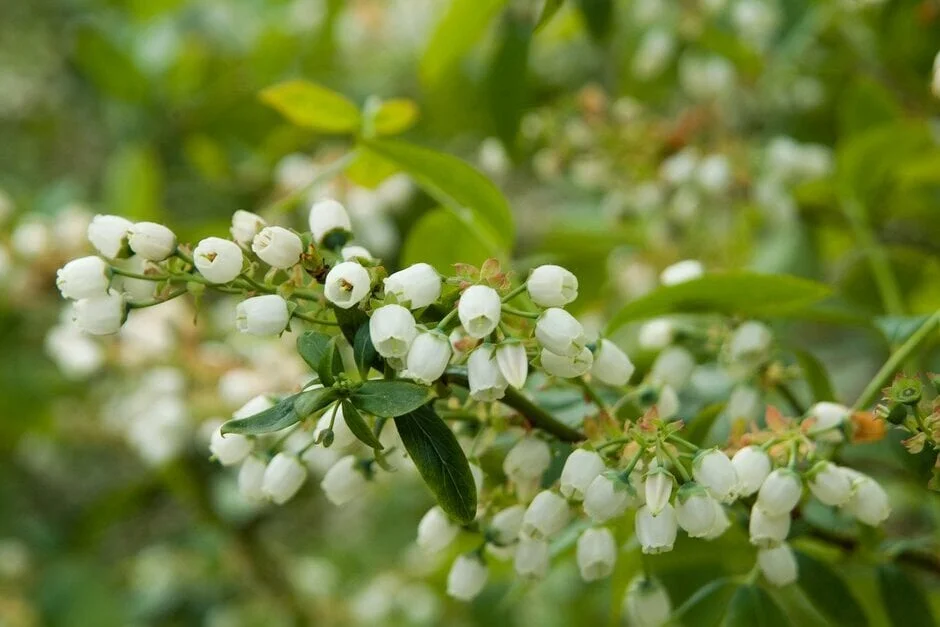
If a late frost is forecast while blueberries are in flower, move potted plants undercover overnight, or cover plants with /reused or an old bedsheet, removing it during the day to allow insects to pollinate the flowers.
Blueberries are considered hardy in the UK, but plants in containers may suffer during particularly cold or wet winters. If heavy and frequent rainfall causes the to become saturated, move your plant to a more sheltered position – such as up against a house wall under the eaves. During prolonged periods of freezing temperatures, protect the roots by grouping pots together or wrapping them in hessian, recycled bubblewrap or other insulating materials. Alternatively, move the pot into an unheated greenhouse, shed or garage until the cold snap has passed.
Protecting crops
Birds will happily eat blueberries. If they are taking too many, protect your crop by covering plants with plastic-free or reused netting. Raise the netting above the fruits using bamboo canes or wood, such as hazel or chestnut poles. Ensure the netting is taut and fastened securely so birds and other wildlife don’t get entangled in it. Alternatively, grow your plants inside a fruit cage.
Propagating
New blueberry plants can be grown from soft-wood taken in late spring or early summer, or taken in summer. See our guides below for details.
Pruning And Training
Pruning is rarely needed in the first two years after planting – just remove any crossing or damaged branches if necessary.
After that, prune at any time from November to March, but ideally in late February or early March when the fruit buds can easily be distinguished from leaf buds. Fat buds produce flowers and fruit, while smaller, flatter buds form shoots and leaves – aim to retain branches with lots of fruit buds.
A mature blueberry bush should comprise about one-third old stems, one-third middle-aged stems and one-third young stems. When pruning, remove:
- Dead, diseased, damaged, weak or rubbing stems, plus any that are touching the ground
- Twiggy growth at the ends of the branches that fruited last year, cutting back to a low, strong, upward-facing or branch. This encourages side-branching
- Up to a quarter of the oldest and thickest stems, making your cuts at the base of a mature plant or just above a younger strong shoot low down on the stem. This encourages plants to send up new stems from the base, to keep them productive
- Any new stems produced in the previous summer that have failed to ripen and have died back to leave hollow wood and dead tips. This may occasionally happen in colder parts of northern England and in Scotland. Cut back affected shoots to healthy wood
Harvesting
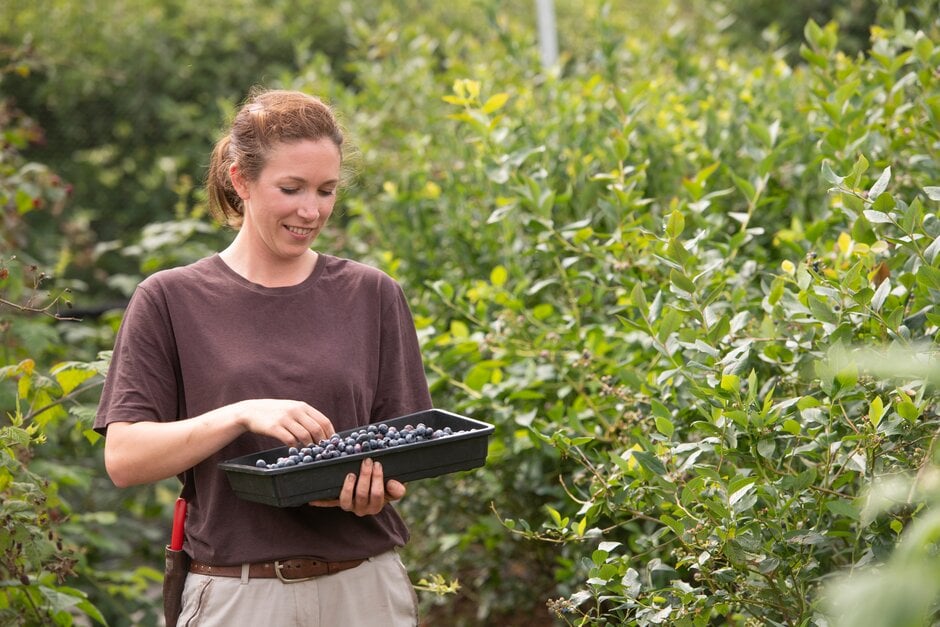
Berries start to ripen from mid-summer onwards, changing from green to dusky blue when ready to pick. They won’t all ripen at the same time, so check plants regularly over several weeks. Pick berries individually by gently pulling them. A fully productive plant, around seven years old, can produce 2.25–5kg (5–11lb) of blueberries.
Problem Solving
Blueberries are generally healthy and trouble-free, as long as they’re grown in suitably acidic soil or peat-free potting , and kept sufficiently watered throughout the . Plants in containers may need protection in very cold spells in winter, and occasionally it may be necessary to protect flowers from late frosts. Protect fruits from birds with netting or a fruit cage.
Blueberry rust is a fungal disease that affects various members of the Ericaceae (heather) family, including blueberries. The disease is a relatively recent arrival in the UK, and RHS Plant Health scientists need your help to monitor and track its spread across the country. See our page on blueberry rust for more information and help with identification. If you have seen blueberry rust, please report it to us via our blueberry rust survey found here.
Common Problems


Nutrient deficiencies
Changes in leaf colour are often a sign that plants aren’t getting the nutrients they need. Pale, yellow or reddish coloured leaves are common, but st...

Phytophthora root rot
After honey fungus, Phytophthora root rot is the most common cause of root and stem base decay of a wide range of trees and shrubs. There are a number...