Alpines for dry stone walls
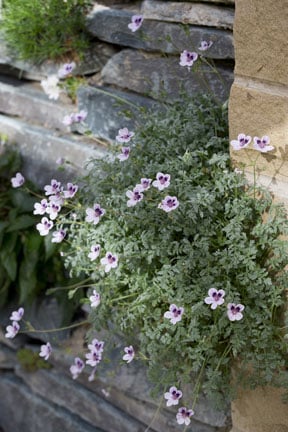
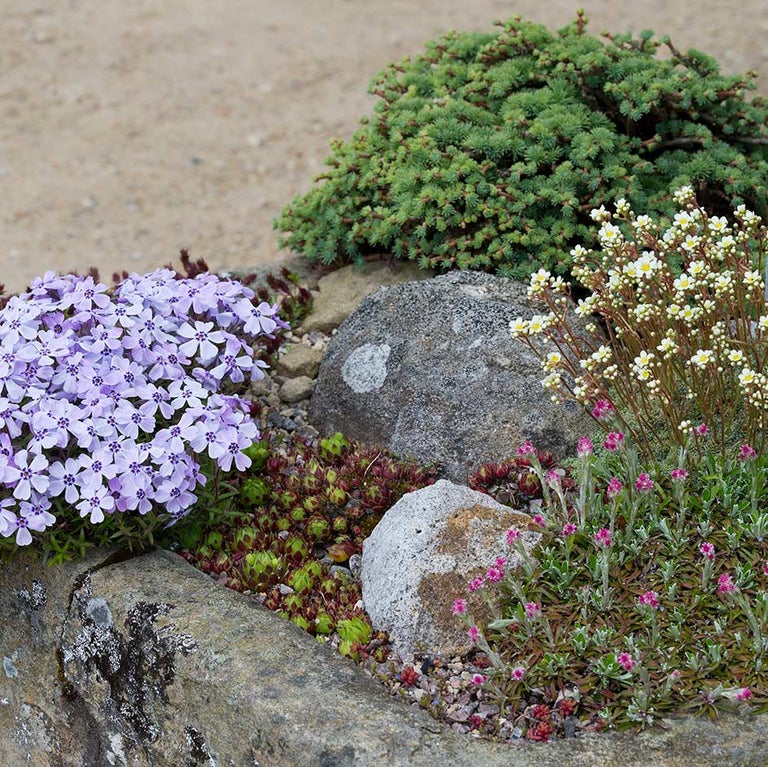
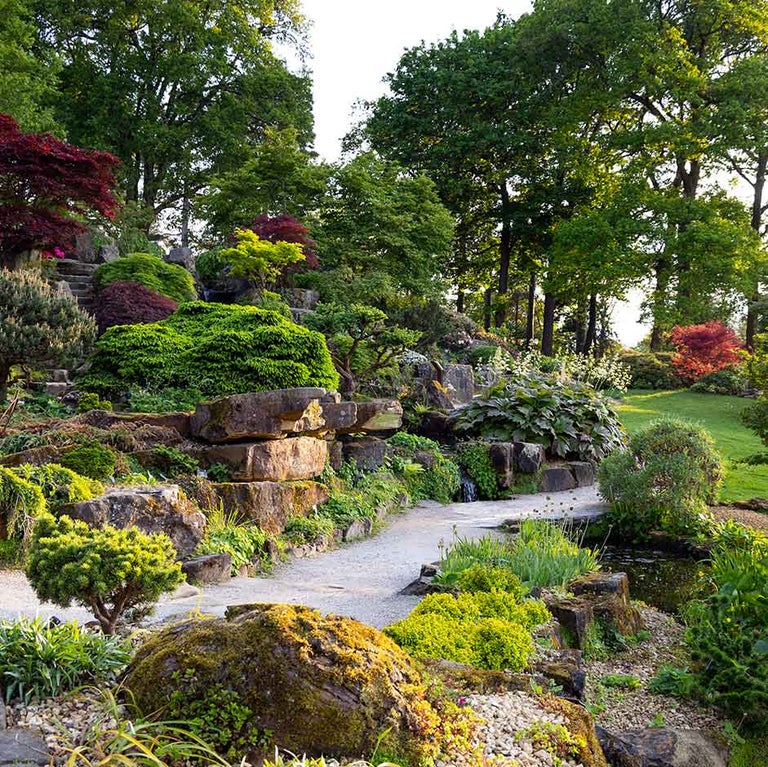
Alpine plants thrive in the well-drained crevices of dry stone walls and along their top where the foliage and flowers can be seen to their best effect.
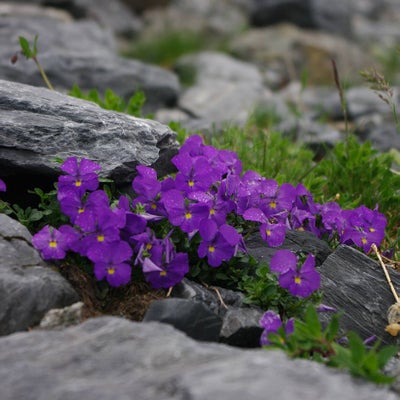
Top five plants for scree gardens:
Saxifraga
Dianthus alpinus AGM
Lewisia cotyledon AGM
Daphne cneorum ‘Eximia’ AGM
Geum montanum AGM

In the garden, a scree bed tries to emulate nature. Screes occur in mountainous areas where rock faces disintegrate due to freeze-thaw action. Rock particles and loose stones travel down the slope and reduce the angle of steepness. Streams bring stones of varying sizes. Melting snow in the summer provides water, and in winter a blanket of snow protects plants from frost and desiccating winds.
To make your scree garden, choose a sunny site that is well lit even in winter, and away from trees and their leaf fall. Then;
Plants with leaves covered with fluff or down need winter protection from drying winds and damp. In their habitat snow protects them. From October to March, suspend a sheet of acrylic or polycarbonate over the plants using corner supports.
Water well in dry spells during the . In well-constructed screes plants are deep-rooting, as in natural screes, but may need extra water.
Lightly top-dress in May with the mixture used in the original construction, with added fertiliser. This will wash down deep into the scree bed, providing nutrition for searching roots.
Cushion plants and those that are mat-forming are ideal for scree gardens. Try to avoid rampant growers, tall plants or those with large foliage.
Androsace sarmentosa
Aubrieta
Draba aizoides
Gentiana verna, Gentiana verna 'Alba'
Geum montanumAGM (through to October)
Lychnis alpina
Petrocallis pyrenaica
Saxifraga (Kabschia Group) e.g.S. burseriana, S. 'Gregor Mendel' AGM
Soldanella alpina,S. montana
Alyssum montanum
Aurinia saxatilis 'Citrina'
Saxifraga oppositifolia, S. oppositifolia subsp. latina, S. retusa
Acantholimon venustum
Androsace lanuginosa AGM
Anthyllis montana ‘Rubra’ AGM
Aquilegia saximontana
Armeria juniperifolia AGM
Asperula gussonei
Aster alpinus AGM
Campanula pulla, C. raineri AGM
Cyananthus lobatusAGM, C. microphyllus AGM
Dianthus alpinus AGM, D. freynii, D. pavonius
Dryas octopetala ‘Minor’ AGM
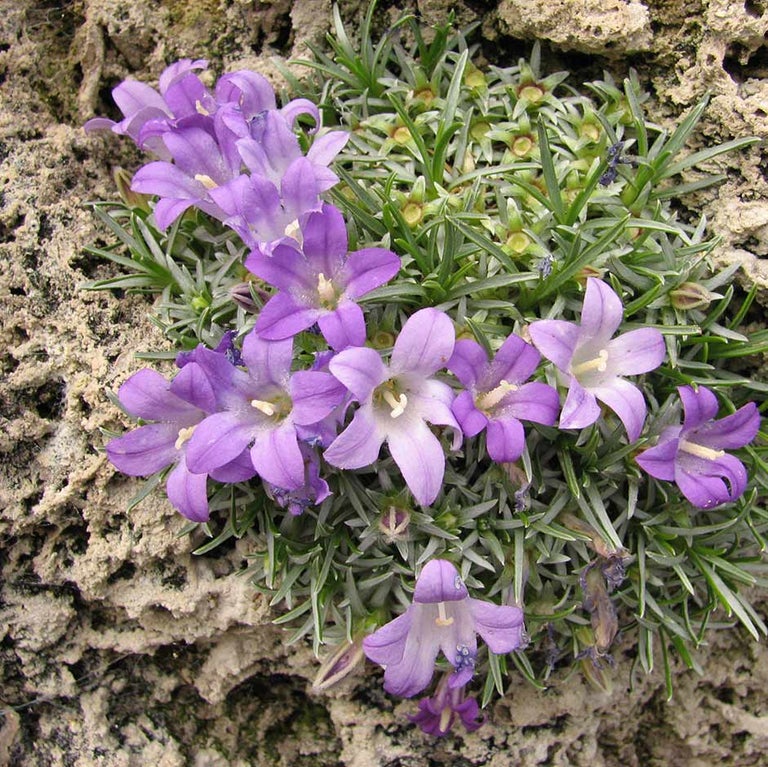
Edraianthus pumilio AGM, E. serpyllifolius
Erinus alpinus AGM
Erodium
Gentiana saxosa
Geranium (Cinereum Group)'Ballerina' AGM, G. subcaulescens ‘Guiseppi’ AGM
Hypericum coris
Lewisia cotyledon AGM,L. oppositifolia, L. rediviva
Linaria alpina
Oxalis enneaphylla AGM
Petrorhagia saxifraga
Potentilla nitida, P. nitida ‘Rubra’
Silene acaulis
Vitaliana primuliflora
Aethionema grandiflorum AGM
Geranium sanguineum, G. sanguineum ‘Album’ AGM
Papaver alpinum, P. triniifolium
Androsace laevigata
Aquilegia saximontana
Campanula
Cyananthus lobatus AGM, C. microphyllus AGM
Gentiana
Linaria
Mertensia
Omphalodes
Primula auricula
Ramonda
Saxifraga
Shrubs
Betula nana
Daphne blagayana
Daphne cneorum ‘Eximia’ AGM
Conifers
Abies balsamea Hudsonia Group
Cedrus deodara ‘Pygmy’
Chamaecyparis obtusa ‘Nana’ AGM
Cryptomeria japonica ‘Nana’
Cryptomeria japonica ‘Vilmoriniana’ AGM
Pinus mugo ‘Mops’ AGM