25 lessons from 2025
Gardening is a lifelong journey of discovery – so what have the past 12 months added to our accumulated wisdom? Drawing on insights from horticulturists, scientists, writers and designers, along with findings from trials and research from the RHS and beyond, we explore the trends and talking points that defined the year
1. Butterfiles bounced back but we can’t get complacent, says Kate Bradbury
Did you feel like you saw more butterflies this year? If so, you’re not alone. It’s been a much better year for them than the washout summer of 2024, thanks to the warm, dry spring and summer. Results from Butterfly Conservation’s Big Butterfly Count show an increase in the number of butterflies recorded (an average of 10 per entry compared to seven in the previous year) and some species, including the large and small white and Jersey tiger moth, had a bumper year. Meanwhile at Knepp, a major rewilding project in West Sussex, they had the highest number of sightings of the rare purple emperor since their records began.
That may all sound like good news but it isn’t, sadly, the full picture. The small tortoiseshell, for example, which had its worst Big Butterfly Count result on record in 2024, showed some improvement in 2025 but has still declined by 60 per cent since 2011. The holly blue this year had its second worst Big Butterfly Count result on record and the common blue its third worst. It was a decent year for many butterfly species, yes, but the larger, long-term story remains one of rapid decline.
Still, it’s a good reminder that numbers can bounce back with the right conditions. Butterflies need hot, sunny summers, which we’re due plenty more of in future. But if it’s too hot, flowers stop producing nectar and caterpillar food plants dry up, so caterpillars die and the next generation of butterflies suffers. As gardeners, we can all do our bit by using grey water to keep flowering plants hydrated in a drought and growing as many caterpillar food plants – nettles, holly, ivy, cuckoo flower and long grass – to give egg laying opportunities for when the sun shines.
It’s right that we should celebrate the small wins, but the truth is our butterflies need us now more than ever
2. We went potty for homemade compost, says Leigh Hunt
In my role, I see gardening trends unfold in real time and in 2025,
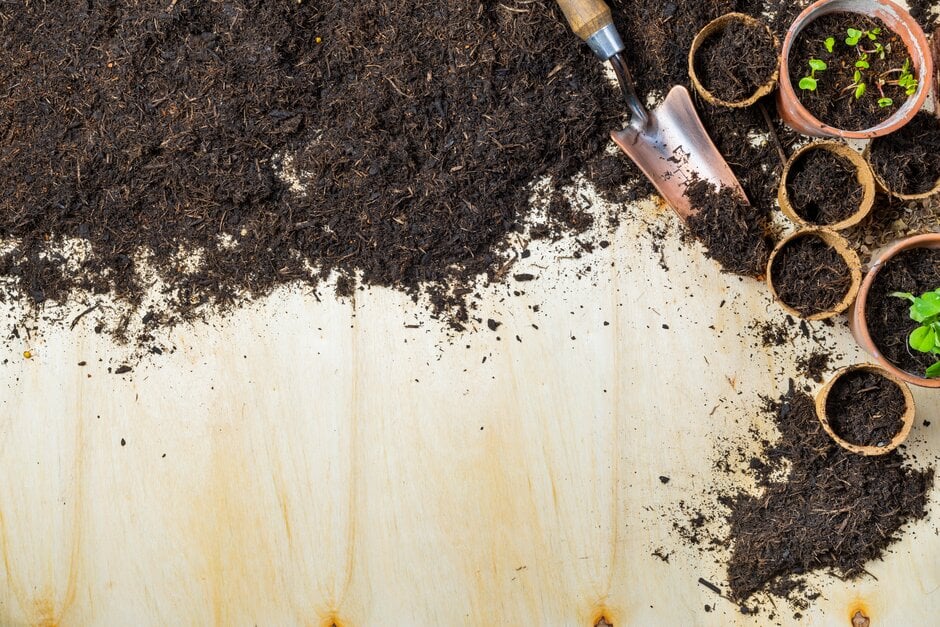
As I do when answering an enquiry from a member, it’s worth establishing what we mean by ‘compost’, which has become a bit of a catch all word. On one hand, there’s potting compost: peat-free, often bought in bags, but not ideal for
What I’ve come to appreciate from speaking with members this year, though, is that compost isn’t just a material – it’s a mindset. And right now, it’s one that’s helping gardeners feel more connected, more resourceful and more hopeful.
3. 2025 was the year of the dog
Monty Don with Ned on their dog garden at 2025 RHS Chelsea
4. Chemical killers are out
80% of gardeners reported using no pesticides or weedkillers – thus protecting our soils, waterways and wildlife at every rung of the food chain.
5. Gardening got gamified
If pressed to suggest the theme of the year’s runaway smash hit video game, you might reasonably guess football, racing or the ever-popular shoot-em-up. But then, you’d be wrong. Since its release on the Roblox gaming platform in March, Grow a Garden – where players are tasked with doing just as the name suggests – has in fact been the record-breaking success story of 2025. In just three months, the game received an estimated nine billion visits, with more than a third of players aged 13 or under.
There is a difference, of course, between hands-in-the-soil gardening and staring at pixelised plants on a screen. Yet to achieve in-game success, players must understand the process of managing a veg plot from the acquisition of seeds through to harvesting crops, introducing a generation of kids to the concept of growing their own.
Grow a Garden was 2025’s smash hit video game
6. The east-west split is the new north-south divide, says Tim Upson
This year’s long, dry spring and summer – each the warmest on record – served as reminders of the extremes brought about by our changed climate. As stems sagged I was reminded of a satellite image of the UK from the last drought year in 2022. The West of England was vibrant green, in stark contrast to the scorched East. The boundary: a diagonal dividing line from roughly the River Severn in the Southwest to Teesside in the Northeast. The pattern was much the same this year and it now seems clear that the impact of drought and associated high temperatures, have redrawn the gardening line in the UK. Differences between north and south are now less pronounced – replaced by a marked contrast between east and west, which looks set to stay.
Last year’s heatwaves were further reminders of the continued need to adapt how we garden. The future is uncertain, but the big picture is clear: it’s now East-West that will have the greatest bearing on what we grow.
7. We got smarter about water, says Nicholas Cryer
By mid-August, five regions in England were in drought, with record July lows for the Wye and Great Ouse rivers. Rainfall was at just 89 per cent of the long-term average, marking six months of below-average levels and causing a nationally significant water shortfall. But while 2025 will understandably be remembered by many for its prolonged droughts, this only tells half the story. The year started wet. Very wet. Think back to New Year’s Day, when 90mm of rain in 24 hours brought floods to parts of England and Wales. Droughts and floods are getting more common. In order to get our plants the right amount of water at the right times, smart water capture and management is now essential.
Weather is a famously local phenomenon and each garden reacts differently due to its structure, composition and microclimate. In your garden, which plants did well and which died or looked stressed? There are many things we can do now to ensure we can grow the plants that we enjoy. The key is to prepare for the future. The first step is to consider your water source.
If your garden has suffered from flooding, take a moment to consider where it occurred and what kinds of plants survived. In heavy rain, where does the water go? Are there dips and troughs? Can you direct water to where it’s needed or can be stored?
Flood and drought are here to stay, but neither need stand in the way of creating glorious gardens. With the right prep, we can go with the flow.
Rainwater capture and storage – in butts, barrels and more – is a vital strategy for mitigating the impact of our changing climate
8. It was a good year for cornflowers... says Guy Barter
Heat-lovers thrived in 2025. Think Canna, Cleome, Cosmos, Diascia, Helichrysum, Nemesia, Nicotiana, sunflowers, Tithonia and Zinnia. So did autumn-sown
9. ...But a bad year for dahlias
Some flowers have been less successful – dahlias, fuchsias and nasturtiums for example, which didn’t come into their own until cooler, showery autumn weather arrived. With more weather extremes expected, rigorously selecting plants for the site will become ever more important, choosing lightly shaded areas for plants that suffer in unrelenting glare. Where heat and light is strongest, choose the glorious array of sun-lovers with fiery colours and striking foliage, planting them as early as feasible into manured or mulched ground.
10. It was a good year for aubergines...
On the veg patch, it was the heat-loving (and generally more water-efficient) squash, courgettes, French beans and sweetcorn that really relished this summer – evidence that even a slight warming in the climate will enhance these crops. The surprise packages came in the form of plants that are normally grown outdoors in hope rather than expectation, such as aubergines, melons and peppers, all of which seldom thrive outside of a greenhouse, but also did well this year. With climate change, these might move from being gambles to joining the ranks of our more reliable outdoor crops, for the South at least.
11. ...But a bad year for brussel sprouts
Veg plants that love mild, rainy climates – such as Brussels sprouts, runner beans, cauliflower and swedes – suffered badly this year, no matter how generously they were watered. In the years to come, we’d do well to choose more resilient amaranths, kales, kohl rabi and spinach substitutes such as New Zealand spinach, especially in gardens with sandy or thin soil. This should help keep fresh food on the plate in trying years.
12. It was a good year for roses...
Roses this year looked absolutely fabulous. These plants prefer hotter, drier climates than the UK, so conditions this year suited them well. Roses root very deeply and UK droughts seldom do them great harm. They flowered unusually early so the first flush of flowers escaped heat damage and while later blooms were truncated by heatwaves, repeat-flowering (of cultivars that repeat) was remarkably good.
13. ...But a bad year for hydrangea
Hydrangea, being woodland plants and preferring some shade, were less content in the scorching summer. Where hydrangeas in your garden display signs of sun stress, consider replacing with shrubby hibiscus and in the South, Lagerstroemia
14. Slugs aren’t the enemy
15. Fungi are a gardeners best friend
16. You really can grow food anywhere
Many people think that without access to a large plot in full sun, a productive garden is out of reach. In this book, author Lucy Chamberlain busted that particular myth, demonstrating that by following the simple principle of “right crop, right place”, fruit and vegetable growing is an option for anyone, anywhere – be that a shady nook or even indoors.
17. Our budgets shrank, but we kept growing
Online, meanwhile, there has been a surge in popularity for second-hand gardening gear and tools on Vinted – a digital marketplace promoting a more circular economy. It is reassuring and indeed uplifting, that while our finances may be feeling the pinch, gardeners, undeterred, will always find ways to keep gardening.
18. Water features have had a wellness twist
Drakkars Drift garden by Luke Coleman
72% of RHS members retained clippings, trimmings and dead wood for use in the garden – a massive increase on last year – helping to support soil health as well as a range of invertebrates and fungi.
20. Planting for purpose was rediscovered, says Olivia Drake
Since early human history, people grew plants for a purpose – to eat, to use, to create. The UK’s second ever botanic garden, Chelsea Physic Garden, was created in 1673 as a living encyclopaedia of plants and their respective uses. In the centuries that followed, we drifted – our earthy relationship with plants was swallowed by waves of trends in which plants were often reduced to status symbols.
The arrival of garden centres opened up a wide choice of plants to gardeners for the first time. This plunged us into a culture in which plants were chosen only because we’d spotted them at their floriferous peak in a retail display. Faced with unprecedented choice, we then lost touch with thousands of years of valuing what a plant could do. That is, I believe, until now.
In 2025, the RHS Healer’s Hollow garden at RHS Hampton Court Palace Garden Festival embodied what I perceive to be a wider societal shift. It was a garden all about reconnecting with plants for medicine, textiles, construction, dyes and more. It showed that our deeper relationship with plants is beginning to reignite, and is bringing our well-loved ornamentals into a new – or very old – light.
The RHS Healer’s Hollow garden at RHS Hampton Court Palace Garden Festival encouraged visitors to reconnect with the myriad practical uses of familiar plants
21. Aphids had their fill and then some, says Gareth Richards
RHS scientists have tentatively identified the culprit as Aphis gossypii, melon-cotton aphid –
The so-called buddleja aphid, however, was just one of many aphids that people observed making themselves at home on our plants. Gardeners’ first response to seeing these tiny critters was concern. But the more you look at aphids, the harder it is to not be at least grudgingly impressed by them. They are fast – when conditions are good they give birth to young that are already pregnant with the next generation. They’re flexible, with wing dimorphism, which means wingless babies if conditions are favourable, or winged ones ready to seek out pastures new if times are tough. Plus, they’re incredibly varied and useful – there are more than 500 species in the UK alone, forming a vital part of terrestrial food chains, supporting everything from lacewings to hoverflies and blue tits to butterflies. Not convinced? Consider the swarm of ladybirds that stopped play at Lord’s Cricket Ground in London on 10 July – these aphid-munching beetles had a bumper year as their prey became plentiful.
Of course, aphids can be a problem in gardens. In May, they topped the charts for the most asked about garden issue among RHS members. Then in June, a severe infestation of lupin aphids led to the abandonment of a lupin trial at RHS Wisley.
As our climate warms, we are likely to see plenty more aphids in future. But if 2025 has taught us anything, it’s that patience – and avoiding chemical sprays that remove predators along with aphids – is the gardener’s best weapon.
22. We added AI to the gardener’s toolkit, says Tom Massey
When we first announced an RHS Chelsea garden to explore artificial intelligence (AI) in a garden context, the social media response was intense. Some people were curious, but many raised concerns about what we, as gardeners, might lose. Would incorporating AI into gardening diminish intuitive knowledge passed down through generations? Could it distance us from the hands-on relationship that makes gardening so meaningful? And what about the environmental costs of the technology?
These concerns deserved serious consideration. The worry that technology might gradually replace human judgment, or that data might overshadow wisdom earned from years with soil and seasons, reflected a deep care for gardening’s essence. This ancient practice of nurturing life felt too precious to approach carelessly.
The lesson I learned was that new tools only have value when they serve human wisdom, without ever seeking to replace it. Technology could perhaps help us listen more carefully to what trees are telling us about their health and needs, but it should never replace the direct observation that connects us intimately with plants and soil. It’s gardeners, designers, communities and landscape custodians who should interpret that information and decide how to respond.
We don’t necessarily have to choose between honouring traditional knowledge and exploring new tools. Technology might find a valuable place in the conversation, but it should never be allowed to lead it.
The Avenade Intelligent Garden at RHS Chelsea showed how sensors could be used to monitor tree health
23. Mullets made a come back
It’s not often that trends in hairstyling and horticulture can be said to align, but this year saw a comeback in both worlds for the mullet. “Mullet gardening is the idea of keeping things tidy at the front, while letting them grow a bit wild at the back,” explains Garden Manager Mark Tuson, a pioneer of mullet gardening at RHS Wisley. “It’s gardening for wildlife, by providing habitat and food, while making it visually cared for.”
24. Peat’s days are numbered
70% of gardeners bought peat-free compost – a boon for peat bogs, the carbon they store and the biodiversity they sustain. From January 2026, every plant sold through RHS Garden Centres and RHS Plants online will be grown peat‑free, or contain only peat already in the production cycle before the end of 2025. The five RHS Garden Centres aim to offer the UK’s widest range of ‘no new peat’ plants.
25. We found peace in Japanese gardens
While Japanese gardens are often spectacularly beautiful, aesthetics are not necessarily the primary concern, so much as what is felt. Peace, harmony, tranquillity: these are the tenets of the Japanese garden. So it follows that in a year of disturbing news stories both close to home and further afield, many of us have been turning to gardens for a much-needed dose of Zen.
This year there were several Japanese gardens at RHS Chelsea Flower Show, including the woodland-inspired, containerised Komorebi Garden, based on the eponymous Japanese term for the atmosphere created by dappled sunlight as it filters through the canopy. But it was Kazuyuki Ishihara’s Cha No Niwa – Japanese Tea Garden that stole hearts, picking up both the judge-awarded RHS Chelsea Garden of the Year and the public-voted People’s Choice Best Show Garden prizes.