Quick Facts
Small or medium-size shrubs
1
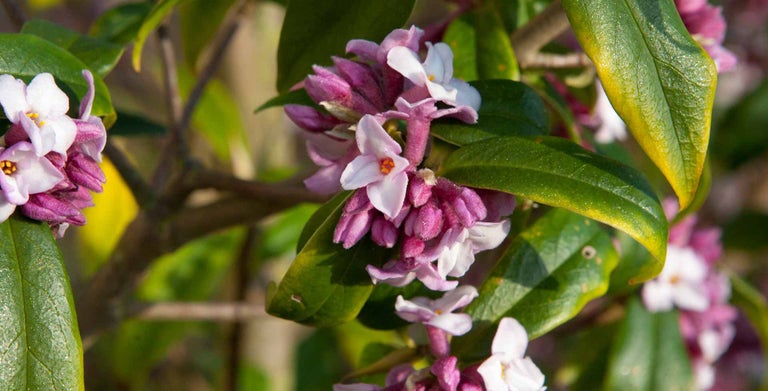
Clusters of fragrant pink, white or yellow flowers
2
Flowers in various seasons, depending on species
3
Most are evergreen or semi-evergreen
4
Plant in spring
5
Most are hardy, all like a warm, sheltered spot
6
Generally prefer light shade
7


Before you get started
What are daphnes?
Daphnes are shrubs with highly fragrant flowers. They bloom at various times of year, depending on the species. Most are evergreen, keeping their leaves all year, or semi-evergreen, losing some of their leaves over winter, especially in cold locations.
They are usually fairly compact, slow growing and need little ongoing maintenance.
Helping wildlife
Evergreen shrubs provide shelter for a wide range of wildlife all year round, including valuable nesting sites for birds early in the season.
How and what to buy
You can buy daphnes from garden centres and online suppliers, including RHS Plants. They are sold in 2 litre pots and upwards.
They are usually grafted, which makes them relatively expensive to buy, so it’s worth taking care to select and plant them carefully.
To explore the various species and cultivars, go to RHS Find a Plant. Search for ‘Daphne’ to browse the photographs and plant descriptions, and find out where to buy them.
Check plant labels or descriptions carefully before you buy, to make sure the will like your garden’s conditions. Most don’t respond well to being moved once established.
Also make sure the plant is suitable for the amount of space you have available – plant labels should give the ultimate height and spread. It’s best not to prune daphnes, as they don’t usually recover well.

Planting
Where to plant
Plant daphnes where you can enjoy their scent to the full – near your front door, garden gate, path or patio. If you plant several different types, you can have fragrance almost all year round.
Depending on the species, daphnes suit most styles of garden, both formal and informal, traditional or contemporary. They work well in mixed borders, shrub borders, woodland areas and rock gardens. Most are compact and slow growing, so ideal for small gardens.
Daphnes generally prefer to be in the ground (rather than in containers), where they like:
- Well-drained but moisture-retentive soil that contains plenty of organic matter. They won’t tolerate drought or waterlogging. See our guide to soil types
- Neutral to slightly – see our guide to assessing your soil pH
- A sheltered position in partial shade, or in sun if the roots are shaded
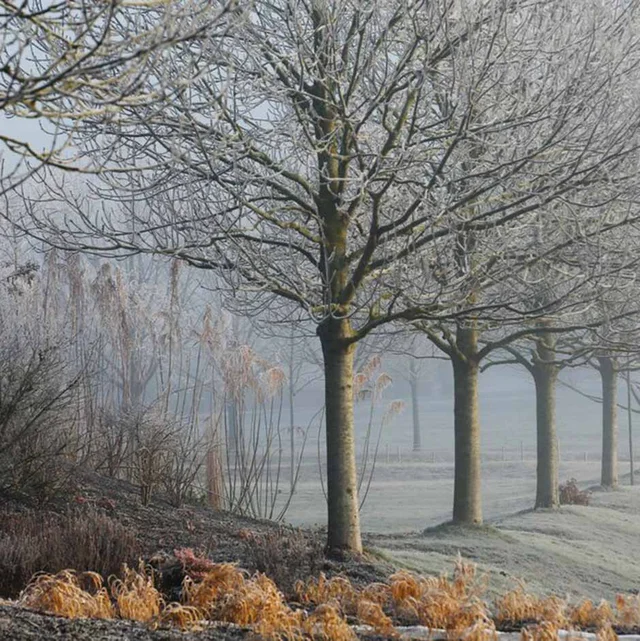
If you don’t have ideal conditions, there may still be some daphnes you can grow:
- Heavy soil – grow in a raised bed, which will provide better drainage. Daphne laureola and D. mezereum may cope in , but dig in plenty of organic matter such as well-rotted garden or manure before planting
- Chalky soil – D. mezereum is the most tolerant
- Full sun – choose dwarf species such as D. arbuscula andD. cneorum
- Deep shade – is fine for D. laureola. Once established it will even cope in dry shade under trees
- Cold site – D. mezereum and D. odora are the most hardy
- Containers – most daphnes are deep rooted, so don’t generally grow well in containers, but smaller alpine daphnes (such as D. arbuscula) should be fine. Use deep containers
Choose the right plant
Always check plant labels carefully before buying, to make sure you can provide suitable conditions for it. Daphnes don't like to be moved, once established.
When to plant
Daphnes establish best when planted in early spring.
How to plant
- With grafted plants, bury the graft union at least 5cm (2in) below soil level – this will encourage better rooting and improve vigour
- After planting, with plenty of organic matter, such as garden compost. This will help to hold moisture in the soil, which is especially important on free-draining, sandy soil, as daphnes won’t tolerate drying out
For step-by-step planting instructions, see our guide to planting shrubs.
Bear in mind that daphnes are highly toxic and the can irritate skin, so it’s advisable to wear gloves when handling them.
Planting in containers
- Smaller alpine species, such as D. arbuscula and D. petraea, can be grown in containers
- Choose a deep container and use an equal-parts mix of peat-free John Innes No 3, peat-free multipurpose compost and coarse
- The roots need to be kept cool, so place containers where they won't get baked in hot sun
Ongoing Care
Watering
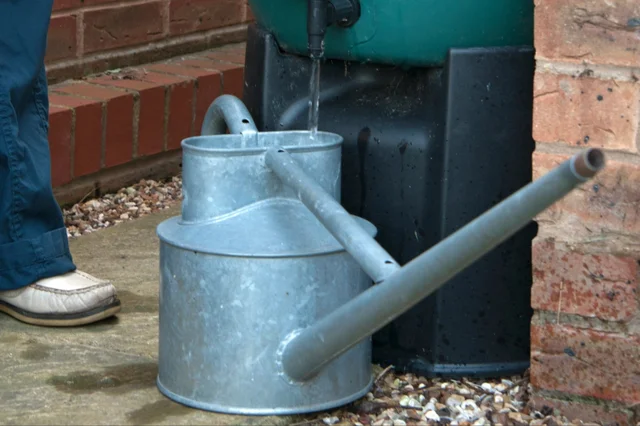
- After planting, water as needed for at least the first year, until well established
- After that, daphne should only need watering in dry spells
- In fast-draining or dry soils (such as sandy soil), or areas of low rainfall, aditional water may be needed in summer
- In containers, dwarf daphnes can dry out quickly, so need will need watering on an ongoing basis
- Avoid overwatering, as daphnes don’t like sitting in soggy soil
Feeding
- Daphnes are generally slow growing and deep rooted, so shouldn't need feeding.
- With alpine daphnes in containers, you can apply a foliar feed two or three times during the (April to September).
- Top-dress containers in early spring by removing the top 5cm (2in) of and replacing with fresh compost. See our guide to container maintenance.
Mulching
- After planting, spread a generous mulch of garden compost over the soil surface. This will help to hold moisture in the soil and deter weed .
- Leave a gap of 7.5cm (3in) around the base of the stem, to avoid rotting.
- In subsequent years, apply every spring, to damp soil, to keep the roots cool over summer.
Overwintering
- Most daphnes are hardy, but prefer a warm, sheltered spot.
- Dwarf daphnes in containers can be moved to a sheltered location over winter, such as at the base of a south- or west-facing wall. Don’t let the compost get .
- Semi-evergreen species, such as D. bholua, may lose some or all of their leaves in cold winters. This does no long-term harm, and new leaves will be produced in spring.
Pruning and Training
It is best not to prune daphnes at all, as it will often result in die-back. So when buying, it’s important to choose a plant that won’t outgrow the amount of space you have available.
Daphnes tend to grow slowly, so pruning is rarely necessary, except to remove damaged or dead stems. This should be done in early spring or shortly after flowering – see our guide to light pruning.
If you do need to prune daphnes, be aware that the can be a skin irritant, so always wear gloves.
Propagating
Daphnes are generally slow and tricky to propagate. Commercially grown plants are usually grafted, which is a skilled process. However, this also makes them quite expensive, so growing new plants yourself can save money, especially if you want several.
The main methods are:
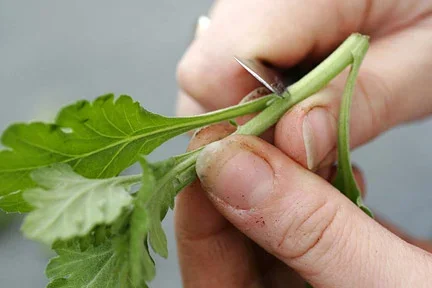
- Semi-ripe heel cuttings – taken in mid to late summer
- Layering – suitable for species with low branches, such as D. cneorum, but it can take several years
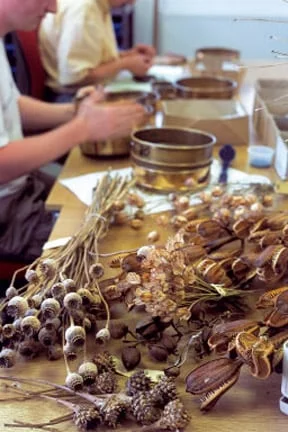
- Sowing seeds – can take at least two years, and with named cultivars the offspring may differ from the parent plant. But it’s a simple process – remove the seeds from ripe fleshy fruits and sow in gritty, peat-free . Place in a sheltered, shady spot or coldframe to germinate. For full details, see our guide to growing shrubs from seed
- grafting in late winter – this can be a tricky process, so try it if you want a challenge
Problems
Daphnes aren’t generally attacked by pests, but they can suffer from a range of other problems, including:
- sudden die-back or yellowing of the foliage, often due to too much or too little moisture, or nutrient deficiencies.
- establishment problems
- leaf browning
- waterlogging
- nutrient deficiency leading to yellowing foliage, especially on . Apply a chelated iron feed
- honey fungus
- root rot
- fungal leaf spot
- virus infections – especially Daphne laureola, D. mezereum and D. odora