Pruning and training
Later in the month, prune deciduous magnolias once the plant is in full leaf. If this is done in winter, when the tree is dormant, dieback can occur, and pruning in late winter or spring can result in bleeding. Midsummer is therefore recommended.
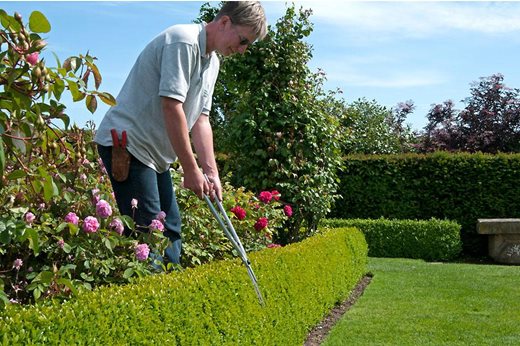 Clip evergreen hedges such as privet (Ligustrum), box (Buxus – pictured) and Lonicera ligustrina var. yunnanensis if needed. If they are not too woody, shredded clippings can be added to the compost heap. Check thoroughly for any nesting birds before starting any trimming.
Thin out new shoots on trees and shrubs stimulated by winter pruning. Remove crossing stems and reduce overcrowding of new growth.
Prune out any remaining frost damage from affected evergreen shrubs.
Prune flowering shrubs such as Deutzia, Kolkwitzia, Weigela and Philadelphus after flowering has finished. If this is left until later, the new growth put on after pruning may not have sufficient ripening time to flower well next year.
Evergreens such as Viburnum tinus can also still be trimmed this month.
Rhododendrons can be lightly pruned after flowering. More severe pruning should wait until the following early spring.
Prune out overcrowded, dead or diseased stems of Clematis montana once it has finished flowering. The aim is to leave well-spaced stems flat against the support.
Young mimosa trees (Acacia dealbata) can be cut back once all risk of frost has passed. Mature trees respond less well to hard pruning.
Prune wall-trained pyracanthas, removing any shoots coming out from the wall, and shortening other new growth to about 8cm. This encourages spur formation, and increased flowering relative to green growth. As with all pruning at this time of year, check carefully for any nesting birds before you begin.
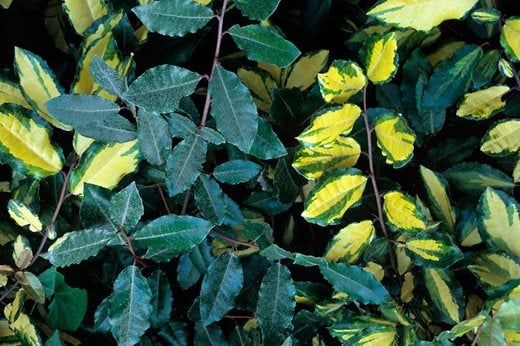 Remove any reverted green shoots on hardy variegated evergreens (such as Elaeagnus, pictured), to prevent reversion taking over.
Twining climbers (such as honeysuckle and Clematis) need regular tying in and twining around their supports.
Tie in new stems of climbing and rambling roses as near to horizontal as possible. This will slow down sap flow, causing more side-shoots to grow along the length of stem. Therefore more flowers will be produced.
Planting and moving
In wet areas, you can still plant containerised trees and shrubs. If summer rainfall is scarce, planting is best avoided. Waiting until autumn means the weather will work with you to support successful establishment.
Propagation
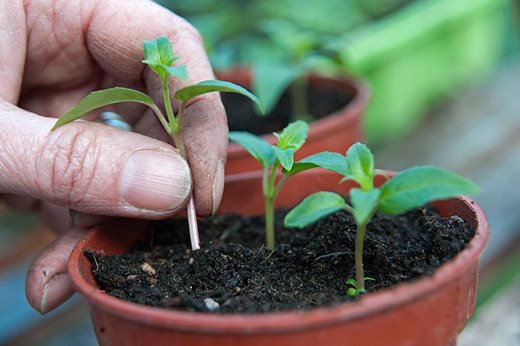 Take softwood cuttings of deciduous shrubs, including Caryopteris, Forsythia, Kolkwitzia, Fuchsia (pictured), Hydrangea macrophylla, Philadelphus, Spiraea,
lavender and rosemary if not done last month.
Layering is a good way to propagate climbers and lax-stemmed shrubs. Layers should root by next spring, especially if watered during dry weather. Examples to try include Philadelphus, Wisteria, Akebia and Lonicera.
General maintenance
Ensure newly planted trees and shrubs do not dry out. Water with rain, grey or recycled water wherever possible.
Hybrid tea roses can be disbudded, removing all smaller buds from the cluster that forms at the shoot tip, leaving the largest central bud to develop into a large, showstopping bloom.
Loosen any tree ties that are digging into the bark, or could do soon as the trunk girth expands.
Water the stem around the crown of tree ferns, especially newly planted ones, using rainwater if possible.
Dig out tree and shrub suckers.
Problems
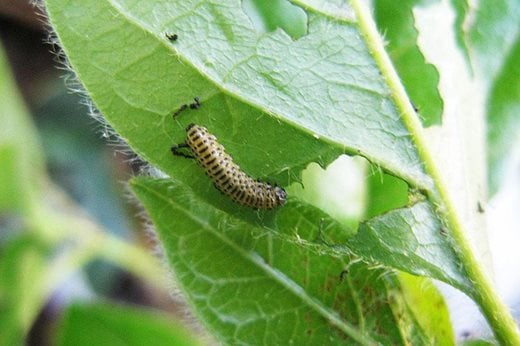 Viburnum beetle grubs (pictured) can nibble holes in the leaves, giving plants a tattered appearance. Where this is a problem, inspect V. tinus and V. opulus regularly and pick off the grubs by hand.
Phytophthora root rots can cause dieback on mature trees and shrubs. Wet winter weather followed by a hot spring and summer can encourage this problem on susceptible woody plants. Dig out affected plants and add to council green waste collection. Avoid replacing them with susceptible plants.
Inspect sick-looking box and holly trees for signs of blight. Tolerate holly blight and consider replacing box with alternative evergreens.
Check for damage or cankers on deciduous trees and remove any damaged branches.
Caterpillars and aphids are an important part of the garden food chain, and in a healthy garden ecosystem, predators such as blue tits and wasps will feed on them.