Celebrating England’s cottage gardens
Soak up the colours and scents of the most quintessential of English gardens in this selection of 10 RHS Partner Gardens
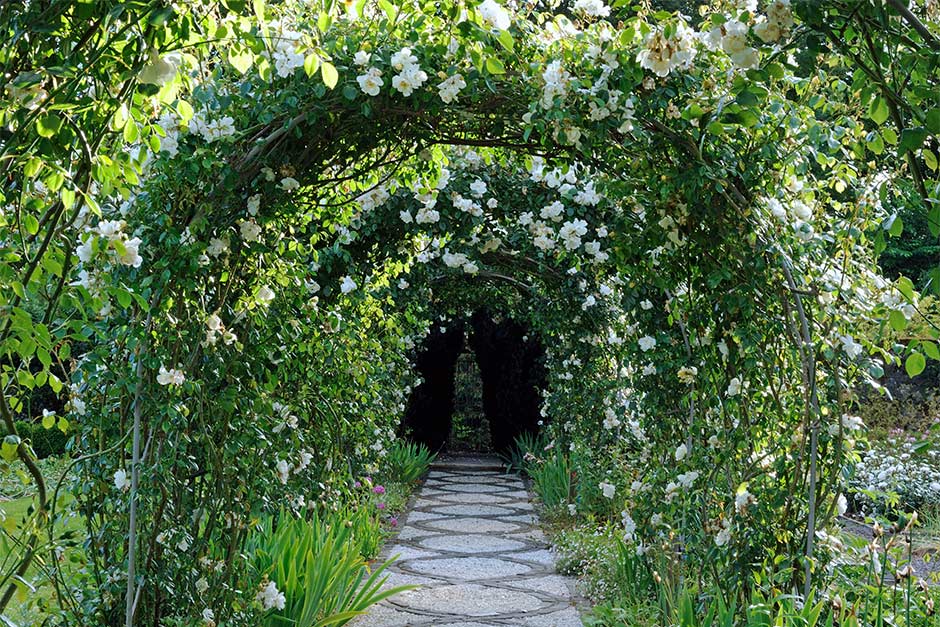
Characterised by informal planting and usually connected to a house or cottage, cottage gardens reflect the beauty and heritage of English gardening. We’ve selected 10 dreamy examples from across the country that will inspire you with their design and planting schemes – and, most of all, will lighten your mood.
Join the RHS and enjoy free access to more than 240 gardens in the UK and around the world at selected times >
Helmsley Walled Garden, Yorkshire
At Helmsley Walled Garden, richly planted borders weave together perennials, bulbs and self-seeding favourites to create layers of colour, texture and seasonal interest
There are many small, intimate areas throughout this five-acre historic garden. Herbaceous borders are overflowing with early summer colour. Roses in full bloom are accompanied by classic cottage garden underplantings of geranium, Nepeta, phlox and Digitalis. At this time of year, fruit is beginning to form on the collection of trained apples and pears – a harbinger of the abundance of the autumn harvest – while the kitchen garden is starting to provide the first crops of produce and bunches of cut flowers.
- Free days out for RHS Members in 2026: March–December, Wednesday; plus October, daily when open
- Find out more at Helmsley Walled Garden
Bide-a-Wee Cottage Gardens, Northumberland
A vast array of unusual plants thrives at Bide-a-Wee Cottage Gardens
- Free days out for RHS Members in 2026: Friday, when open
- Find out more at Bide-a-Wee Cottage Gardens
Houghton Hall and Gardens, Norfolk
Houghton Hall and Gardens blends delicate structure with joyous informality
The border features an ingenious layout of shifting colour palettes: at one end, cool shades of blue, crisp white, and pale pink dominate, including cottage favourites like Echinops exaltatus and Phlox paniculata. These transition beautifully into a ‘hot zone’ packed with fiery blocks of Lilium davidii and Helenium ‘Moerheim Beauty’.
Nepeta ‘Six Hills Giant’ lines the entire length, providing visual harmony while attracting a steady buzz of bees, butterflies and other pollinators to its nectar-rich flowers. Clumps of Achillea and Monarda weave effortlessly between specimens, adding dense layers of colour and helping to suppress weeds. At the back, Macleaya cordata lends height and soft movement as its plumes sway gently in the breeze.
By blending delicate structure with joyous informality, this meticulously planned border ensures a continuous succession of flowers, celebrating traditional cottage charm and biodiversity.
- Free days out for RHS Members in 2026: June–July, when open
- Find out more at Houghton Hall and Gardens
Farringford Estate, Isle of Wight
The walled garden at Farringford Estate reflects its 19th-century abundant planting style
The walled garden, where Alfred and Emily Tennyson spent much of their time, has been restored as closely as possible to its original layout. The planting has a wonderfully relaxed, cottage-garden feel, reflecting a garden once described by Tennyson as ‘carelessly ordered’. Old-fashioned roses, salvias, Alcea, delphiniums, sweet peas, Ammi majus and everlasting flowers mingle with fruit and vegetables, creating a space that feels both productive and full of character. Throughout the seasons, bees and butterflies thrive among the abundant planting.
As visitors wander through the garden, historic detail, romantic planting and seasonal interest combine to create a welcoming atmosphere, while views across the surrounding countryside can be enjoyed from Emily Tennyson’s
- Free days out for RHS Members in 2026: April–October, Wednesday and Thursday when open
- Find out more at Farringford Estate
Hutton-in-the-Forest, Cumbria
At Hutton-in-the-Forest, the planting combines cottage garden charm with summer abundance
- Free days out for RHS Members in 2026: When open
- Find out more at Hutton-in-the-Forest
The Dorothy Clive Garden, Shropshire
The Dorothy Clive Garden offers visitors seasonal garden design in a unique hillside setting
The garden’s informal character encourages visitors to explore its network of paths, discovering colourful borders and plant combinations along the way. Later in the season, the herbaceous borders come into their own, providing a rich tapestry of flowers that complement collections of rhododendrons, azaleas and woodland plants. Together, these plantings contribute to the intimate and inspiring atmosphere for which The Dorothy Clive Garden is known.
- Free days out for RHS Members in 2026: January–March and July–December, when open
- Find out more at The Dorothy Clive Garden
Furzey Gardens, Hampshire
The cottage garden at Furzey Gardens captures the essence of a classic cottage garden
- Free days out for RHS Members in 2026: February–December, when open (excluding school holidays)
- Find out more at Furzey Gardens
Wyken Hall, Suffolk
Stylish and well maintained, Wyken Hall is one of the best modern private gardens in England
- Free days out for RHS Members in 2026: When open (excluding Charity days)
- Find out more at Wyken Hall
Kelmarsh Hall & Gardens, Northamptonshire
Nestled in the Northamptonshire countryside, Kelmarsh Hall is a Palladian house built in 1732
- Free days out for RHS Members in 2026: March–October, Tuesday–Thursday when open
- Find out more at Kelmarsh Hall & Gardens
East Lambrook Manor Gardens, Somerset
East Lambrook Manor Gardens features winding paths and themed garden rooms
- Free days out for RHS Members in 2026: Wednesdays–Thursdays, April–September
- Find out more at East Lambrook Manor Gardens