Catherine MacDonald on designing The RHS Royal Legacy Garden
Garden designer Catherine MacDonald reveals how trees, fractal patterns and climate-resilient planting shaped her collaboration with King Charles III for the first RHS Sandringham Flower Show
How did it feel to get the call to collaborate with His Majesty the King on The RHS Royal Legacy Garden?
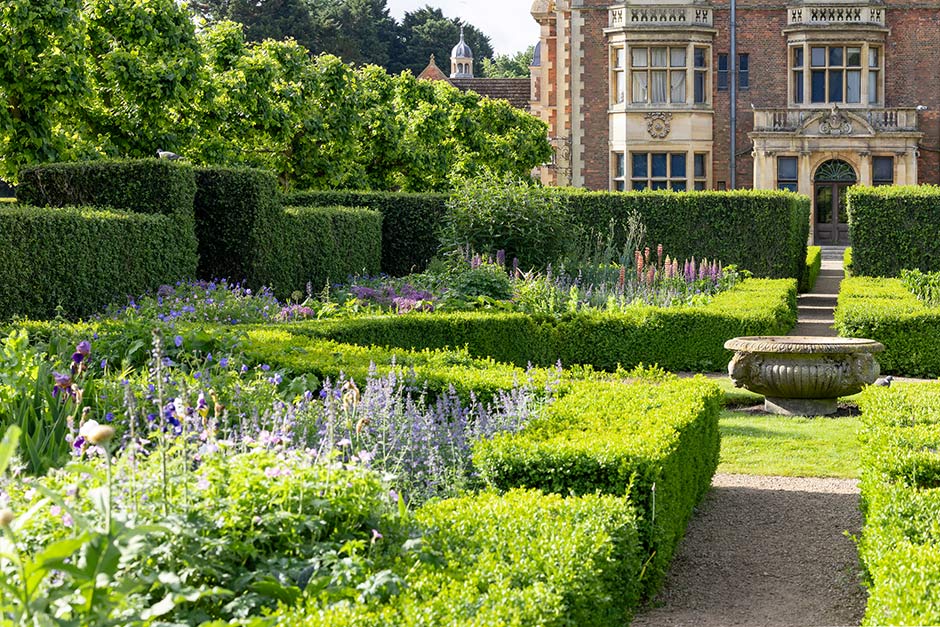
It’s a huge privilege and great responsibility. I feel prepared, having designed 11 Show Gardens including The Boodles Garden at this year’s RHS Chelsea Flower Show. I’ve also worked on projects at Sandringham (the King’s royal residence in Norfolk), including the new Topiary Garden that was designed as a contemplative, peaceful space. I have an established working relationship with Sandringham’s Head Gardener Jack Lindfield, whose input on plant selection and the garden’s relocation to Sandringham after the Show have been invaluable.
Designer Catherine MacDonald also designed the Topiary Garden at Sandringham
Has the King been hands on with the process?
The Topiary Garden at Sandringham Estate‚ designed by Catherine MacDonald
Tell us more about those patterns?
Repetitive patterns, including fractal-like and branching forms, feature in many plants and natural landscapes. Fractals are patterns that repeat at different scales, and research suggests that these kinds of natural patterns can help hold our attention and support relaxation, which is why being in nature can benefit our mental wellbeing. Look up into an oak tree in winter and you’ll see the branches and stems forming intricate, branching structures that can appear fractal-like, with larger forms echoed in smaller twigs. Fern fronds are another example of this kind of repeating structure. Other plants in the garden, such as Coreopsis verticillata ‘Moonbeam’ and Echinacea paradoxa ‘Yellow Mellow’ also display strong repetition and symmetry, though these are better understood as patterned flower structures rather than strict fractals.
How you are incorporating natural patterns in the design?
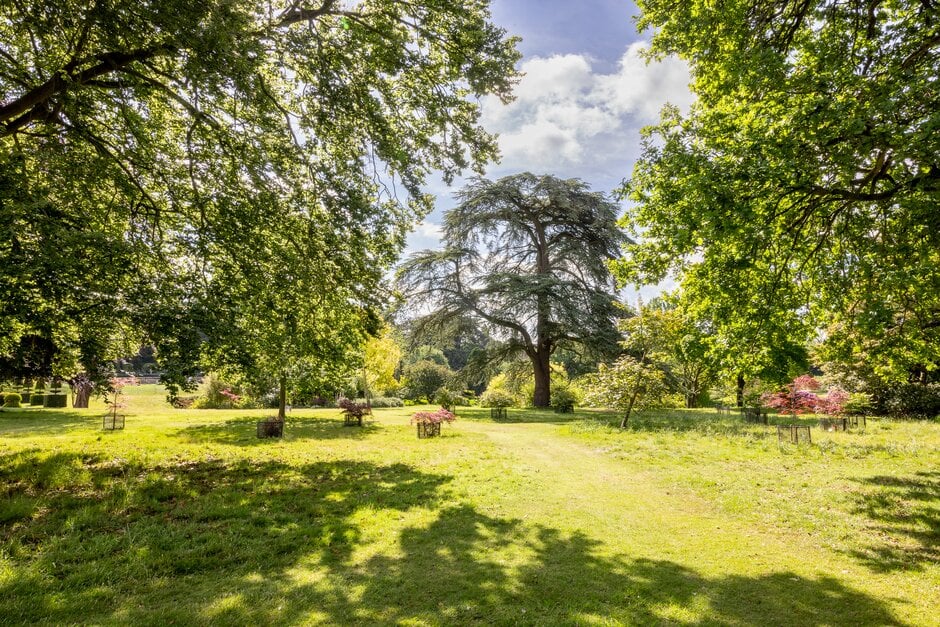
I presented four design ideas to the King and our favourite was chosen to be developed. The layout, informed by fractal and branching patterns, includes sinuous paths that thread through the garden between organic-shaped planting beds. As fractals repeat at different scales, our paving design reflects this idea – the gaps between elements echo the branching structure that’s behind the whole garden concept. Visitors will notice these patterns at both a small scale and in a wider overview like it happens in nature – the pattern of large oak
The layout of the paving and broken up planting areas in The RHS Royal Legacy Garden were inspired by fractal-like and branching forms
Did the King want any specific plants included?
The King and I chose focal point trees such as the beautiful pride of India (Koelreuteria paniculata), with large clusters of yellow flowers in summer, and climate-resilient species including the strawberry tree (Arbutus unedo), a Mediterranean native, that may be more adaptable to the warming temperatures in the UK. The King requested bright colours in the borders for visual impact, and we’ve designed a bold scheme of purple and yellow flowers, with splashes of red and some white for contrast. Many plants, such as Salvia nemorosa ‘Caradonna’ and Achillea ‘Credo’, are pollinator-friendly, too.
His Majesty is passionate about horticultural skills and local crafts. Are these showcased in the garden?
The trees and topiary in the Feature Garden need ongoing care to create and maintain their shapes, so during the Show Sandringham’s gardening team will be able to explain to visitors about tree and shrub pruning to inspired visitors who want to try the trees in their own gardens. With a nod to rural crafts, the woven-willow border edging has been made by Karen Bek, a local craftsperson. A bespoke willowbench was designed and produced by The King’s Foundation alumna Alice Hemery, and furniture was crafted from sustainable timber, loaned for the Show by Perthshire-based master craftsman Angus Ross.
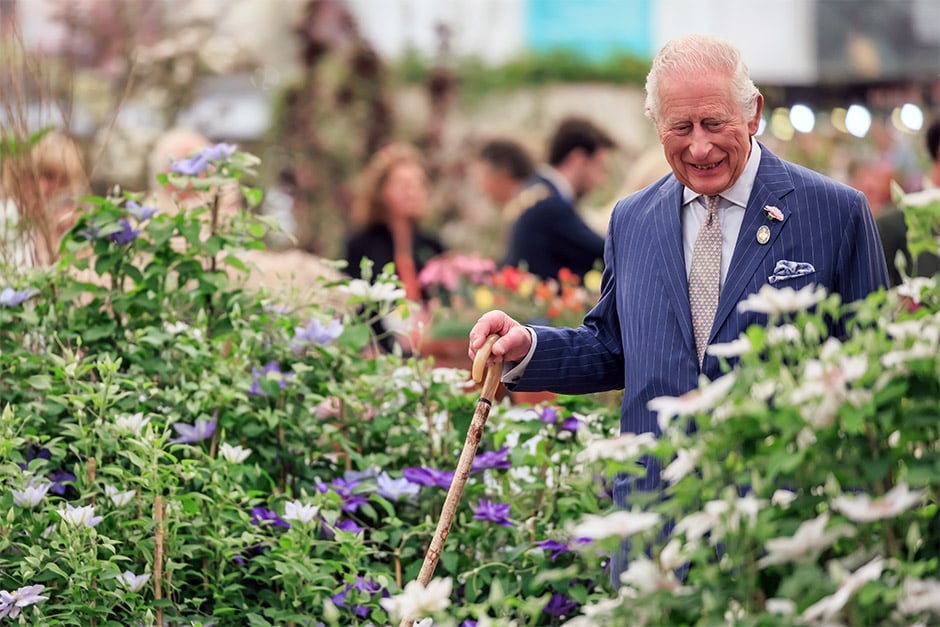
King Chales visiting RHS Chelsea Flower Show 2025
What does it take to create a large Feature Garden?
We usually start planning about 18 months in advance but we had just six months for this Feature Garden. We may continue to tweak the design during the weeks before we start building, but I’m not keen on surprises, so I’ll have everything carefully planned. The one thing I can’t control, of course, is the weather, which might mean some plants have to be substituted. Our partner nursery, Creepers, will have plenty of alternatives, and that’s the fun part – working with plants that will look really good and create the design that we set out to produce for Show visitors to enjoy. We go on site on 8 July and the build takes about two weeks.
What will be the legacy of The RHS Royal Legacy Garden?
His Majesty has already created a legacy in terms of plants, gardens and environmental stewardship, and he’s long been an advocate of organic, sustainable horticultural practices. This garden will have a legacy at Sandringham Estate, too, after the Show, thanks to sponsorship from Boodles. It’d be a challenge to relocate the garden as a whole, so we’re working with the King and Head Gardener Jack to move the trees and plants to suitable locations on the estate, where they will go into existing areas plus a new space that I’ll be designing.
Catherine’s top plants in The RHS Royal Legacy Garden