Rather than turning to the same crops each year, why not think outside the box and choose fruit and veg that will get the best out of your plot
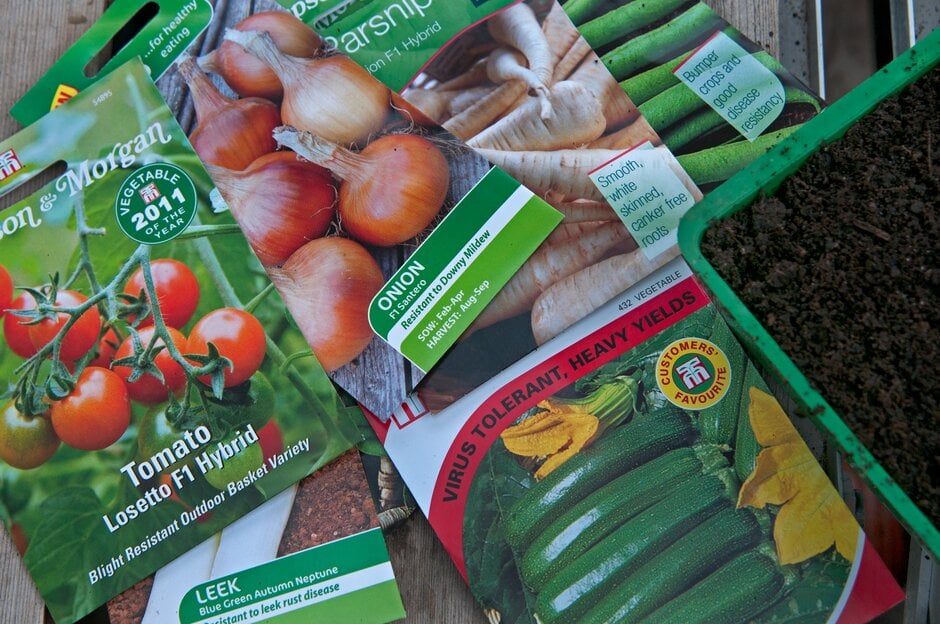.jpg "Seed packets")
An allotment doesn’t have to be the traditional space we all think of – it can also be a small garden or even a balcony. Whether you’ve just got your first allotment and wondering what to grow, or you’re an old hand wanting a change, it can be difficult to know where to start. Here’s how to make what you’re growing count.
Getting the best value out of your allotment
With a high cost of living making it all the more important that gardeners get the most out of their investment of effort, cost and space, perhaps it’s time to take a different approach. When thinking about what to grow, consider these points:
- Do I like to eat it?
- Is it easy to grow?
- Does it avoid costly needs, such as netting, feeding or a lot of space?
- Is it expensive to buy in the shops, or difficult to find?
- Can I save on food miles by growing it myself?
Considering which crops meet the most of these criteria should help you narrow down what to grow.
Do I like to eat it?
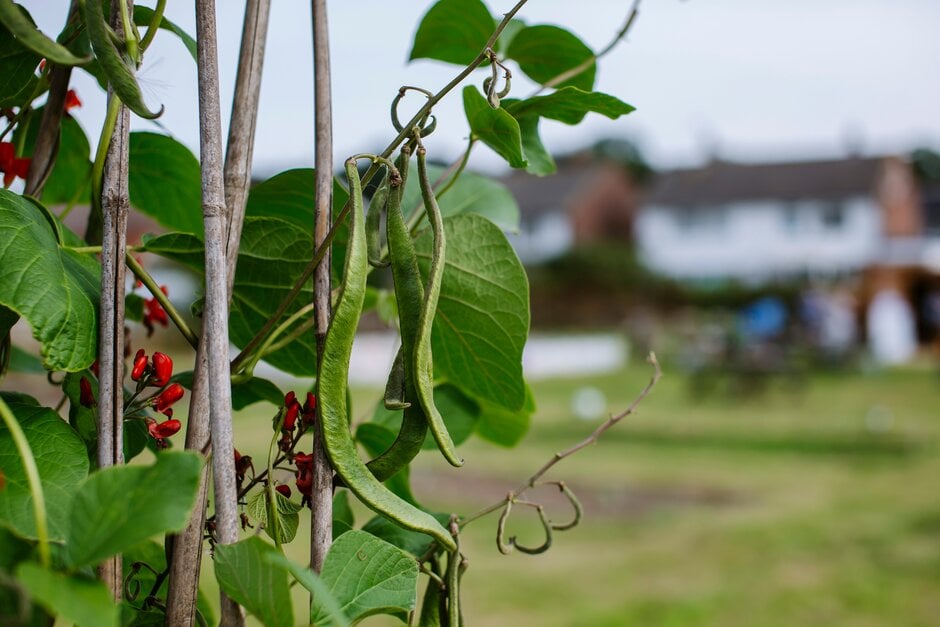 Rather than eating what you grow, grow what you like to eat. When you get out your seed catalogues this autumn, ask yourself, would you buy it if you didn’t grow it?
The ultimate allotment stalwart must be the humble runner bean, and with good reason. Its gorgeous flowers quickly scramble up supports and it requires little effort for the masses of fruit it provides. However, there may be some benefits to sowing French beans instead – they grow better in warm, dry summers, are easier to prep with less stringiness, and can be sown successionally for a longer cropping season.
Swap - If you love growing potatoes, try ‘Pink Fir Apple’. They have a delicious nutty flavour and can be difficult to find in some shops.
While our culinary tastes have changed, what we grow hasn’t altered much since the 1950s. By matching what you grow to your favourite takeaway meals, there’s a chance to grow your own homecooked versions. Given the nation’s most popular takeaway meals include Japanese, Indian and Mexican cuisine, why aren’t lemongrass, tomatillos and edamame more commonly grown?
Is it easy to grow?
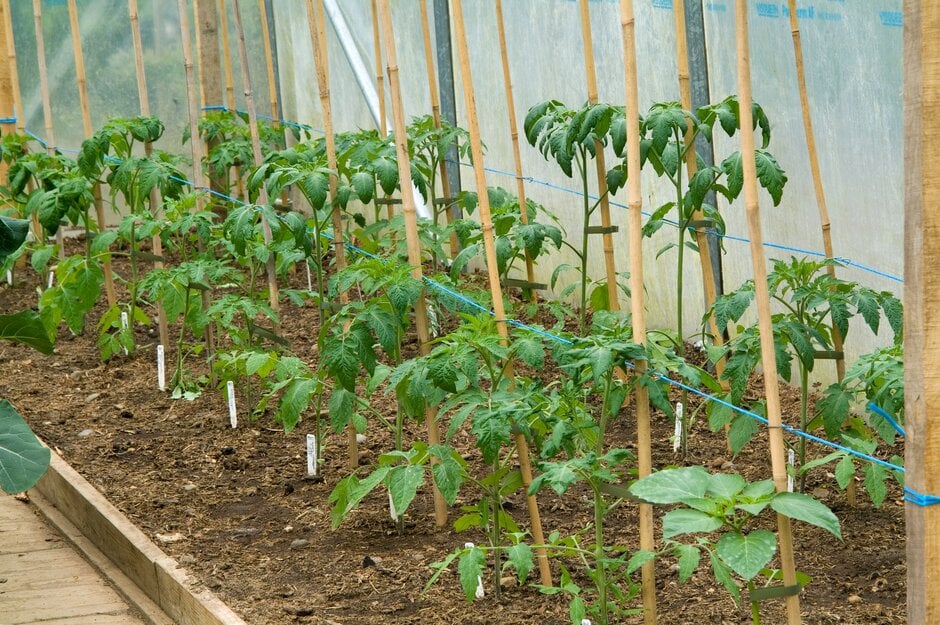
Tomatoes are one of the most popular grow your own crops. They are delicious and can be grown in a container, or even a hanging basket for bush varieties if you don’t have a garden.
Though tomatoes often need regular watering, feeding, pinching out and support, growing your own is very rewarding because it gives you access to heritage varieties, different colours and forms, as well as much better flavour. Look for disease-resistant varieties and those that thrive growing outdoors if you don't have a greenhouse.
Is it expensive to buy in shops, or difficult to find?
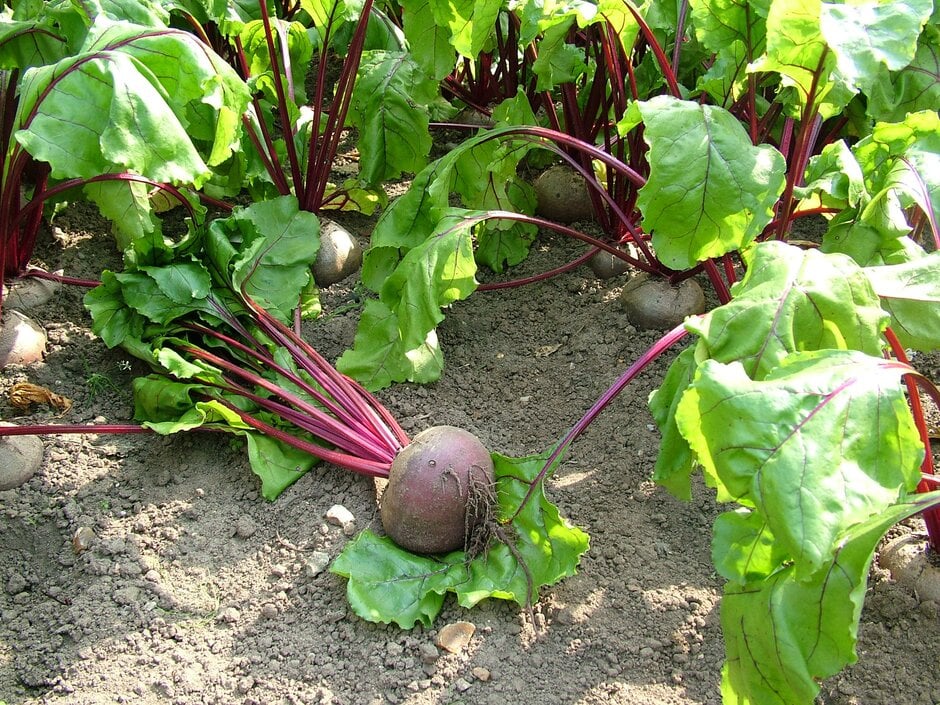
Beetroot has long been an allotment favourite as it’s very easy to grow, however it also has the added benefit of providing a double crop, so it’s a great choice if you don’t have much space. Harvest the leaves for a delicious salad or for cooking like spinach, and then dig up the roots to be roasted, pickled or juiced. Beetroot can also be quite hard to find in the shops and regular portions are thought to help lower blood pressure and regulate blood sugar, so if you enjoy the taste and health benefits, they are well worth a spot on the plot.
Swap – If you love broccoli, why not grow purple sprouting broccoli, which is expensive to buy, rather than large heads of calabrese, which are cheap and readily available?
Can I save on food miles by growing it myself?
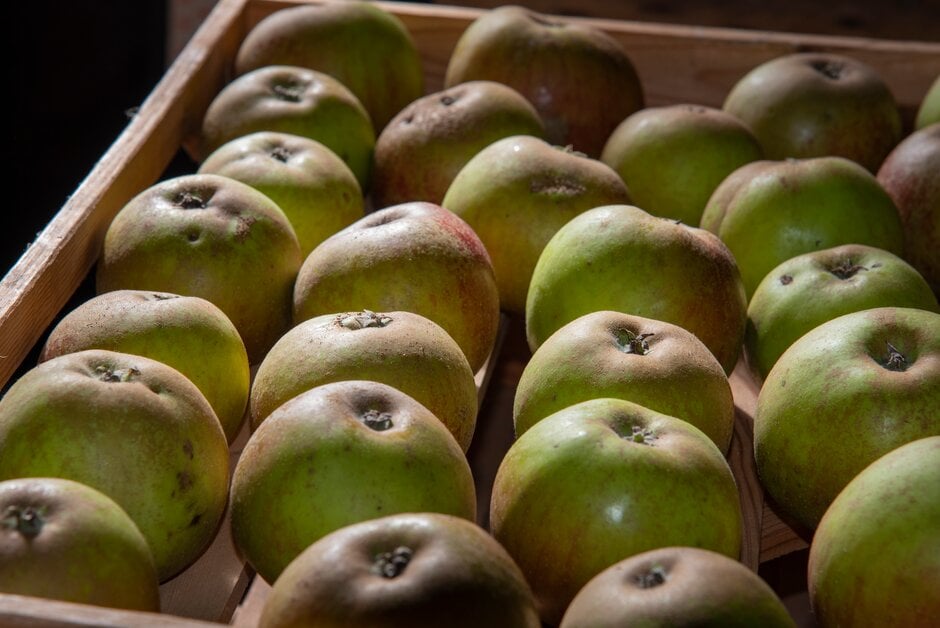
The best way to cut down the food miles on your plate is to eat seasonally and grow as much of your own food as possible. Fruit is often shipped from all over the world – out of season
apples can come from as far away as New Zealand, or if British-grown, may have been refrigerated for many months. If you have apple trees and somewhere to store your harvest, it’s possible to be eating home-grown almost all year round.
Commercial farming favours appearance and longevity of crops over taste and nutrient value. Storage and shipping methods have added to the problem, meaning that the nutrient value of fruit and veg bought in the UK has
dropped significantly over the past 80 years. By growing your own, you’re getting the maximum nutritional value from the crop, saving on plastic packaging, and know it’s free from pesticides.
Lean into what you like
Some things are just fun to grow. If you love eating peas straight from the pod on a warm summer day, the low cost to buy shouldn’t stop you from growing them yourself. Go for it!
Swap – Try growing cut-and-come-again leaves rather than heads of lettuce, for a low-effort crop you can harvest for longer.
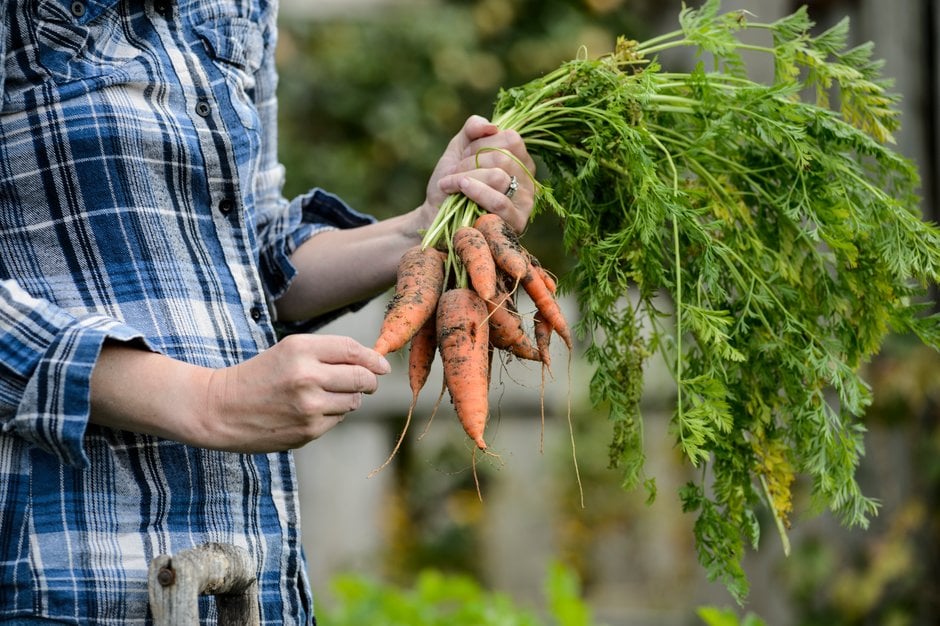
Growing carrots, which need protecting against carrot-root fly, is a lot of effort when you consider how cheap and plentiful British-grown carrots are to buy. Yet carrots continue to be one of the most popular seeds sold, particularly among children, who love the magic of pulling up their golden treat. Always grow what you love, but maybe also make some room for something different this year – not to mention carrots of different colours, shapes and sizes.
The table below may help you decide what to prioritise growing.
You may also be interested in...