Getting Started
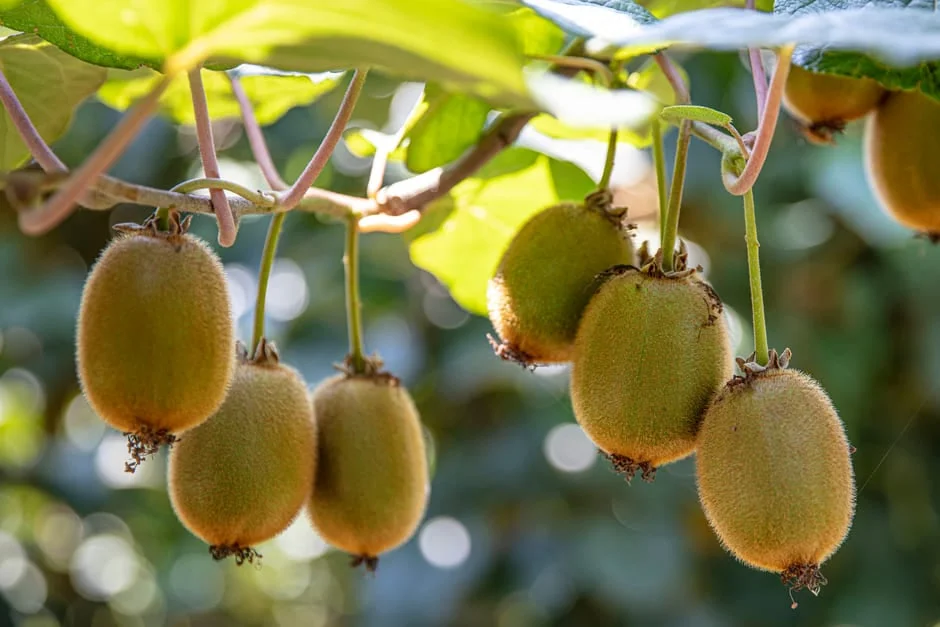
Kiwi fruits (Actinidia deliciosa and Actinidia arguta) may seem exotic, but there are several varieties that will fruit in the UK if grown in a warm, sunny, sheltered spot. These are vigorous climbers and need plenty of space, and are best pruned twice a year to get a good crop and keep them under control. Take care to buy a hardy variety, ideally self-fertile.
Kiwis make attractive plants, with large, often velvety leaves, furry shoots, creamy-white fragrant flowers and (on female or self-fertile plants) downy or smooth oval fruits that develop over the summer and into autumn. The fruits rarely ripen fully outdoors except in long hot summers, but can simply be picked and ripened indoors.
Jobs to do now
Harvest
Bring fruit indoors to ripen
Month by Month
Plant
Harvest


Choosing What To Grow
There are several factors to consider before buying a kiwi plant:
- Kiwis are vigorous climbing vines that need plenty of space, large sturdy supports and a warm, sunny, sheltered site. Unpruned plants can eventually grow to 8m (26ft) or more, depending on the variety
- They need twice yearly pruning, in summer and winter, to keep them in check and fruiting well
- Plants may take three or four years to start fruiting
- Varieties are either female, male or self-fertile. Most of the widely available varieties are self-fertile, but do check. If you buy a female variety, you will also need a male or a self-fertile variety nearby in order for it to crop. Male plants produce flowers but no fruit. If you only have room for one plant, make sure it’s a self-fertile variety
- Actinidia arguta produces smaller fruits, only about 2.5cm (1in) long, with a smooth skin – they are sometimes called kiwi berries. Consider growing self-fertile ‘Issai’. The female variety ‘Ken’s Red’ will produce pale red fruits if a male such as ‘Weiki’ is growing nearby
- Actinidia deliciosa produces larger fruits, 3–5cm (1¼–2in) long, that are furry skinned and similar to those sold in supermarkets. If you only have space for one plant, choose self-fertile ‘Jenny’, which produces smaller, well-flavoured fruits. Popular female varieties include ‘Hayward’ and SOLISSIMO (‘Renact’), but for successful fruiting with these you also need a male such as ‘Tormuri’ or self-fertile 'Jenny' nearby
- Actinidia arguta is hardier than A. deliciosa, but the young shoots of both are extremely vulnerable to late frost damage and may require protection
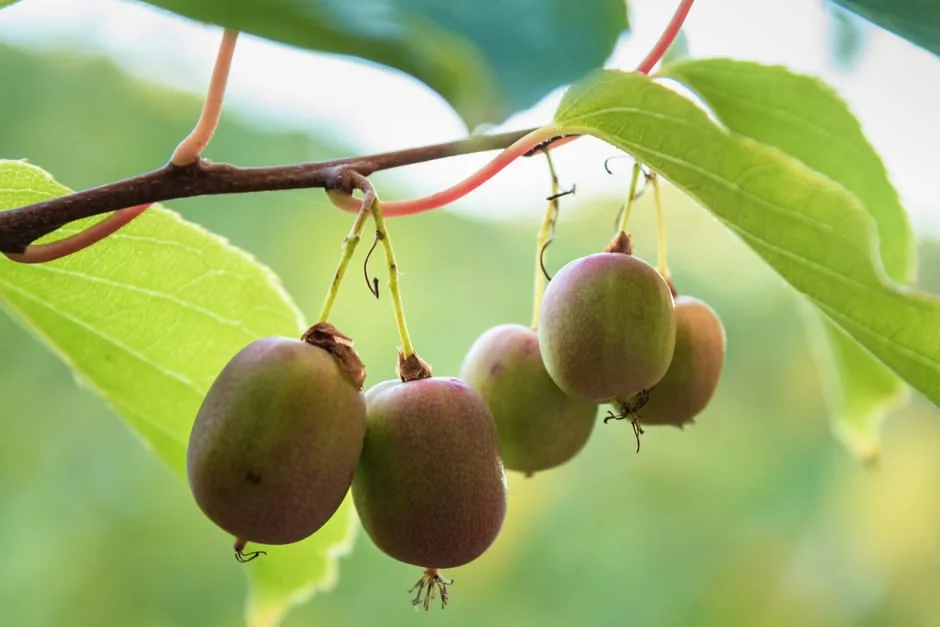
What and where to buy
Kiwi plants are available in larger garden centres, fruit nurseries and from online plant retailers. They are available as container-grown plants, often in a range of pot sizes, depending on their age.
Recommended Varieties


Planting
Kiwis are best planted in spring, once the soil and weather are warming up. They require a warm, sheltered, sunny position, preferably against a south- or west-facing wall, although they can be grown in the open in milder areas. The young shoots are extremely vulnerable to frost damage in spring, so avoid planting in a frost-prone site.
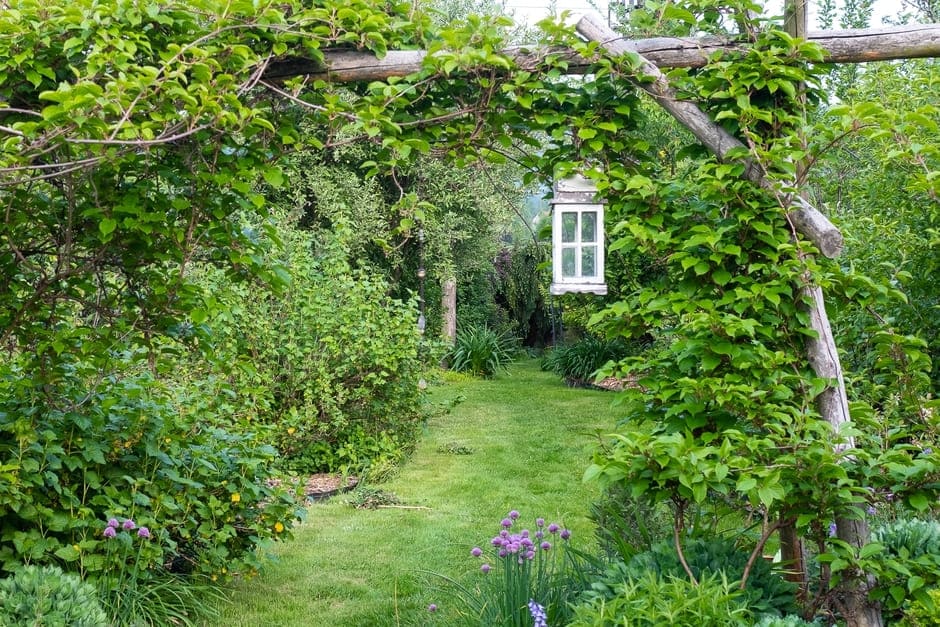
These vigorous climbers need a large, sturdy support, such as a pergola or archway, or strong wires attached to a wall or well-built fence. They prefer fertile, well-drained, slightly acidic soil that is rich in organic matter, so dig plenty of garden compost or well-rotted manure into the soil you remove from the planting hole and use this to backfill after planting. If planting more than one kiwi, space them 3–4.5m (10–15ft) apart. Plants should be pruned straight after planting – see the Pruning and Training section below.
For full planting details, see the following guide:
Plant Care
Once established, kiwis need very little ongoing maintenance other than pruning and frost protection. Newly-planted kiwis do, however, need some initial attention to ensure they establish well.
Watering
Water newly-planted kiwis during the for at least the first few years after planting. Once established, plants shouldn't need regular watering, though you can help ensure a good crop by watering during prolonged dry spells while fruit is swelling. Try to water early in the morning or in the evening to limit moisture loss by evaporation, ideally using stored rainwater.
The roots of kiwi plants are prone to rotting in soil, so make sure the site drains freely.
Mulching
Apply a of garden compost or well-rotted manure to the soil around the base of your kiwi plant in early spring. This helps to enrich the soil, reduce moisture loss and deter weeds. Just make sure to leave a small mulch-free circle immediately around the base of the stem to avoid the risk of rotting.
Feeding
Kiwi plants growing in regularly mulched soil shouldn't need routine feeding. However, if harvests are poor or your plant is showing signs of a nutrient deficiency, apply an organic granular fertiliser to the soil in early spring. Use our page on nutrient deficiencies to work out what is lacking and apply the recommended feed, following instructions on the packet.
Frost protection
Although kiwi plants are hardy while dormant in winter, the young shoots are susceptible to frost damage in spring, which can significantly check the plant’s growth. Depending on your local climate, it may be worth protecting plants with hessian or if they sprout before the last hard frost.
The fruits should also be protected from autumn frosts – the safest option is to pick all unripe fruit before the first heavy frost, then ripen them indoors.
Propagating
You can grow new kiwi plants from an existing vine by taking softwood cuttings or by rooting low-growing shoots in spring. Be prepared that young plants can take three or four years to start fruiting.
Pruning And Training
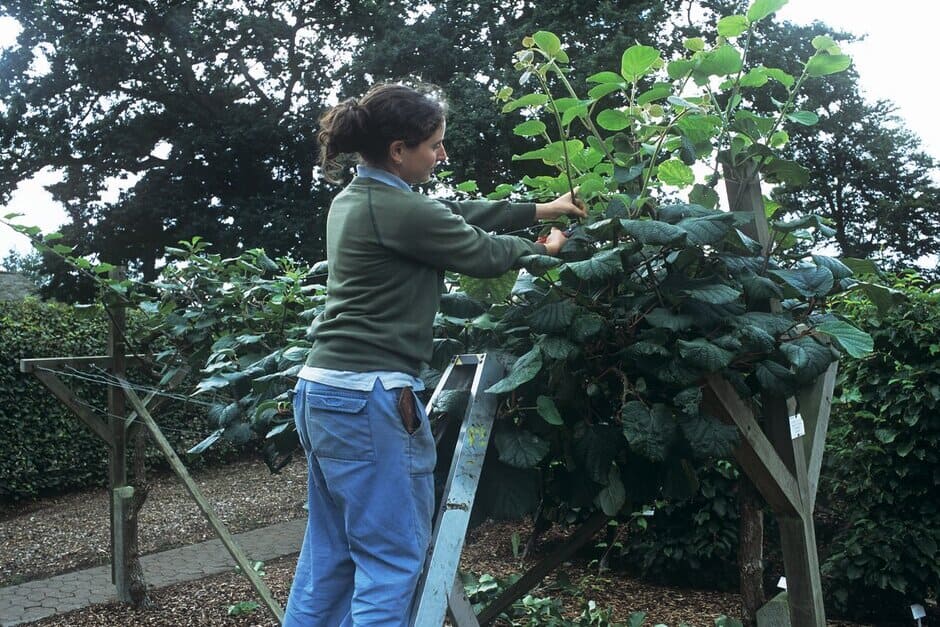
While kiwi plants can be left to their own devices, they will crop much better if pruned and trained. Unpruned plants will often grow very large, producing leaves and shoots at the expense of fruit.
For maximum cropping, train as a tiered , against a sunny wall or fence, with horizontal wires spaced at 40–50cm (16–20in) intervals. The aim is to develop a permanent framework made up of a central stem with several pairs of horizontal branches (espalier arms) bearing spaced spurs (short, stubby branches) from which the flowering and fruiting shoots are produced.
Pruning aims to stimulate new fruiting growth each year. Flowers and fruit are produced on new shoots that sprout from the base of the previous year’s growth, rather than from older stems. So when pruning, it’s important to retain the oldest part of last year’s growth, to ensure fruiting.
These vigorous climbers can also be grown over a pergola or similar sturdy structure, as long as you can access them easily for pruning, in a similar way to espaliers.
Kiwis should be pruned at planting time, then twice a year, in winter and summer as follows:
Initial espalier training:
- After planting in spring, before new growth starts, select the strongest shoot and prune it back to 30cm (1ft), cutting just above a healthy . Remove the weaker shoots. This will stimulate the development of a strong main stem. Tie this main (leading) shoot to a attached vertically to the horizontal wires
- As the main shoot grows, select a pair of side-shoots and train them in opposite directions along each horizontal wire, tying them to it loosely as they grow. the tip of these two horizontal shoots (or arms) when they fill the allotted width
- Allow side-shoots (laterals) to develop at 25–30cm (10–12in) intervals along the horizontal arms. Pinch out the tip of these shoots once they have five leaves – these will produce fruiting shoots the following year
- Continue training a pair of shoots to grow along each horizontal wire at 40-50cm (16-20in) intervals, to develop the main permanent framework of tiers
Winter pruning
- Prune the horizontal arms by one third in late winter or early spring, to encourage more lateral shoots. Prune by more than one third if overly long. Train new growth along the wire in spring
- Prune back existing lateral shoots (coming off the horizontal arms) to three or four buds
Mature espalier training:
Summer pruning
Start pruning from June onwards. Summer pruning is important to keep these vigorous plants in check:
- On shoots where fruit has started to form, pinch back to four or five leaves beyond the maturing fruit
- Any non-fruiting laterals can be pruned back to five leaves. Pinch back any regrowth to one leaf beyond the last cut
Winter pruning
Prune in late winter or early spring, before new growth starts:
- Prune the stems that carried fruit last year to three or four buds beyond the last fruit carrying side-shoot
- Prune back last year's non-fruiting shoots (growing from previously pruned laterals off the horizontal arms) to three or four buds
- On mature plants, prune back a quarter to a third of the oldest laterals (growing from the horizontal arms) to a about 5cm (2in) from the base. New growth will be produced from this stub in the coming . Thin surplus shoots, aiming for 25-30cm (10-12in) spacing
Harvesting
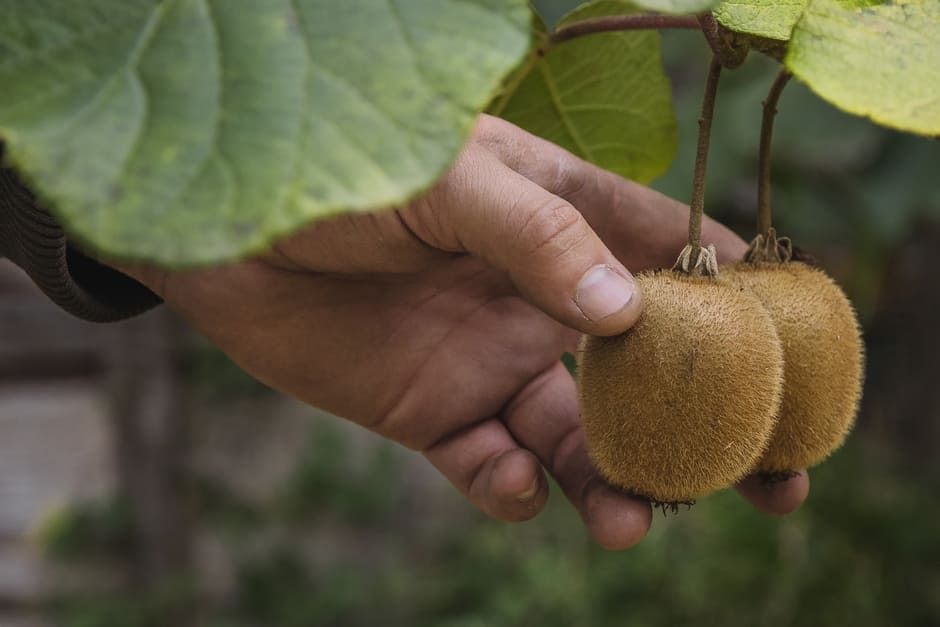
Kiwis usually start fruiting three or four years after planting. In favourable, warm conditions, especially in southern England, they can produce a prolific crop if plants are well-pruned.
They need a very warm, long summer and autumn for the fruits to ripen outdoors. Quite often they won’t ripen fully, but can be picked in autumn and ripened indoors. Harvest any remaining unripe fruit before the first hard frost and place near your fruit bowl to ripen. This can take several weeks.
Kiwis soften as they ripen, so lightly squeeze fruit to check if they are ready for eating. Keep ripening kiwis in a single layer at room temperature; once ripe they can be kept in the fridge for a couple of weeks.
Problem Solving
Kiwi fruits are generally robust, vigorous, healthy plants when grown in a suitably warm, sheltered location. However, growth can be affected by the following:
- Frost can damage new growth in spring
- Drought and/or drying winds can lead to drooping leaves, brown leaf edges and even complete loss of leaves – so choose a sheltered planting site and water as needed during prolonged dry spells
- Nutrient deficiencies may occur, particularly in chalky soil
- Fungal diseases – like many other woody climbers, kiwis may succumb to honey fungus or phytophthora root rot
Common Problems

Nutrient deficiencies
Changes in leaf colour are often a sign that plants aren’t getting the nutrients they need. Pale, yellow or reddish coloured leaves are common, but st...

Honey fungus
Honey fungus is the common name for several different species of the fungus Armillaria that attack and kill the roots of many woody and perennial plan...

Phytophthora root rot
After honey fungus, Phytophthora root rot is the most common cause of root and stem base decay of a wide range of trees and shrubs. There are a number...
