Ten experienced horticulturists share the gardening lessons they’ve learned and their hopes for the future
RHS Editorial Team
8-minute read
Looking for tried-and-tested ways to improve your garden? Few people are better placed to offer advice than the UK’s Head Gardeners – some of the most influential people in British horticulture. Responsible for some of the UK’s most admired gardens, they combine years of practical experience with the knowledge, skills, leadership and vision needed to keep these special places thriving.
The ten Head Gardeners featured here work across a diverse range of RHS Partner Gardens . From restoring historic landscapes and caring for treasured plant collections to adapting gardens for a changing climate, they are helping to shape the future of British horticulture while inspiring gardeners nationwide. Here are their tips to help you achieve success in your own garden.
Create a strong garden
Åsa Gregers-Warg, Head Gardener at Beth Chatto’s Plants and Gardens
Working alongside Beth Chatto and drawing on her knowledge and expertise, Åsa Gregers-Warg plays a key role in carrying forward the renowned British horticulturist's legacy. Åsa has worked at Beth Chatto's Plants and Gardens since 2001 and her role involves promoting sustainable gardening through talks, advice, articles and publications. Central to Beth Chatto's philosophy was her iconic mantra, 'right plant, right place' – the single best starting point for building a thriving, resilient garden. Success lies in choosing plants that are naturally adapted to your garden's soil type, and climate. Åsa's practical tips include:
Let and biennials self-seed– “Plants that germinate and grow in situ often establish more strongly and cope better with dry conditions than those raised elsewhere and then planted out. Without the disturbance of transplanting, they can develop deeper, more robust root systems from the outset. This can be particularly valuable in poorer soil, where plants need to establish strong root systems to thrive.”
Create raised beds– “For gardeners on heavy clay soil, particularly where you experience very wet winters followed by summer drought, raised beds can be very useful. They allow excess water to drain away more readily during the wetter months, reducing the risk of roots becoming , while still allowing plants to access moisture deeper in the soil during dry periods.”
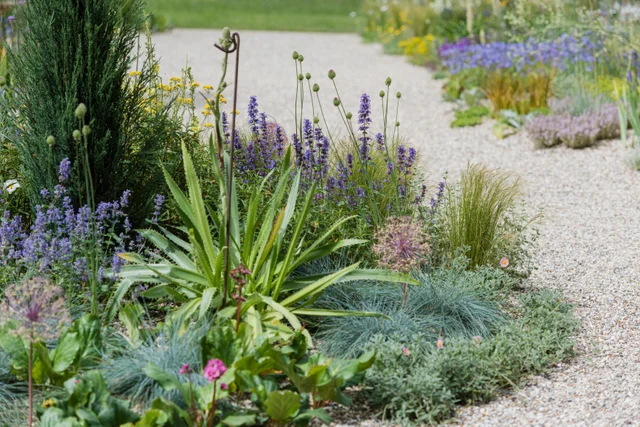
Plant densely– “Avoid leaving too much bare soil between plants. A densely planted garden or border creates its own cooler, more humid microclimate at ground level, protecting roots from intense sun and reducing evaporation.”
Work with the conditions you have – “Here at Beth Chatto’s, we’re increasingly reluctant to cut plants back hard during a heatwave, even if they’re struggling. Leaving some of that growth in place can provide valuable shade and protection for the soil and the plant’s roots. A few years ago, we also made the decision to stop routinely watering the garden, and now we only water while plants are establishing. This means accepting that our lawns will go brown during dry periods and that we may not be able to grow certain plants in the future. However, that doesn’t mean you can’t make small adjustments to help plants cope. A bit of shade can make a real difference during a heatwave, while shelter from drying winds can greatly reduce plant stress. In wet conditions, improving drainage – for example, by raising beds slightly – can help too.”
Peter Jones, Head of Horticulture at the Eden Project
For Peter Jones, Head of Horticulture at the Eden Project , horticulturists need to be open-minded – ready to experiment new approaches and styles and think about how their actions might affect the plants and the nature around us.
Here is what he recommends:
Get to know your site– “Does your ground drain freely? Does it retain water or does it dry out quickly? Is your site open and exposed or sheltered? Understand the conditions in your garden and use this information as a starting point for deciding what you can grow.”
Make sure new plants establish well – “Ensure trees and shrubs receive enough water to establish their roots during the first 6–18 months. Applying in a circle around the base helps retain soil moisture. When watering, focus on the area around the roots and, during hot weather or drought, water in the early morning or evening to minimise water loss through evaporation.”
Be open to new ideas– “As our weather patterns change and affect growing conditions, plants may struggle to cope. For example, prolonged periods of mild and wet weather can encourage aggressive fungal and bacterial problems, such as Phytophthora and honey fungus . The lack of frost can also prevent some pest insects from being naturally reduced in number. While these changes can be frustrating and sometimes upsetting, they also create opportunities for us to try new things in our gardens.”
Described by Beatrix Havergal, founder of Waterperry Gardens , as her “youngest student” at the age of three, Pat Havers is now the Head Gardener of this green oasis in rural Oxfordshire, originally created as a horticultural college for women and now renowned as a living legacy of women in horticulture, including Mary Spiller and Valerie Finnis .
Pat has spent a lifetime learning Beatrix Havergal’s way of gardening. Today, she invites gardeners to view gardens as evolving spaces where experimentation and observation can guide future planting choices.
Her top tips are:
Make informed choices before buying plants– “Selecting plants that are naturally suited to your local environment gives them the best chance of coping with both wetter winters and hotter, drier summers. Our modern borders at Waterperry Gardens, which incorporate drought-tolerant grasses, have suffered during periods of extreme heat, while plants that are performing particularly well include ornamental grasses , hylotelephium and dahlias . They continue to provide strong structure and vibrant colour despite the challenges of recent summers.”
Plant in autumn – “This will allow roots to establish over winter and spring, producing stronger, more resilient plants that are better equipped to withstand drought conditions. Particularly useful for hardy perennials.”
Water once and water well– “Deep, thorough watering encourages plants to develop stronger root systems, whereas frequent light watering often results in shallow roots that are more vulnerable to drought. Installing a water butt can also help gardeners make better use of rainfall and build a reserve for dry periods. Seep hoses have become invaluable in our herbaceous borders, as they deliver water directly to the root zone, where it’s needed most, while minimising waste through evaporation. They can also be left running gently overnight when temperatures are cooler.”
Monitor your trees– “Trees are the backbone of many gardens, providing structure, shade, wildlife habitat and cooling benefits, so looking after them should be a priority. Whether you have a mature specimen or a newly planted tree, regular monitoring is essential.”
Gardens are to be enjoyed, not just worked on, says Andy Tudbury. He has been the Head Gardener at Belvoir Castle since 2023, but his career spans more than 25 years in show garden design, teaching and garden leadership.
His advice to fellow gardeners is:
Apply a generous layer of organic before spring– “As well as suppressing weeds and feeding the plants, mulching helps retain moisture in the soil and provides a protective layer against all but the hardest frosts and snow. It’s a simple, low-cost practice that home gardeners can easily adopt to build resilience into their own spaces.”
Look beyond your borders– “There is a great deal we can learn from horticulturists in other parts of the world, who have long been managing the kind of extreme conditions the UK is only now beginning to experience regularly. Looking beyond our borders for proven techniques will be key to helping British gardens cope with a changing climate.”
Garden for the environment– “Encourage pollinators and natural predators into the garden to help maintain healthy, resilient plants. I garden organically wherever possible and make far greater use of companion planting. I’ve also shifted towards selecting plants that offer year-round interest rather than a single, fleeting season of colour.”
Upcycle your waste
James Dobson
Jodie Hilton, Head Gardener at Sheffield Park and Garden
Jodie Hilton joined Sheffield Park and Garden in August 2021 and became Head Gardener in February 2024. Over her time there, Jodie has developed a keen interest in rhododendrons, becoming a plant committee member for the RHS Rhododendron, Camellia and Magnolia Group , while also working to build a culture of conservation within horticulture.
She recommends:
Don’t get bogged down in perfection– “Nature does not follow a plan and since we share our gardens with many other creatures, we should be ensuring these spaces are there for them to thrive in too.”
Understand your surroundings – “What soil are you on? Where does the sun hit in the hottest parts of the day and where does the frost catch over winter? Look at what is currently growing in those areas. Some plants will have done very well despite the drought, while others will have struggled and some may not have even come back after a very wet winter. It’s important to experiment in your own garden because it’s the best way to learn and understand which plants will work long term.
Upcycle your waste– “Try cutting and dropping some of your garden arisings directly onto your beds, this protects the surface of the soil and encourages organisms to move around, which in turn alleviates compaction.”
The stories of these and other Head Gardeners were at the heart of RHS Head Gardeners’ Courtyard, a display created by award-winning garden designer Dave Green for the 2026 RHS Sandringham Flower Show. The exhibit celebrated their career journeys, achievements and ambitions for the future, while highlighting the expertise that underpins great gardening.
Walk your garden daily
Tony Young, Head Gardener at Shuttleworth Swiss Garden
Supported by a dedicated team of volunteers, Tony Young oversees the day-to-day stewardship of Shuttleworth Swiss Garden ’s unique historic landscape, where close observation and hands-on management are essential. For him, the future of horticulture depends on inspiring the next generation to take up the challenge of caring for Britain’s treasured gardens.
His approach is simple:
Spend less time cutting grass– “Once a weekly job at Shuttleworth Swiss Garden, mowing is now carried out fortnightly, using mulching mowers to cut the grass higher. I’ve also moved away from digging and now focus on loosening the soil and mulching flower and shrub beds.”
Research your local area– “Enrol on an RHS course to learn more and meet other gardeners. Join your local gardening club and listen to the experiences of others and pick out what will work for you.”
Walk your garden daily– “The best mud is on the boss’ boots!”
Don’t overwater– “Encourage the plants’ roots to go further down to seek water and .”
Philip Oostenbrink, Head Gardener at Walmer Castle and Gardens
Philip Oostenbrink has been Head Gardener at Walmer Castle and Gardens since 2020 and wants to encourage other plant enthusiasts to experiment. He holds four National Plant Collections and wishes for people to keep planting rather than replacing gardens with artificial turf, so British gardening can remain as diverse as possible.
Here are his suggestions:
Take care of the soil beneath your feet – “At Walmer Castle and Gardens, we using our own leaf mould and , as well as farmyard manure bought in every winter. Make sure you cover the soil with mulch as much as possible, as this improves its structure, which is extremely beneficial during periods of extreme weather.”
Plant a diverse garden– “Plant a combination of shrubs and perennials that can cope with dry or wet conditions. We are based in the east of Kent, one of the driest parts of the country. To adapt to heatwaves, plants such as Astilbe have been replaced with Crocosmia or Calamintha,which are good for pollinators and provide throughout dry periods. We are also using more ornamental oregano .”
Create shade– “To provide relief during hot weather and help combat the urban heat island effect, incorporate an upper canopy that offers shade in summer and shelter in winter. This could be achieved by planting small trees or using trees that are coppiced in early spring, allowing them to provide height and canopy cover during the summer months. Examples are Paulownia, Catalpa or Robinia for a more filtered effect.”
Aymeric Huguerre, Head Gardener at The Walled Gardens of Cannington
While aesthetic was once everything in horticulture, Aymeric Huguerre has now learnt to consider the environmental impact first when embarking on a new gardening project. He joined The Walled Gardens of Cannington in 2015 and became Head Gardener in 2017, continuing the extensive redevelopment of the grounds of the medieval priory where the gardens are set.
His key takeaways are:
Prefer perennials over – “In recent years, we have noticed that sudden and prolonged dry spells mean don’t have enough time to establish properly. Instead, encourage the use of ornamental perennials.”
Manage water in your garden– “Rainwater storage should be a priority. Make use of every building and shed you have to collect rainwater and fill water butts. Olla irrigation pots and drip irrigation systems can also help make your garden more resilient to dry weather.”
Use tall species– “Using taller species to provide shade for smaller plants can be very effective, sometimes even improving both crop yields and the overall aesthetic.”
Improve drainage– “This is essential during wet winters, especially in heavy clay soils. My preferred approach is to incorporate a mixture of well-rotted organic matter, light and gravel or grit into the top 2–3 inches of the border, repeating this over three or four years.”
Jamie Harris, Head Gardener at Leonardslee Lakes and Gardens
Before turning a gardening hobby into a profession, Jamie Harris began his career in film and television. In 2009, he trained as a horticulturist and in 2021 he became Head Gardener at Leonardslee Lakes and Gardens , where he curates the historic and rare plant collections within the Grade I-listed estate.
His know-how includes:
Plant new specimens at the right time– “Autumn is generally the best season for planting out, particularly when it comes to young plants. The ground is still warm from the summer but will be moist from the autumn showers, allowing plants to develop their roots and establish themselves before entering winter . There will then hopefully be no need to irrigate until the following spring.”
Plant on a mound– “Planting trees and shrubs on a slight mound will help excess water to drain away, while a bowl or dish at the base of the mound allows the plant to access water rather than letting it run off.”
Let it go – “We have lost many plants due to the lack of rain. Rhododendrons and hydrangeas in particular have really suffered, even in shady locations. Although it might be hard to let go of a plant collection that struggles to cope with the changing climate, I am trying to see it as an opportunity for rejuvenation and exciting change. Losing an old tree or shrub will leave a big hole, both physically and sometimes emotionally, but it also offers a chance to try something different and bring new life to an area.”
Support wildlife
Ross Underwood, Head Gardener at The Dorothy Clive Garden
At The Dorothy Clive Garden , Ross Underwood brings specialist knowledge of rhododendrons and magnolias to a varied and evolving plant collection. This 12-acre garden reflects both horticultural passion and a commitment to creating richer habitats for the future, with new plans including the creation of a three-acre wildlife meadow and arboretum.
His advice is practical:
Cover the soil– “Bare soil should be anathema to any gardener. Plants which grow together cheek by jowl help shade the soil in times of drought and reduce evaporation, while taller plants provide for those below. In winter, roots help bind the soil together under a canopy and evergreens help deflect rain and prevent erosion. Where there are gaps, such as in a vegetable garden or when using , a hefty organic is key.”
Stake and prune– “Staking and judicious pruning of herbaceous perennials help keep them looking at their best, even when the heat is really intense. We use the Chelsea chop method to help stagger flowering times. We also practise the Hampton hack , clearing away the initial flush of flowers and foliage from early summer perennials. This promotes a second flush in some, rejuvenates the foliage in others and helps control mildew, which can be prevalent in dry weather.”
Be radical– “I think we can be too precious about our plants, preferring to persist in nursing along plants that may be struggling rather than moving them or replacing them entirely. Plant breeders are ingenious and always coming up with new offerings, which we should be more willing to seek out. Our changing climate presents opportunities as well as pitfalls!”
Support wildlife– “When I started my career, more was always better. More plants, more , more feed, more chemicals. Now I am more aware that my garden is not just mine. I share it with our fast-diminishing wildlife and endeavour to be as good and gracious a host as possible. I try to source plants from smaller growers and specialists, not only to reduce travel miles but also because they put their heart and soul into the plants they grow.”