Quick Facts
Lilacs are hardy deciduous shrubs that are easy to grow
1
They usually bear cone-shaped, scented flowerheads
2
Most flower once in late spring; a few flower again in summer and autumn
3
Height varies according to species, so pick one to suit your space
4
Lilacs like to grow in sunny spots
5
They need good drainage, and most prefer neutral to alkaline soils
6
They need little pruning once established
7
Lilacs can be propagated from suckers, by layering or from cuttings
8


Before you get started
What are lilacs?
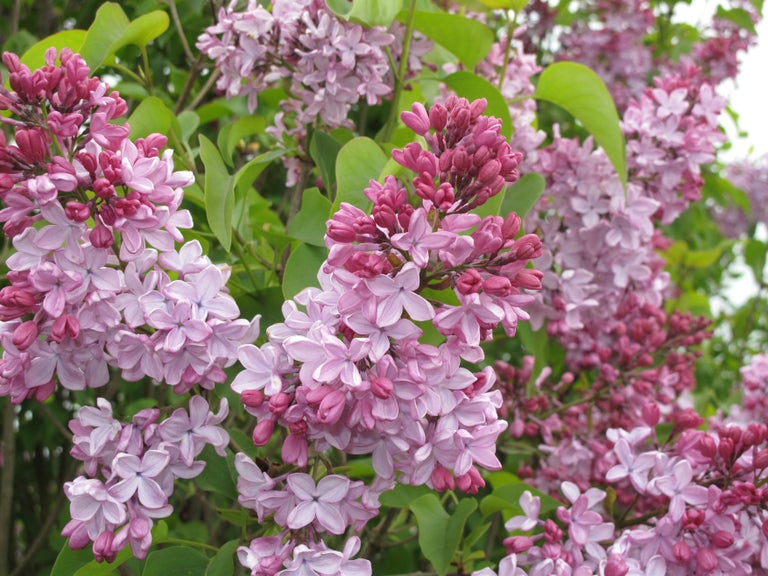
Lilacs belong to the genus Syringa and occur naturally in south-eastern Europe and in Asia from the Himalayas to Japan. Best known are the many varieties of common lilac ( Syringa vulgaris ), beloved for their large, richly scented flowers in a range of mostly purple shades, as well as pink, cream and white. More practical for many gardens are the smaller species with a more limited range of pink and purple shades. Some are repeat-flowering and most have the luscious lilac scent.
Choosing the right lilac
With such a large range, choosing the right size for your garden will be your first consideration. There is also a good choice of colours among common lilac varieties. Look out for plants with the RHS Recommended: Award of Garden Merit . These have done well in trials and expert assessments and should be the best of their kind.
Larger lilacs
Flowering profusely in late spring, large lilacs have a relatively short period of interest – their foliage is unremarkable, and they lose their leaves over winter – so bear that in mind when choosing and planting. They work well as part of a shrubbery alongside other early-flowering shrubs like Deutzia and Weigela. Otherwise, you can mix them with later performers like Philadelphus and Buddleja to give a longer season of interest.
Alternatively, they can be grown as small, multi-stemmed trees free-standing in lawns, or as a focal point. Old tree-like specimens have quite interesting, shaggy and can be underplanted with or ground cover plants. Wherever you plant them, ensure that over time their situation doesn't become shaded as this will stifle flowering.
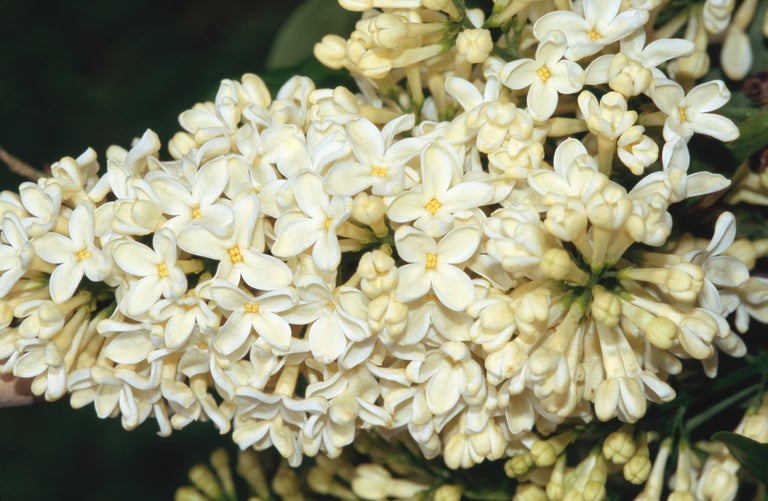
There are many varieties of common lilac, some easier to come by than others, with both single and double flowers, and colours in all shades of purple, pink, cream and white. Reliable choices include dark purple-red ‘Andenken an Ludwig Späth’ , double lavender ‘Katherine Havermeyer’ , cream ‘Primrose’ and double white ‘Madame Lemoine’ . For further inspiration there is a National Collection of large-flowered lilacs at Golden Acre Park, Leeds – not far from RHS Garden Harlow Carr.
As well as varieties of common lilac ( S. vulgaris ), it is worth seeking out the more delicate charms of S. × hyacinthiflora and S. × josiflexa varieties, which have smaller, more airy flowers but still develop into large shrubs.
Hungarian lilac, S. josikaea , can reach about 3m but tolerates regular trimming to create a flowering, lightly scented, chalk-tolerant hedge. Not all lilacs are sweetly scented, and the Himalayan lilac, S. emodi , has an unpleasant odour – perhaps redeemed by two varieties with foliage.
Smaller lilacs
More compact, small-flowered lilacs are great mixed with other similar-scale shrubs. Choose ones that like the same conditions but flower a little later in the season including roses, lavenders and cistus. You can also plant small lilacs in containers for sunny patios.
Good, reliable choices include the popular S. × meyeri ‘Palibin’ growing slowly to 1.5m, or the slightly larger S. pubescens subsp. patula ‘Miss Kim' .
Many smaller cultivars flower over a long period – usually starting with a flourish in late spring then flowering intermittently from mid-summer to mid-autumn. Look out for ‘Red Pixie’ opening pale purple from red-purple buds, or the Bloomerang and Flowerfesta series in various colours.
Buying
Lilacs are widely available from garden centres, nurseries and via mail order as container-grown plants, particularly in spring. They are available in a range of sizes – and prices – from young plants in 9cm pots to more established specimens in 2 litre to 12 litre pots. Some of the larger plants will be grafted, which can produce more substantial plants more quickly.
A few smaller varieties are also available as 1m high standards – lollipop shapes that are ideal for container growing.
Some mail order suppliers stock a limited range of bare root plants during the dormant season (from late autumn to late winter).
For suppliers of specific cultivars, see RHS Find a Plant .




Planting
Where to plant
Lilacs need a sunny, open and uncrowded position to flower well, have room to develop and reduce fungal problems. They generally prefer well-drained, neutral to . If your soil is prone to waterlogging over winter, then mound-plant by creating a small hummock 25-30cm high and 1m in diameter. Avoid frost pockets – the plants are perfectly hardy but late frost can damage both flowers and foliage.
When to plant
As with other hardy shrubs that lose their leaves over winter, the best time to plant a lilac is from autumn to early spring so it can start to establish before it comes back into leaf. Plants bought in containers can, in theory, be planted at any time of year, but you will need to pay more attention to watering if the new plant is in leaf.
How to plant

Planting in containers
Compact lilacs like 'Red Pixie' can be grown in containers. Pot into a loam-based potting such as peat-free John Innes No 3. Follow these links for tips on container growing:


Ongoing care
Watering
will only need watering in exceptionally dry weather, but newly planted shrubs may need additional watering in dry spells for their first year or two, while a good root system is developing.


Mulching
Like most shrubs, lilacs will appreciate an annual with organic matter to improve soil structure, aid moisture retention and provide some .



Feeding
Plants growing in the soil do not need any special feeding unless they are showing signs of nutrient deficiencies.

Container care
In spring, replace the top 2-3cm of in containers with homemade compost or peat-free John Innes No 3 compost. Containers will benefit from a liquid feed once a month during the (April to September) using an organic fertiliser, such as a seaweed feed or a homemade liquid feed.
Lilacs grown in containers will need repotting every three to five years. Spring is the best time to do this as plants will be coming into active growth. Avoid repotting late in the year or plants can end up sitting in over-wet, excess compost over the winter.



Pruning and training
Regular pruning
Lilacs generally need little pruning. As all lilacs flower on wood made the previous season, any regular pruning should take place in summer, directly after flowering. To keep the common lilac within bounds, prune lightly every year, down to an outward-facing . Avoid hard pruning which will result in masses of leafy growth and few flowers. With mature plants, out deadwood and overcrowded branches improves air flow and helps keep mildew at bay.

Deadheading
Where practical, to the next pair of leaves will improve appearance, especially of pale-flowered varieties, and avoid diverting the plant’s energies into producing seed.
Suckers
Cultivars of the common, large-flowered lilac, S. vulgaris, tend to produce strong upright shoots, known as suckers, from the roots. If the plant is its own roots, then these suckers will be identical to the parent and can be used for propagation (see below). Otherwise, they are best removed to prevent the plant forming a thicket. With grafted plants, any suckers will not flower true to the parent and should be removed when you come across them.

Renovation pruning
If you need to renovate a lilac by hard pruning, January is the best time. If you can stagger the process over two to three years, the shrub's response will be better.

Propagating
The quickest and easiest techniques for propagating lilacs are layering, in autumn or spring, and using suckers in spring.


Plants that are not suitable for either technique can be propagated by softwood or, later, . Bear in mind that can be slow to root and success rates are often variable.


Only species will come true from seed, and may take years to flower.

Please be aware that some lilacs are protected by Plant Breeder’s Rights, and you are not allowed to propagate them for sale.
Problems
Lilacs are generally robust and hardy plants, but there are a few problems to watch out for:
- Suckering from the roots - see Pruning above.
- Lilac leaf-mining moth caterpillars burrow into leaves, creating brown blotches in late summer. Usually, the level of damage can be tolerated.
- Privet thrips can cause silvery-brown mottling, though the damage is rarely serious.
- Diseases like powdery mildew and lilac blight can sometimes occur.
- Pigeons feed on a wide range of plants but seem particularly fond of lilacs, resulting in ripped and shredded leaves.
If you are a member of the RHS, you can use our online Gardening Advice Service , via MyRHS , for any gardening problems or queries.