Getting Started
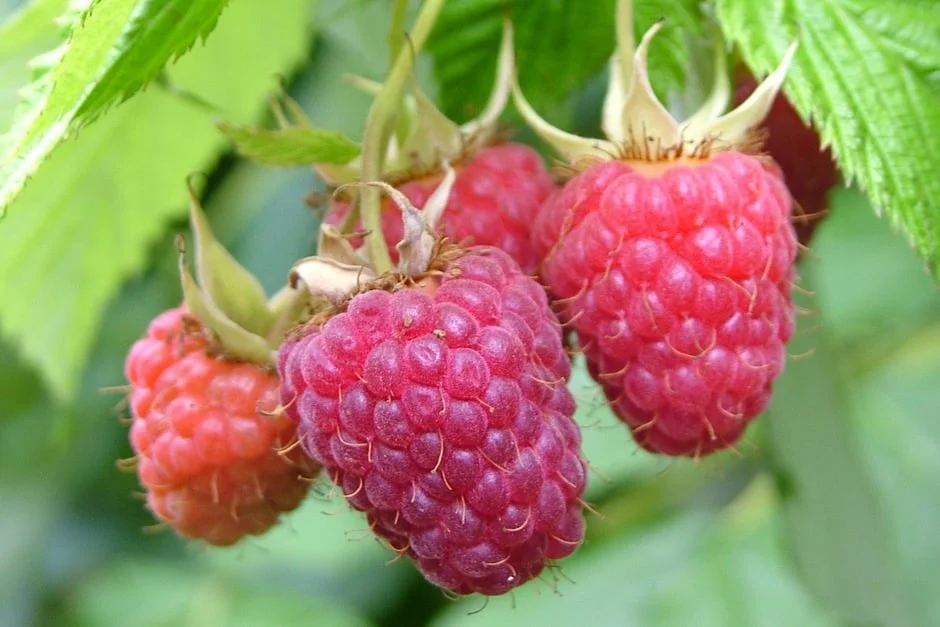
Juicy, sweet and easy to grow, raspberries (Rubus idaeus) are among the most popular summer fruits, suitable for any size of garden and even containers if you choose a compact variety. Raspberries are self-fertile, so you only need one plant to get fruit. There are two main types – summer fruiting (floricanes) and autumn fruiting (primocanes), and if you grow both you can enjoy harvests for months on end:
- Summer-fruiting raspberries usually grow to about 1.8m (6ft) tall and form bushy plants that need plenty of space. They fruit from early to late summer, depending on the variety. Newly planted, they will usually fruit from their second summer onwards
- Autumn-fruiting raspberries are generally smaller, less vigorous plants, usually 1.2–1.5m (4–5ft) tall, and crop from late summer into autumn. They are easier to prune and suitable for smaller plots. New plants will fruit in their first year
Raspberries are hardy, vigorous plants that grow well in most locations, especially in cooler regions. They prefer a sunny, sheltered position but can produce a decent crop in partial shade. They do need annual pruning and support for their tall stems.
Jobs to do now
Harvest ripe fruit
Prune summer-fruiting raspberries
Tie in stems
Month by Month
Plant
Harvest


Choosing What To Grow

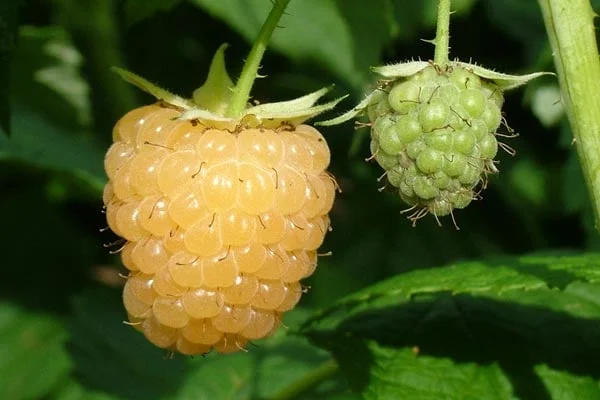
There is a huge range of raspberry varieties to choose from, for early-, mid- and late-season crops. If you grow a selection, you can harvest delicious fresh berries from late June through to October. Different varieties also offer a choice of plant sizes, some with spine-free stems or resistance to diseases. The fruits come in various sizes, flavours and even colours – including yellow, apricot, dark purple and the more familiar red.
If you’re short on space, consider autumn-fruiting varieties, such as ‘All Gold’ and ‘Autumn Treasure'. There are also some less vigorous summer-fruiting varieties, such as ‘Malling Jewel’ and ‘Malling Minerva’. Select a compact, dwarf variety, such as ‘Ruby Beauty’, if you want to grow raspberries in containers.
When choosing varieties, look in particular for those with an RHS Recommended: Award of Garden Merit (AGM), which shows they performed well in trials, so should crop reliably. See our list of AGM fruit and veg (135kB pdf) and our Recommended Varieties below. You can also see many soft fruits, including raspberries, growing in the fruit and veg plots at the RHS gardens, so do visit to see how they are grown, compare the varieties and pick up useful tips.
What and where to buy
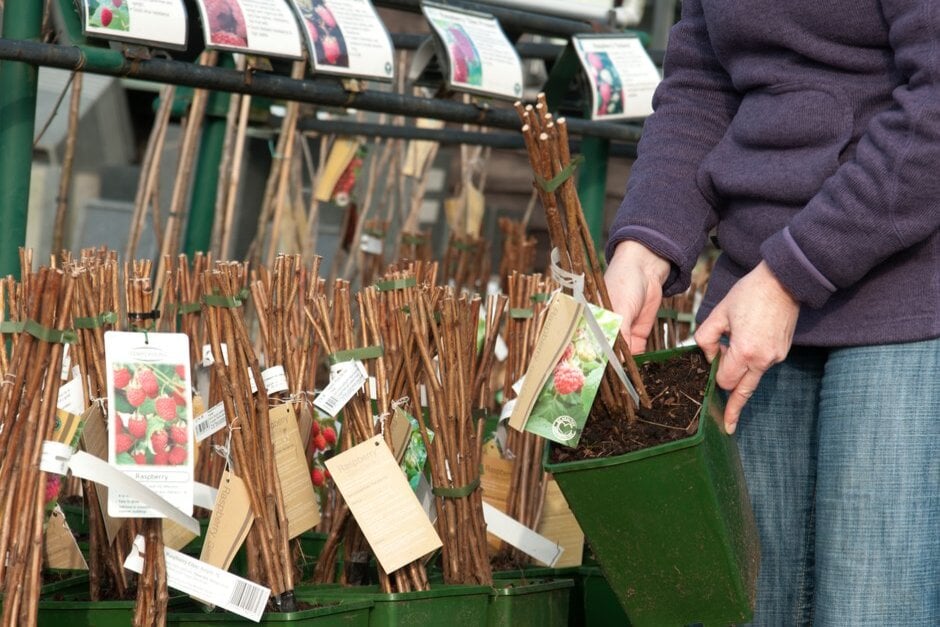
Raspberries are available as either plants (without soil around the roots) or in containers. Bare-root raspberry plants (canes) are mainly available from fruit nurseries and larger online plant retailers by mail order, while containerised or container-grown plants are available in garden centres too.
Bare-root plants are only sold during the dormant season, from autumn to early spring – they tend to be cheaper and sold in bundles of five or more, so ideal if you want to plant a row. Raspberries in pots are often available for a longer period, but may be more expensive. For the widest choice of varieties, go to fruit nurseries and online fruit specialists. Take care to buy plants that are certified virus-free, as raspberries are prone to virus infections, which reduce their vigour and cropping.
Recommended Varieties




Planting
Raspberries are usually planted in the ground, although compact varieties can be planted in containers. Late autumn is a good time to plant, but they can be planted at any time while dormant, between November and March, providing the soil isn’t frozen. Raspberries prefer fertile, well-drained soil that is slightly acidic (ideally 6–6.7). They dislike shallow chalky soil and won’t tolerate waterlogging, especially in winter. To improve drainage, consider planting in raised beds. Raspberries can struggle with establishment and health issues if planted in soil where they’ve previously been grown. If you're removing old rows and planning to replant, it's best to choose a different area to avoid replant problems.
Choose a sunny planting site for best results. Raspberries will fruit in light shade, but will produce a smaller crop and be less robust and healthy. Raspberries are usually grown in rows, ideally running north to south so the plants don’t shade each other. A sheltered site is preferable too, as strong winds can deter pollinating insects and snap thin fruiting side-branches.
Remove weeds from the area. On decent garden soil, no additional soil preparation should be needed before planting. However, if your soil is poor, mix in some organic matter, such as garden , to the soil you remove from each planting hole and use this to backfill after planting. This minimises soil disturbance and helps your plant get off to a strong start.
It's easier to put supports in place before planting – usually a system of posts and horizontal wires (see Supporting plants below). If you don’t have room for rows of raspberry plants, you can just use sturdy bamboo canes to support a few plants.
Space plants 40–60cm (16–24in) apart, with 1.5–2m (5–6.5ft) between rows, depending on the variety. Take care not to plant too deeply – the first roots should be no more than 5cm (2in) below the soil surface. Use the previous soil mark on the stem as a guide. After planting, spread over the soil in a layer 5–7.5cm (2–3in) deep, but don't place mulch too close to the stems as this can cause them to rot. Mulch with well-rotted organic matter, garden compost is ideal – avoid using alkaline mushroom compost.
Most raspberries should be pruned straight after planting – cut the stems (canes) down to 25cm (10in) tall. However, don’t prune summer-fruiting raspberries bought as ‘long canes’, otherwise you will lose the fruit for that season.
Planting in containers
There are some compact raspberry varieties that are suitable for planting in a container. For these, choose a pot at least 40cm (16in) wide and 30cm (12in) deep and fill with a mixture of approximately two thirds peat-free multi-purpose and one third loam-based compost, such as peat-free John Innes No 3.
Plant a single raspberry in the centre of a 40cm (16in) wide pot, at the same level it was previously growing. Insert sturdy bamboo canes or poles for support and tie in new growth. Raspberries grown in containers will need regular watering and feeding to keep them healthy and fruiting well.
Plant Care
Once established, raspberry plants are a fairly easy crop to look after. Canes need to be supported and occasionally thinned out, and they benefit from annual mulching. These tasks, along with correct pruning (see Pruning and training below), will help keep plants cropping well for up to ten years.
Watering
Water well immediately after planting and during any prolonged dry spells during the first . Well- shouldn’t need extra watering. However, raspberry plants have shallow root systems, so during exceptionally long dry spells, some additional water may be necessary when the fruits are developing.
When growing raspberries in a container, water throughout the growing season to keep the consistently moist. Use rainwater from a butt whenever possible, particularly in hard water areas, and water at cooler times of the day, ideally in the morning.
Mulching
Apply a 5-7.5cm (2-3in) layer of organic matter as a around raspberry plants in late winter or early spring. Leave a slight gap around the base of the stems to prevent rotting. Mulching will improve your soil, help to retain moisture and suppress weeds. Avoid using organic matter with a high level, such as spent mushroom .
Feeding
Raspberries growing in regularly mulched soil shouldn't need any additional feeding. However, if harvests are particularly poor, or your plants are showing signs of nutrient deficiency, apply an organic granular fertiliser to the soil in early spring. Use our page on nutrient deficiencies to work out what is lacking and apply the recommended feed, following instructions on the packet.
When growing raspberries in a container, feed with an organic general-purpose liquid fertiliser on a monthly basis throughout the .
Supporting plants
Raspberries are usually planted in rows and supported by a system of posts and horizontal wires. If you don’t have room for a row, you can just grow a couple of plants supported by a single post (see below), or one compact plant in a container supported by bamboo canes.
Single fence:
This system of posts and horizontal wires is ideal for summer-fruiting raspberries.
- Install a tall, sturdy post at each end of the row, plus extra posts at 3.6m (12ft) intervals if necessary. They should stand about 1.8m (6ft) tall
- Attach three lengths of strong galvanised wire horizontally between the posts, at 60cm (2ft) intervals
- Plant the summer-fruiting raspberries and tie in the stems along one side of the wires
- Keep all the fruiting stems on one side, and the young new stems for next year’s crop on the other side as the season progresses. This way, the fruited canes can easily be pruned out and the young canes will be separate along the other side of the wire
Single or double fence with parallel wires:
This system is ideal for autumn-fruiting raspberries and for summer raspberries in a small space. Tying in individual canes isn’t necessary, as they are fenced in by parallel wires either side. However, harvesting is a little more tricky, and there is a greater chance of fungal problems due to more crowded conditions.
- Install a sturdy post at each end of the row – they should stand about 60cm (2ft) tall for autumn raspberries and 1.8m (6ft) for summer raspberries. Add extra posts at 3.6m (12ft) intervals if necessary
- Attach short lengths of timber horizontally to the top of each post, plus another 60cm (2ft) below on the taller posts for summer-fruiting raspberries
- Attach strong galvanised wire to the ends of the horizontal timbers to create parallel wires along each side
- You can also add thinner wire or between the parallel wires as cross ties, every 60cm (2ft) along the row
- Plant the raspberries in a row between the posts. The stems don’t need tying in, as they will be supported by the parallel wires and cross ties
For a double fence, insert posts (as above) along each side of the row rather than in the middle, then fix horizontal wires to the posts at the spacings described above. You can also add cross ties if you wish.
Single posts:
This method is ideal for small spaces where only a few plants are being grown.
- Install a sturdy post that stands about 60cm (2ft) tall for autumn raspberries and 1.8m (6ft) for summer raspberries
- Plant two or three raspberry plants around the base of the post and tie the stems to it with twine
Propagating
It’s easy to make new plants from existing raspberries, to extend your row or start new ones. When the plants are dormant, simply dig up any healthy suckers that appear outside the row and replant in the new location.
Only propagate from recently bought plants that are certified virus-free, as raspberries are prone to a number of diseases and viruses as they age, which would infect the new plants too, reducing their vigour and cropping potential.
Pruning And Training
Raspberries should be pruned and trained regularly to keep plants healthy and fruiting well. If left unmanaged, a raspberry plant will grow into a bush and spread by suckers beyond its allotted space. Summer and autumn raspberries are pruned at different times, as detailed below.
Pruning summer-fruiting raspberries
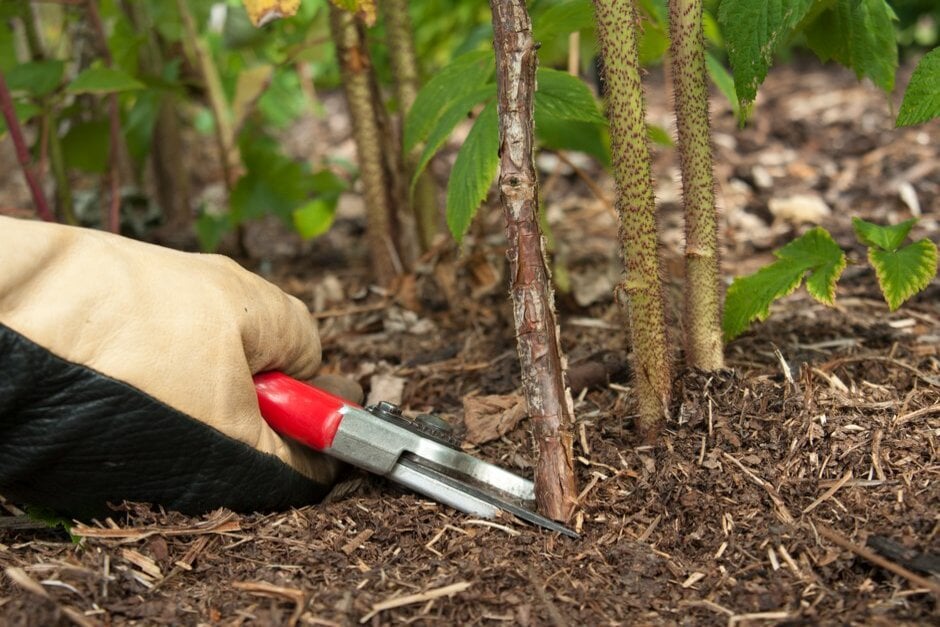
Summer-fruiting raspberries (floricanes) produce fruit on one-year-old stems (the previous season’s growth). They should be pruned and trained straight after you finish harvesting the crop, as follows:
- Cut all the old, woody, fruited stems right down to ground level
- Then select the strongest young green stems that have grown during the current season – around six to eight per plant – and tie them to your horizontal wires, spacing them about 10cm (4in) apart. These will fruit the following summer
- Cut any other young stems to ground level
- If the young stems are taller than the top wire, loop them over and tie them in temporarily. Then in February, trim back these long canes to a about 10cm (4in) above the top wire
Pruning autumn-fruiting raspberries
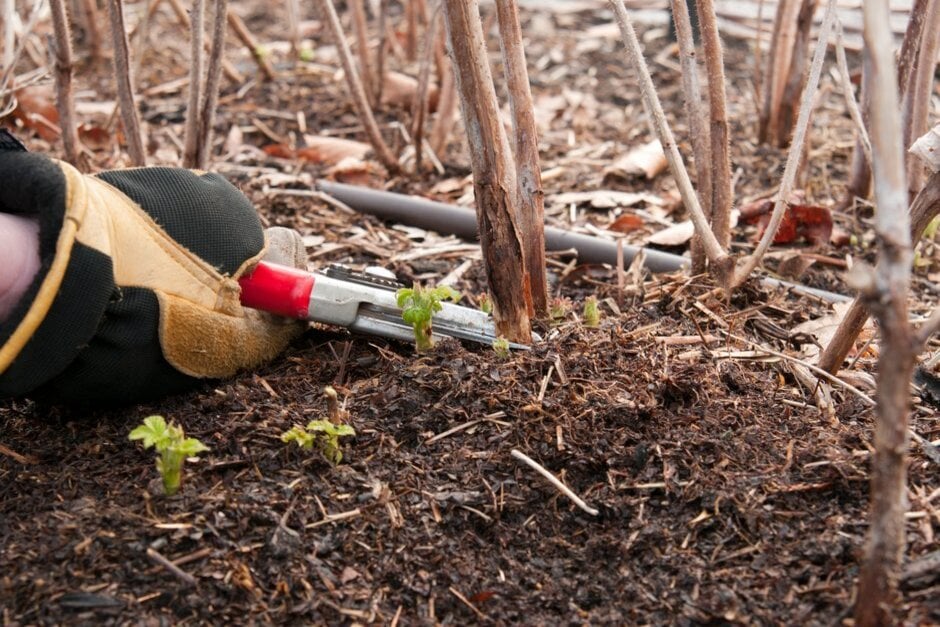
Autumn-fruiting raspberries (primocanes) produce their crop on the current season’s stems. They are easy to prune:
- In February, cut back all the old, fruited stems to ground level. New ones will start emerging in late winter/early spring, which will bear fruit later in the year
- In early summer, thin out any very overcrowded clumps if necessary, removing weaker stems so the remainder are about 10cm (4in) apart
Pruning autumn raspberries for double cropping
Double cropping is useful if you don’t have space to grow summer- and autumn-fruiting raspberries. You’ll get a modest summer crop, and a slightly reduced autumn crop. The combined harvest should exceed that of autumn-fruiting raspberries pruned in the traditional way, with the added benefit of a longer cropping season. To prune for a double crop:
- In February, instead of cutting all the stems to ground level, select six to eight of the strongest ones per 1m (3ft) of row, and prune off just the upper fruited part
- Cut all the other stems to ground level as normal
- After the half-pruned stems have fruited in summer, cut them down to ground level, leaving the current year’s stems to fruit in autumn
Use this method only on well- that are growing strongly. Varieties such as ‘Joan J’ and 'Polka' are particularly suitable.
Removing suckers
Raspberries will send up suckers of new canes in spring. Any that sprout up outside the intended growing area should be removed. If you want more plants, the suckers can be replanted in a more suitable spot, see Propagating above.
Harvesting
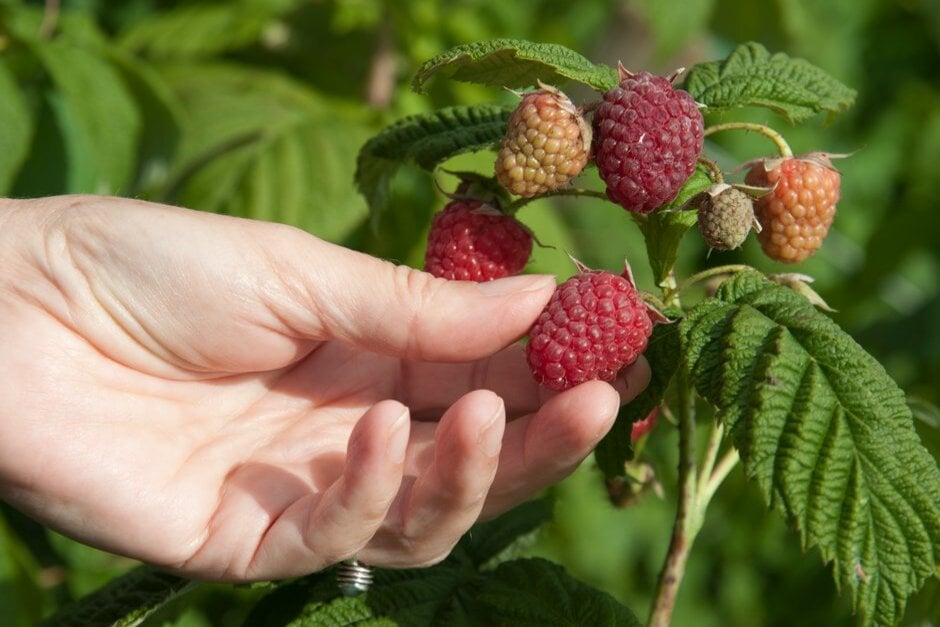
Early varieties of summer-fruiting raspberries should be ready for harvesting from June, with later varieties potentially still ripening into September. Autumn-fruiting raspberries start cropping in August, often continuing well into October.
Harvest regularly, to get fruits at the peak of ripeness, when richly coloured, plump and easy to pull off. Pick on a dry day, as damp berries can soon turn mouldy. If you don't want picked fruits to get squashed, place them in a shallow bowl or punnet, keeping them only two or three layers deep. Raspberries are best eaten fresh, when juicy, sweet and delicious. If you end up with a glut, they freeze well and make lovely jams, sauces and desserts.
Problem Solving
Raspberries generally grow vigorously and crop well for up to ten years in most locations. However, they can be affected by various problems, including:
- Viruses and fungal diseases – including blights and rust. Raspberries are particularly prone to viruses, which cause stunting and distortion. Affected plants should be removed quickly, as viruses are easily spread by aphids and other -sucking insects
- Birds and squirrels –may be a problem on some sites. If necessary, protect your crop by covering plants with plastic-free or reused netting. Raise the netting above the fruits using bamboo canes or wood, such as hazel or chestnut poles. Ensure the netting is taut and fastened securely so birds and other wildlife don’t get entangled in it. Alternatively, grow your raspberries inside a fruit cage
- Insects and mites – including raspberry beetles and leaf and mites
- Magnesium deficiency – foliage turns yellow between the leaf veins, sometimes with reddish brown tints
For information on avoiding and overcoming the above issues, see Common problems below.
Common Problems

Nutrient deficiencies
Changes in leaf colour are often a sign that plants aren’t getting the nutrients they need. Pale, yellow or reddish coloured leaves are common, but st...

Grey mould
Grey mould, caused by the fungus Botrytis cinerea, is a very common disease, causing a soft decay of plant tissues accompanied by a growth of fuzzy gr...

Raspberry cane blight
Raspberry cane blight is a common and serious fungal disease of raspberries, causing extensive die-back of canes.


