Getting Started
Easy to grow, hardy and generally trouble-free, quince trees are attractive and productive. They produce large, highly fragrant fruits, usually golden yellow in colour. These aren’t edible raw, but can be cooked to make aromatic quince jelly, desserts and a quince paste called membrillo.
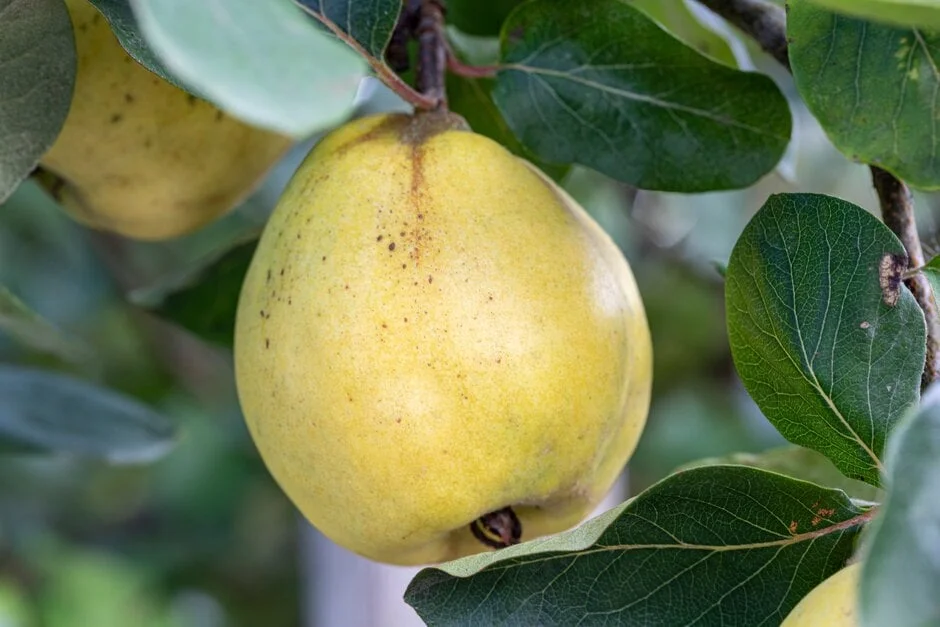
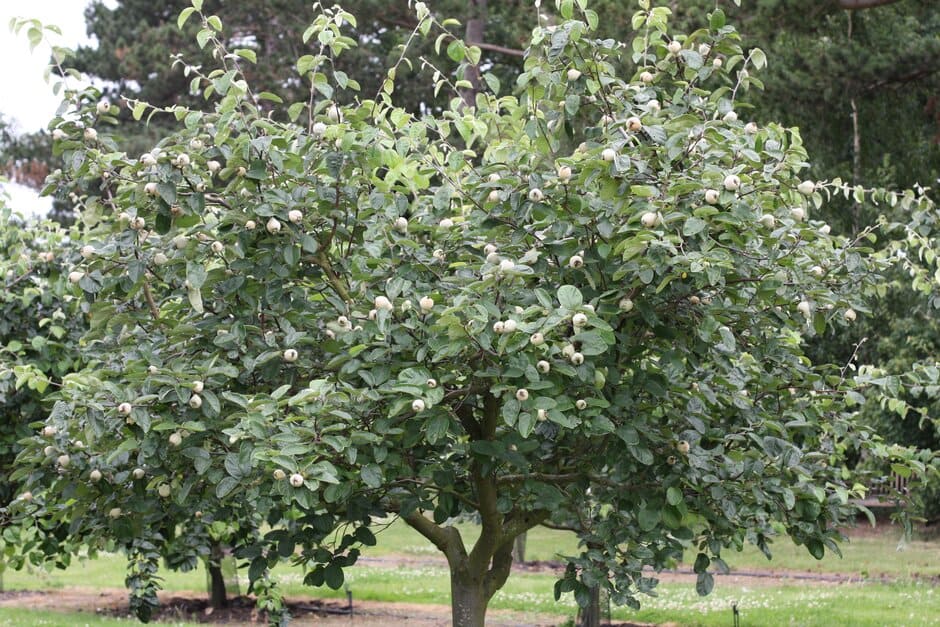
Quince trees (Cydonia oblonga) look fairly similar to apple trees and produce pretty spring blossom as well as fruit. They can range from large spreading trees that make an attractive focal point in a lawn, especially in warmer locations, to more compact forms suitable for smaller gardens or even large pots. They usually start cropping when five or six years old. Quince trees are self-fertile, so you’ll get a good crop with just one tree, without any need for a partner.
They are sometimes confused with the Japanese quince (Chaenomeles), a thorny shrub grown for its spring blossom. This also produces aromatic fruits, but they’re much smaller and, although edible, aren’t worth eating. There is also a Chinese quince (Pseudocydonia sinensis), which is less widely available but forms an attractive, compact tree with aromatic fruits that can be cooked in the same way as Cydonia quinces.
Jobs to do now
Harvest
Store fruit
Month by Month
Plant
Harvest


Choosing What To Grow
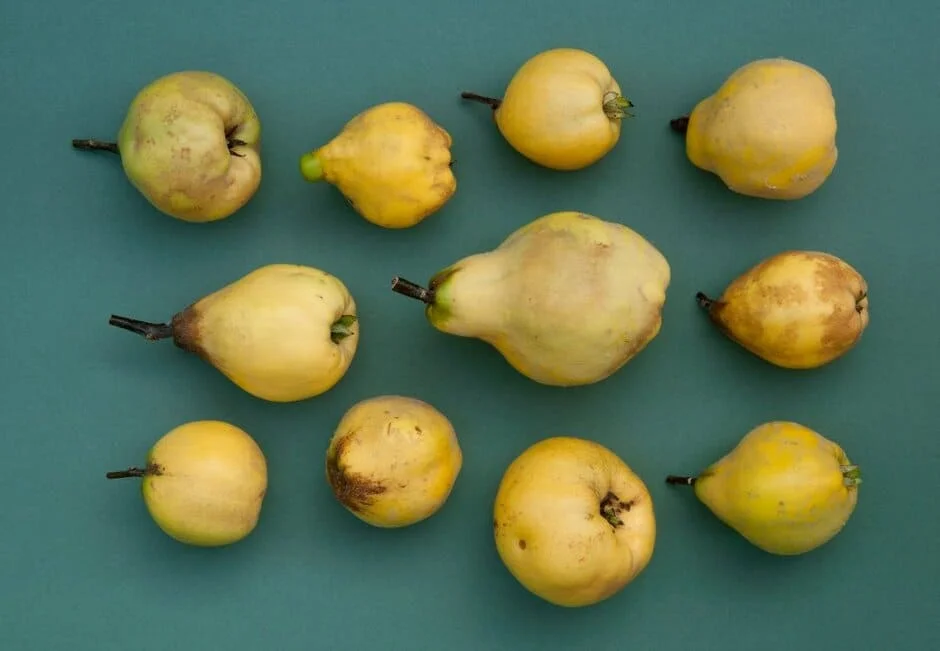
Quince trees can be bought as grafted plants, on roots that will limit their eventual size – usually ‘Quince A’ (semi-dwarfing), and ‘Quince C’ and ‘Quince Eline’ (dwarfing), which make them suitable for smaller gardens and even containers. Ungrafted plants may also be available, but will form large trees, so are only suitable if you have plenty of space.
Different quince varieties have differing tolerance to quince leaf blight, a fungal infection that can significantly affect vigour and fruiting, especially in wet summers. If you live in a wetter part of the country, consider planting 'Serbian Gold' or 'Aromatnaya', which have been found to show good tolerance to the disease among the quince collection at RHS Garden Wisley.
You can find quince trees in the orchards and fruit plots of the RHS gardens, so do visit to see how they are grown, compare the varieties and pick up useful growing tips.
What and where to buy
Quince trees may be available in larger garden centres, but for the widest choice visit specialist fruit nurseries and online fruit tree suppliers. Quinces are best bought as two-year-old trees with the first branches already formed. They are sold ready for planting in two forms:
- trees – available while dormant, from late autumn to early spring, for immediate planting, and generally cheaper than trees in pots
- Container-grown trees – available all year round for planting at any time, though during the tree's dormant period is preferable
Recommended Varieties


Planting
Plant new quince trees between November and March, while they are dormant. Choose a warm, sunny, sheltered spot, as the spring flowers are susceptible to frost damage, and sun is needed for the fruit to ripen.
In southern England or milder urban or coastal locations, quinces usually crop well in open ground, but further north or in colder or more exposed sites, they are best planted against a south- or south-west-facing wall, for extra warmth and shelter. Allow space for the tree’s eventual size – quinces can reach 3-4.5m (10-15ft) in height and spread, depending on the rootstock, position and soil type.
Quinces tolerate a range of soils, but prefer those that are deep, fertile and moisture-retentive. No soil preparation is generally needed before planting. However, if your soil is light or shallow, add a bucketful of organic matter, such as garden or well-rotted manure, to the soil you remove from your planting hole and use this to backfill after planting. This minimises soil disturbance and gets your tree off to a strong start.
Prepare your tree for planting by giving it a thorough watering if it’s in a pot or by standing it in a bucket of water for half an hour if it’s a tree. Put a sturdy tree stake in place after planting to support your tree while it establishes.
For advice on how to plant your quince tree, see our guides below:
Planting in containers
Compact varieties of quince on a dwarfing (Quince C or Quince Eline) rootstock can be grown in large containers. Choose a pot at least 45-60cm (18in-2ft) wide and fill with a good quality, such as peat-free John Innes No.3. Position in a warm, sunny, sheltered spot, such as on a south or west-facing patio.
Plant Care
Newly-planted quince trees and those growing in containers need some regular attention to ensure they establish well and produce a good crop. Once established, quince trees growing in the ground need little ongoing maintenance.
Watering
- Newly planted quince trees should be watered regularly during dry spells for the first couple of years after planting
- Trees in containers need a steady supply of moisture throughout the , so water regularly in dry spells, aiming to keep the evenly moist
- Established trees in the ground shouldn't need watering if grown in moisture-retentive soil. However, trees may need additional water where the soil drains freely or during prolonged dry spells, especially when fruits are swelling
Try to water early in the morning or in the evening to minimise water loss from the soil, ideally using stored rainwater.
Mulching
trees growing in the ground each spring, spreading a thick layer of organic matter, such as garden or well-rotted manure, on the soil around the base of the trees. This helps to improve soil fertility, hold-in moisture and deter weeds. Just make sure to leave a small, mulch-free circle immediately around the base of the trunk to prevent rotting.
Feeding
Quince trees growing in regularly mulched soil shouldn't need any additional feeding. However, if harvests are poor or your tree is showing signs of nutrient deficiency, apply an organic granular fertiliser to the soil in early spring. Use our page on nutrient deficiencies to work out what is lacking and apply the recommended feed, following instructions on the packet.
Quince trees growing in containers benefit from regular feeding. Either apply an organic high-potassium liquid fertiliser fortnightly through the , or sprinkle a handful of an organic general-purpose granular fertiliser on the each spring.
Repotting
Container-grown trees need repotting every few years into a larger container of peat-free compost; this is best done in spring. Once it becomes impractical to move the tree into a larger pot, repot into the same one, removing and replacing any loose and lightly trimming the roots.
In the years between repotting, topdress by removing the top layer of compost and replacing with fresh.
Protecting flowers from frost
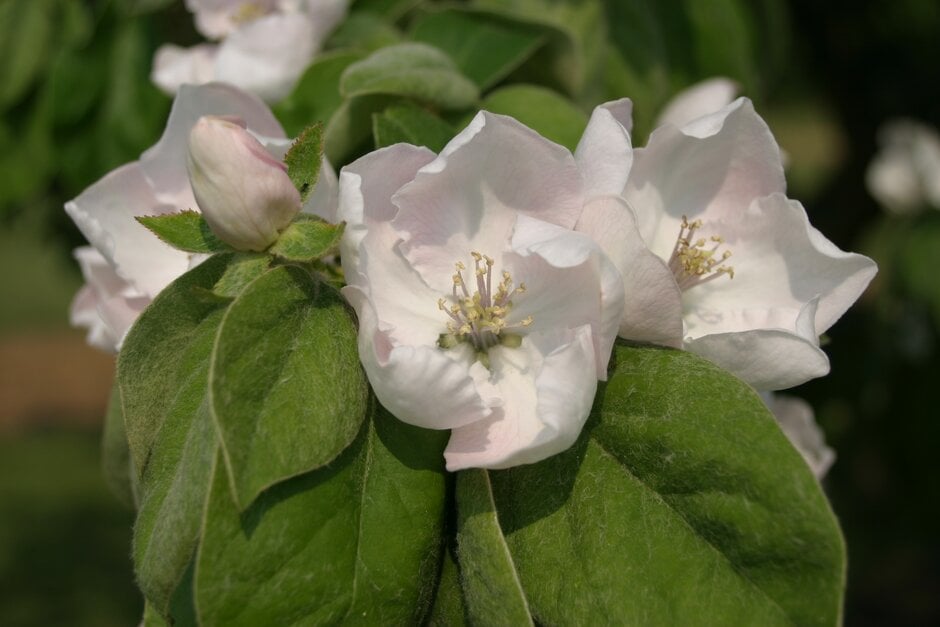
Quinces flower in late spring and are susceptible to damage by late frost. If frost is forecast, protect the blossom on smaller trees with or hessian, removing it during the day to allow pollinating insects access to the flowers.
Pruning And Training
Prune newly-planted quinces in the same way as apple trees, aiming to create an open-centred, goblet shape. If you get your quince into good shape early on, then only minimal pruning should be needed in future years. See our guide to initial pruning – although this is about apples, it applies equally to quinces.
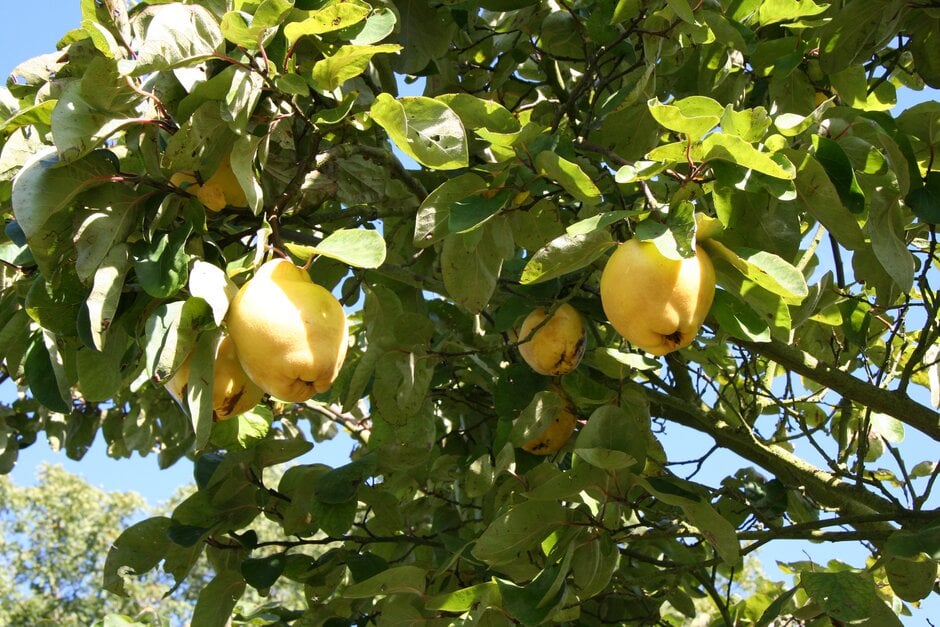
Once established, quinces only need light pruning, which should be done in winter, while dormant, if necessary. Remove any dead, damaged or diseased wood and thin out any congested, unproductive, overly-vigorous or wayward stems. Aim to maintain a framework of well-spaced branches on a clear trunk. Quinces are tip-bearers, meaning the fruits mainly form on the tips of shoots formed the previous year, so take care not to remove these. As quince trees are usually grafted, also remove any suckers that sprout around the base.
With overgrown or congested quince trees, you can remove up to a quarter of the oldest branches if necessary, to open up the centre and create a balanced shape. Prune these back to just above their point of origin, or to a lower shoot that is around one-third of the diameter of the branch being removed.
Harvesting
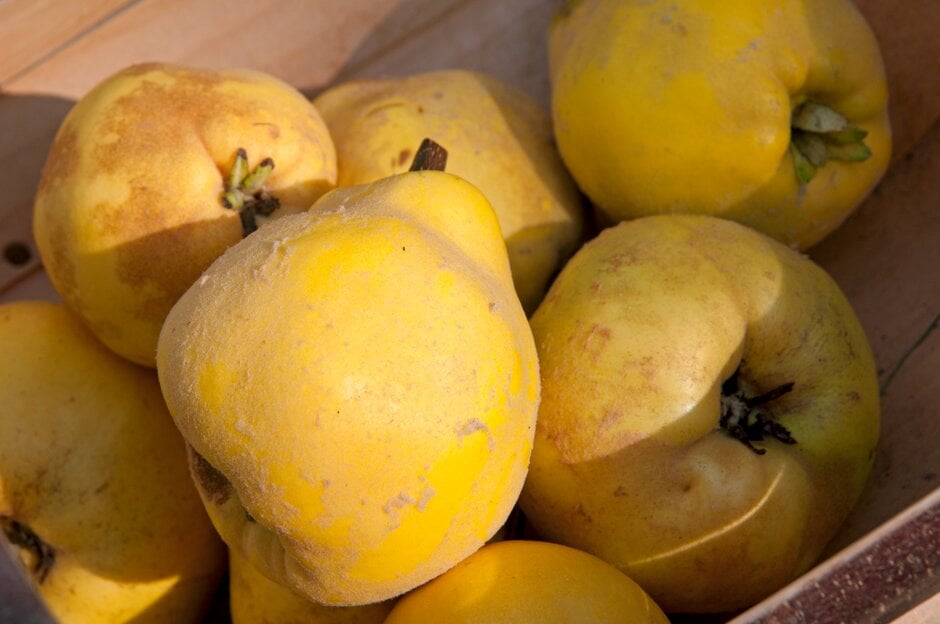
Quince fruits should be harvested in October or November, when they’ve turned from a light yellow to a golden colour and are extremely aromatic. They won’t usually ripen fully in UK summers, but leave them on the tree for as long as possible to enhance their flavour, then harvest before the first frost.
The fruit should be stored for at least six to eight weeks, to allow it to ‘mellow’ before use. Only pick and store undamaged fruits, placing them in a cool, dark place in slatted wooden or cardboard trays – ensure the fruits don’t touch, and don’t wrap them.
Quinces will keep for two or three months, so have the benefit of a long season of use. They can’t be eaten raw, but can be turned into deliciously aromatic jams, jellies, sweet pies and tarts, and a traditional Spanish quince paste called membrillo.
Problem Solving
Quince trees are usually robust and healthy, with few issues other than quince leaf blight. Although many of the diseases and insects that affect apples and pears can also affect quinces, they are seldom significant problems. See Common problems below for details.
Common Problems


Fireblight
Fireblight is a bacterial disease that kills the shoots of apples, pears and related ornamentals, giving the plant the appearance of having been scorc...


