Getting Started
Apples are probably the easiest and most popular tree fruit to grow, offering delicious harvests for decades. Eating a crisp, juicy apple straight from your own tree is a treat to be savoured. So whether you’re lucky enough to already have an apple tree, or would like to plant one, here is everything you need to know to enjoy delicious home-grown apples.
Apple trees (Malus domestica) are an asset to any garden, providing spring blossom, dappled shade in summer and attractive, delicious fruits in autumn. An established tree needs little maintenance, although annual pruning will help to ensure the best harvests and keep the tree in good shape.
Planting a new apple tree is very straightforward, and there are choices to suit all sizes of garden. You can grow a free-standing tree in a lawn or other open, sunny site, or, if space is limited, choose a more compact trained tree, such as a , or a dwarf tree for a container.
Jobs to do now
Finish pruning trained trees
Harvest
Store apples
Month by Month
Plant
Harvest


Choosing What To Grow
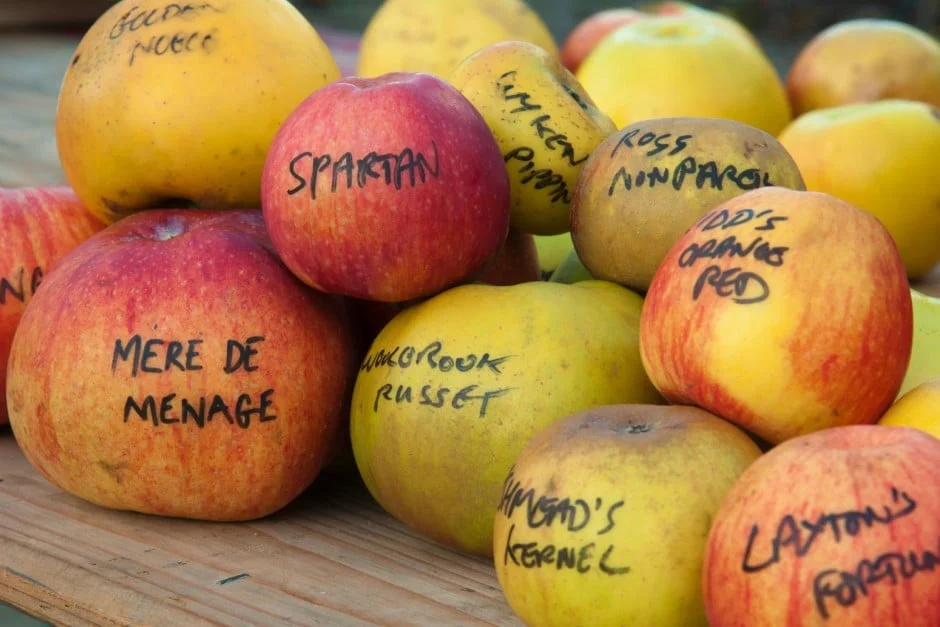
When choosing an apple variety, one of the first considerations is whether you want an eating (dessert) apple, a cooking apple or a dual-purpose fruit. Within each category, there’s a wide range of varieties, each with its own unique flavour, texture, level of sweetness, harvest time and storage potential. Local and heritage varieties are an increasingly popular choice, but bear in mind that modern varieties are often more resistant to disease than traditional ones.
Flowering time is also important, as you need another tree of a different variety nearby, which flowers at the same time, to ensure successful pollination and a good crop. Alternatively, choose a self-fertile variety that will set fruit on its own.
Furthermore, apple trees grow to a range of sizes so it is important to choose one that suits your space. Like many fruit trees, apples are grafted onto a rootstock, which controls the vigour and size of the tree. There are various options to choose from – dwarfing rootstocks (such as M9 or M26) are best for small gardens, pots and trained forms like cordons and small espaliers, while semi-dwarfing rootstocks (such as MM106) produce larger trees, up to 4m (13ft) tall. Details of the rootstock should be provided on the plant label or in the catalogue/online description, so check before you buy.
More than 60 apple varieties have an RHS Recommended: Award of Garden Merit (AGM), which shows they performed well in trials and are reliable choices. See our list of AGM fruit and veg (135kB pdf) and our Recommended Varieties below. You'll also find apples growing in the orchards and fruit areas of RHS gardens, so do visit to compare varieties and pick up growing tips.
What and where to buy
Apple trees are a long-term investment, so always buy from a reputable fruit nursery or garden centre. They are sold as young trees ready for planting in two forms: or container-grown. Bare-root trees are only available from late autumn to early spring, while dormant, for immediate planting, and are generally cheaper than trees in pots. Container-grown trees are available all year round and can be planted at any time, though winter is preferable.
If you want to grow a trained tree, decide if you want to train it yourself from scratch starting with a young tree (known as a ) or buy a (more expensive) partly trained tree.
Recommended Varieties


Planting
Choose a planting site with fertile soil that drains freely and doesn’t become . Apple trees like full sun and a warm sheltered site that isn’t prone to late frosts, which can damage the flowers. They’re usually either grown in an open site, such as in a lawn, or trained against a wall or fence. Trees grafted onto a dwarfing rootstock can also be grown in a large pot – see Planting in a container, below.
The best time to plant is while the tree is dormant, from autumn to spring. Container-grown trees can be planted at other times, but may not settle in as readily. Avoid planting in hot, dry weather.
No soil preparation is generally needed before planting. However, if your soil is poor, dig a bucketful of organic matter, such as garden or well-rotted manure, into the soil you remove from your planting hole and use this to backfill after planting. This minimises soil disturbance and helps your tree get off to a strong start.
Prepare your tree for planting by giving it a good watering if it’s in a container, or by standing it in a bucket of water for half an hour if it’s a tree.
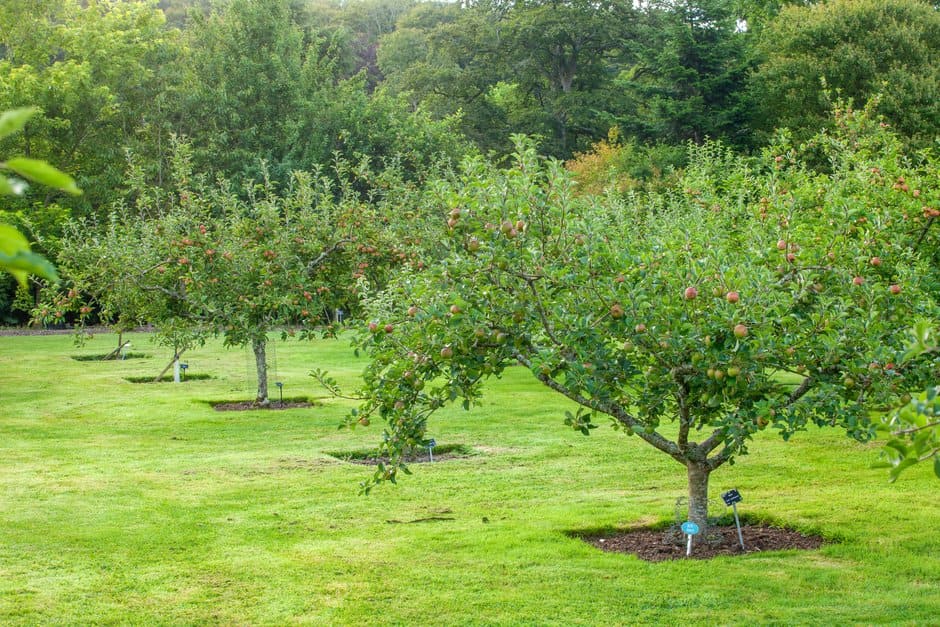
If planting a trained form (such as a , or fan) against a wall or fence, attach horizontal wires before planting, and plant the tree about 30cm (1ft) away from the base. If planting into a lawn, remove a circle or square of grass at least 1m (3ft) across, so the tree’s roots don’t have to compete with the grass for rainwater and while they get established. Support free-standing apple trees with tree stakes, putting them in place at planting time.
For advice on how to plant, see our handy guide below:
Planting in a container
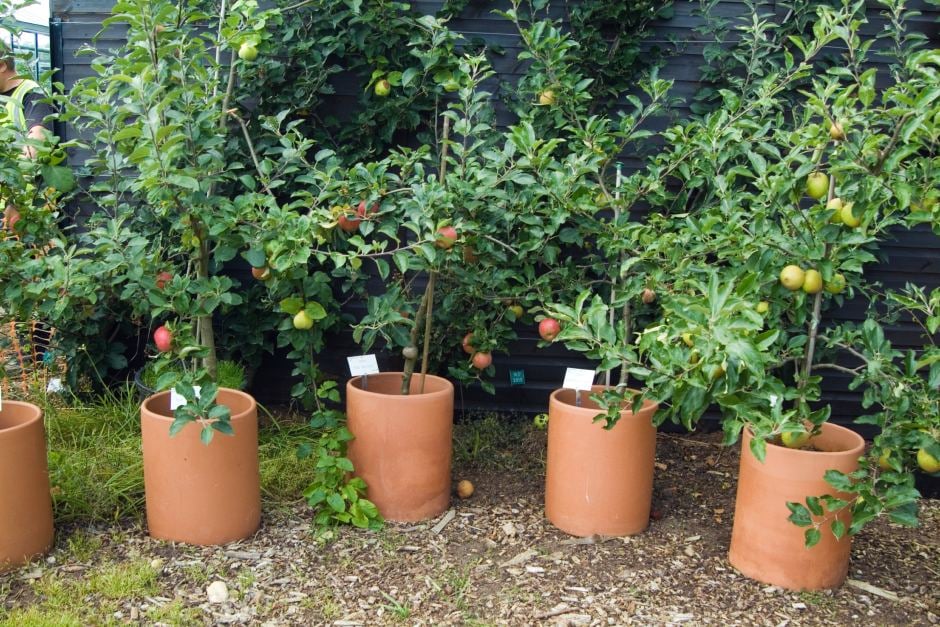
For growing in a container, choose a tree on a dwarfing M9 or M26 rootstock. The container should be at least 45cm (18in) in diameter and filled with a good quality, loam-based such as peat-free John Innes No 3. Position in a warm, sunny, sheltered spot, such as on a south or west-facing patio.
Plant Care
Newly planted apple trees and those growing in containers need some regular attention to ensure they establish well and produce a good crop. Once established, trees in the ground need little ongoing maintenance.
Watering
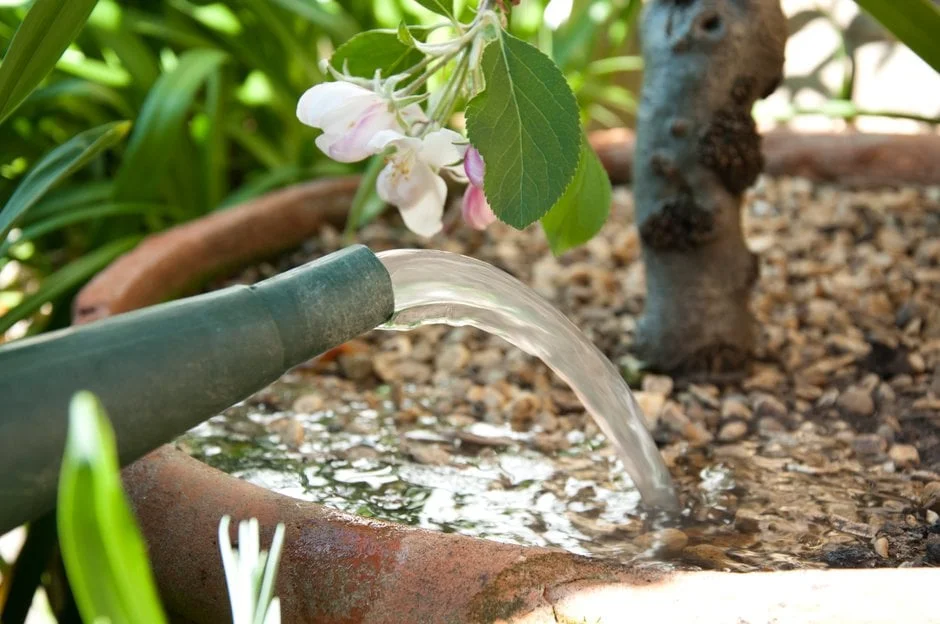
- Newly planted apple trees should be watered regularly during dry spells for the first couple of years after planting
- Trees in containers need a steady supply of moisture throughout the , so water regularly in dry spells, aiming to keep the evenly moist
- Established trees in the ground shouldn't need watering
Try to water early in the morning or late in the evening to minimise water loss from the soil, ideally using stored rainwater.
Mulching
apple trees growing in the ground each spring, spreading a thick layer of mulch, such as home-made garden or well-rotted manure, on the soil around the base of the trees. This helps to hold in moisture and suppress weeds.
Feeding
Apple trees growing in regularly mulched soil shouldn't need any additional feeding. However, if harvests are particularly poor, or your tree is showing signs of nutrient deficiency, apply a granular fertiliser to the soil in early spring. Use our page on nutrient deficiencies to work out what is lacking and apply the recommended feed, following instructions on the packet.
Apples growing in containers benefit from regular feeding. Either apply an organic, high potassium liquid fertiliser every fortnight during the , or sprinkle a handful of a granular, general-purpose fertiliser onto the each spring.
Repotting
Container-grown trees need repotting every few years into a larger container of peat-free compost; this is best done in spring. Once it becomes impractical to move the tree to a larger pot, repot into the same one, removing and replacing any loose and lightly trimming the roots.
In the years between repotting, topdress by removing the top layer of compost and replacing with fresh.
Fruit thinning
Apples trees often produce more than they can cope with, so in early summer they tend to naturally shed the excess, known as the . However, it may still be beneficial to remove even more of the young apples in early July, to improve the size and quality of the remaining fruit.
It is also a good idea to remove any developing fruits from young apples trees in the year after planting, and to let just a couple remain in the second year. This is to allow young trees to concentrate on root establishment and crown development, which is important in the long term.
Pruning And Training
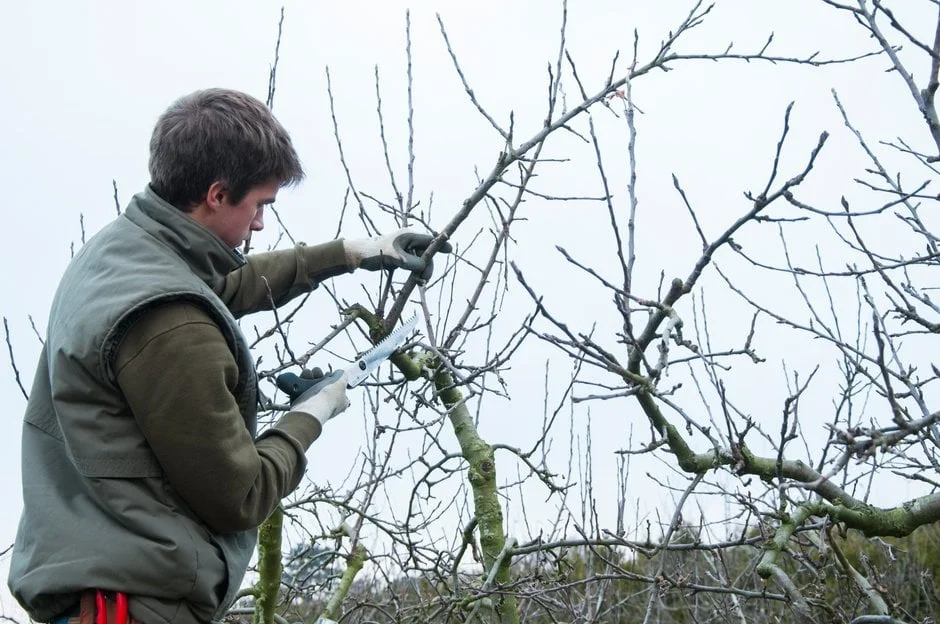
Apple trees should be pruned annually to get the best crop and keep trees healthy and well-shaped. If you have bought a young tree, start with formative pruning, to establish the initial shape.
When and how to prune established apple trees depends on the type of tree:
- Free-standing apple trees (bush and standard trees) should be pruned in winter, to keep them healthy, in good shape and to promote fruiting
- Trained apple trees should be pruned in late summer, to restrict their growth and improve fruiting
Apple trees can be trained into various shapes – both to restrict their size and create an attractive feature. These more compact forms are ideal for small spaces and make picking the fruit very easy. Trained trees must be grown on dwarfing rootstocks and usually need the support of a wall or fence. The most popular shapes are:
- Cordon – a single stem, usually at a 45 degree angle, with very short side branches that carry the fruit
- Espalier – a central trunk, with several tiers of horizontal branches on each side
- Fan – a short trunk, with a fan of branches radiating out at the top
- Step-over – the smallest form of trained tree, only 45–60cm (18–24in) tall, like the first tier of an . It has a short trunk and a single pair of horizontal branches on each side, ideal as edging for a veg bed
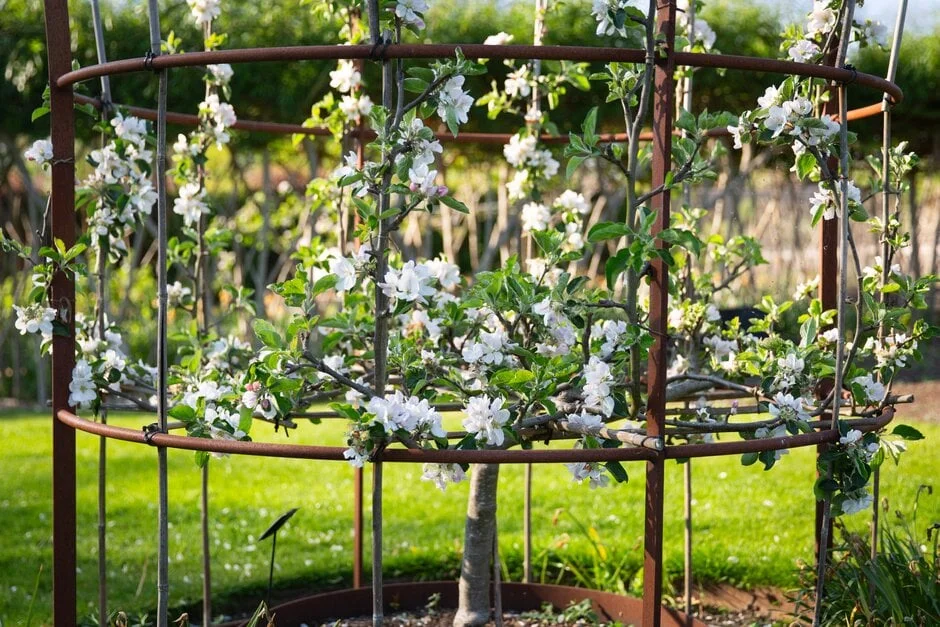
- Arch or tunnel – tall vertical cordons (see above) can be grown on either side of a path and trained over at the top to meet in the middle. They make a highly ornamental feature, especially when in blossom.
If you have an old, overgrown apple tree, you can get it back into shape and improve fruiting by renovation pruning.
Click on the above links for detailed advice on pruning each type, or see our handy guides below for more information:
Harvesting
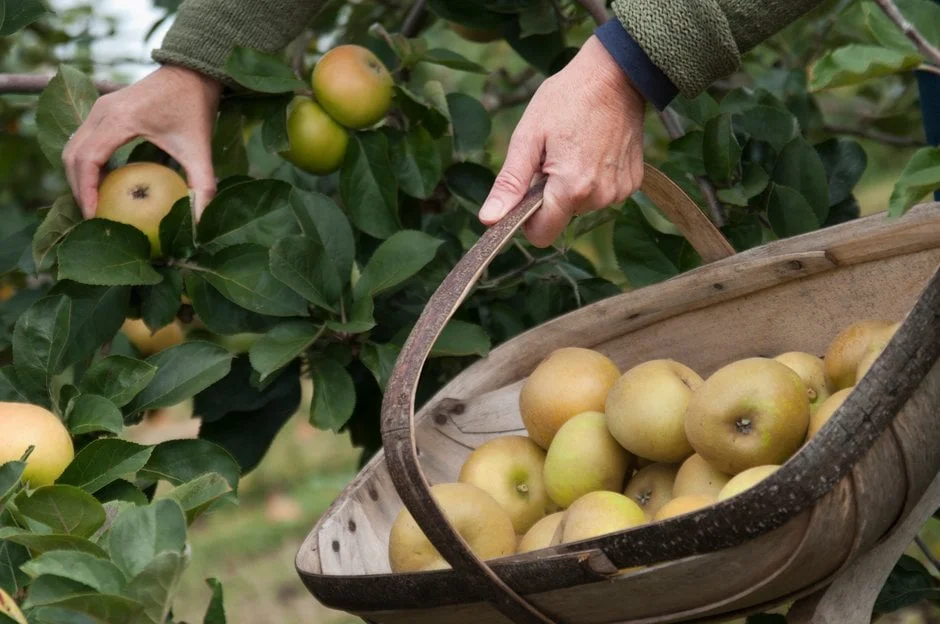
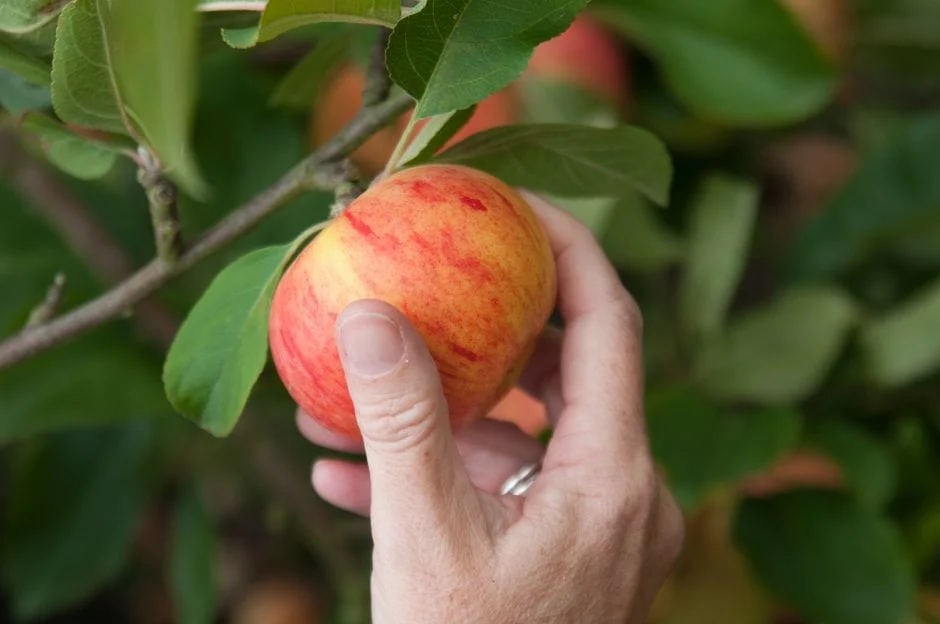
Pick apples regularly as they ripen, once fruit have swelled up to a good size, started to colour up and taste sweet. If you see windfalls on the ground, it’s also a good sign that the fruits are ripening.
To pick an apple, cup it in your hand, lift gently and give a slight twist. It should come off easily with the stalk intact.
Harvesting fruit from a tall tree can be tricky – you could use a step ladder, but do take care when working at height. Various long-handled or telescopic fruit pickers are also available, but they can be difficult to manoeuvre. Alternatively, you can wait until the out-of-reach apples fall, but they will need to be eaten promptly as they may be damaged.
Storing
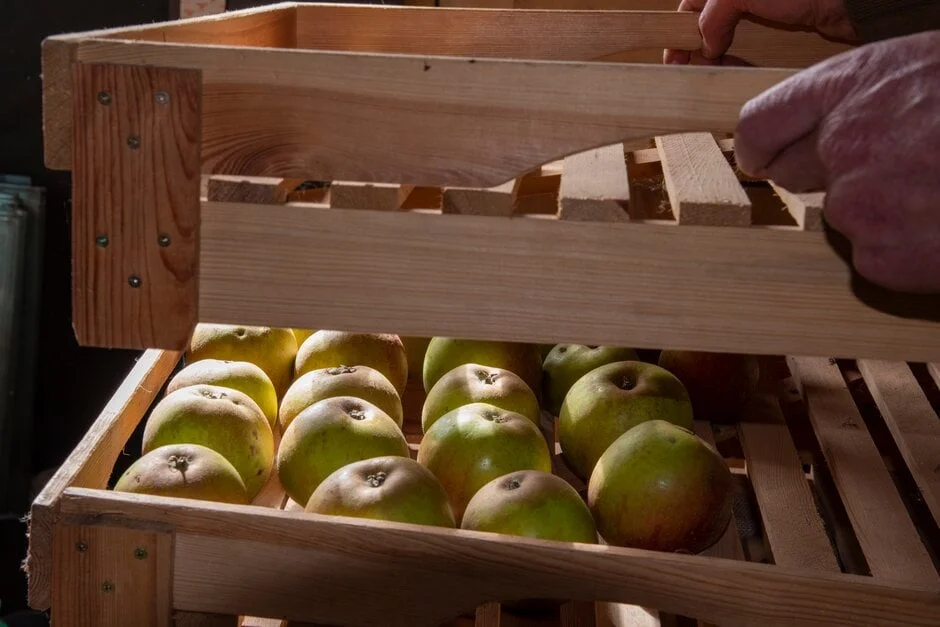
Early apples, which ripen in late summer, usually need to be eaten within a few days of picking. Later-maturing varieties are usually more suitable for storing, keeping for several months in the right conditions. Only store undamaged and unblemished apples. Place in slatted crates or fruit trays and arrange so that fruits don't touch each other, ideally in a single layer. Store in a cool, frost-free, well-ventilated dark place and check regularly for signs of deterioration.
Cooking apples can also be frozen after they’ve been cooked. Dessert apples can be frozen too, but the texture will be softer once thawed, although they’re still good for using in smoothies, baking or fruit salad.
Problem Solving
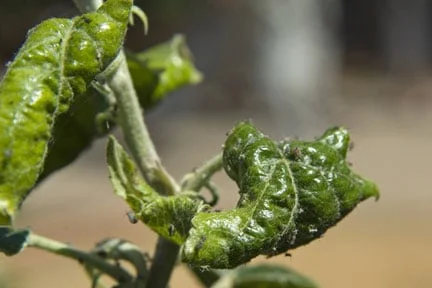
Apples are one of the hardiest and easiest fruit trees to grow, but even so, certain diseases, insects, birds and weather conditions can damage the trees, blossom or fruit. Check apple trees regularly and take prompt action if necessary, using our handy guides and Common problems below for more information.
Common Problems

Bitter pit in apples
Bitter pit is a common disorder that causes dark spots on apples late in the season or in storage. This condition is related to lack of calcium in fru...

Apple canker
Apple canker is a fungal disease causing disfiguring and sunken patches of dead bark on the branches of apple and some other trees. Infections often b...

Apple scab and pear scab
Apple scab and pear scab are two fungal diseases that cause dark, scabby marks on the fruit and leaves of apples, pears and some other ornamental frui...