Sustainability in the RHS Gardens
Sustainability is embedded in everything we do across the RHS Gardens‚ shaping how we care for plants‚ support wildlife and create spaces for people to thrive
Our ambition is to be net positive for nature and people. This means going beyond reducing our impact but actively increasing ‚ removing more carbon from the atmosphere than we produce and improving people’s physical‚ mental and social wellbeing through gardening.
Gardening is the UK’s most widespread interaction with nature, with around 41 million people taking part each month. It also plays an important role in wellbeing, with 77% of gardeners reporting positive impacts on their mental health .
Gardens are a vital habitat for UK wildlife
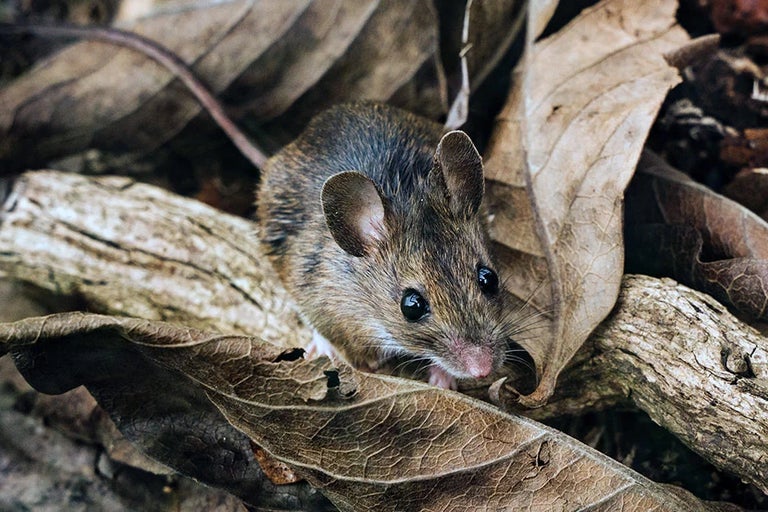
The cultivated and wild plants in our five RHS Gardens provide unique habitats for a range of biodiversity, from fungi and pollinators to birds and mammals‚ we are doing everything we can to cater for diverse species.
Collectively, UK gardens are a nationally important habitat, supporting more than 50% of our butterfly, amphibian and reptile species , and over 40% of bird and mammal species . They also cover more land than all National Nature Reserves combined .
Together, they are home to over 50 million trees , forming a vital green network that absorbs carbon, cools cities and supports wildlife.

Wildflower-rich planting and natural habitat features at RHS Wisley help provide food and shelter for a wide range of wildlife
Across our sites:
- RHS Garden Hyde Hall sits within wider landscape of woodlands and fields, which alongside the Coronation Meadow support breeding kestrels and owls
- RHS Garden Bridgewater is an important habitat for breeding birds including grasshopper warblers and endangered swifts. The creation of bird habitats has raised the garden to a level of regional importance for breeding birds.
- RHS Garden Rosemoor has visiting otters which are being monitored using remote trail cameras and is home to eight bat species and dormice
- RHS Garden Harlow Carr supports a wide range of beetles including the Coleoptera species which has not been noted in our other gardens
- RHS Garden Wisley is home to the once-rare bee wolf wasp‚ that can be seen emerging each summer from their sandy burrows in hunt of honeybees
At RHS Bridgewater, three rare mole ‘fortresses’ were discovered in 2026, offering a glimpse into the behaviour of one of the UK’s most elusive mammals. These large structures are built as raised nesting sites, helping protect moles from flooding and cold conditions.

The mole-made structures in the Worsley Welcome Garden are more than 1.6m across
At RHS Hyde Hall, the shrill carder bee , one of England’s rarest bumblebees, has recently been recorded. This threatened species has declined significantly across the UK, with only a few remaining populations.
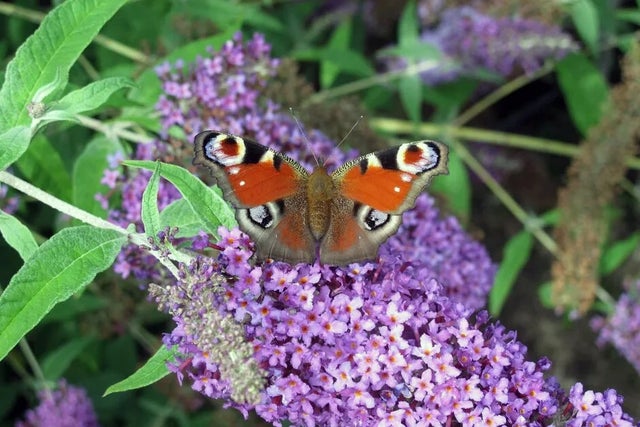
While some species can recover in favourable conditions, long-term trends show that many, including butterflies, remain in decline. Gardens can play an important role in reversing this, by providing -rich flowers, caterpillar food plants and areas of undisturbed habitat.

The numbers of small tortoiseshell butterflies improved in 2025 after hitting a record low in 2024 but the long-term trend sadly remains one of decline
Our teams of staff‚ volunteers and scientists actively monitor wildlife across all RHS Gardens. In 2024, we hosted our first annual staff biodiversity conference to share knowledge and best practice, helping ensure our gardens continue to support both common and threatened species.
Long-term monitoring includes butterfly surveys aligned with the UK Butterfly Monitoring Scheme and regular bird transects. These records support sustainable development and enable us to better understand‚ conserve and enhance biodiversity across our gardens and estates.
Science-led gardening
Plants are increasingly being selected not just for how they look, but for what they do. Through programmes such as RHS Plants for Purpose, we are identifying plants that can help address challenges such as climate change, flooding, overheating and biodiversity loss. This approach underpins ongoing RHS research to identify plants that can deliver multiple environmental benefits.
The diversity of cultivated plants in UK gardens is vast. The RHS Cultivated Plant Database contains over 308,000 recorded species and cultivars – one of the most extensive records of cultivated plant diversity in the UK.
RHS research has found that climbing plants such as ivy can help keep buildings cool ‚leading to the planted walls that also provide valuable habitat and food for invertebrates.

At RHS Garden Bridgewater, ivy helps cool walls while providing valuable habitat for wildlife
At RHS Wisley ‚ we are trialling a wide range of hedging plants – testing around 30 different cultivars of ornamental hedging plant – to explore alternatives that are both resilient and beneficial for wildlife.
We have used our living collections of plants at all five gardens‚ alongside the support of our volunteers to gather citizen science data that informs the RHS Plants for Pollinators lists‚ helping gardeners choose wildlife friendly plants.
In the Main Borders at RHS Harlow Carr‚ and across our gardens‚ many perennials are left standing through autumn and winter rather than being cut back when flowering is finished. Their seedheads provide structure and seasonal interest‚ while also being an important food source for birds during winter. Hollow stems and spent growth offer shelter for overwintering insects, an approach we are also applying in more structured habitat features.

At RHS Hyde Hall, perennial seedheads are left standing through winter to support wildlife while extending seasonal interest
At RHS Garden Wisley, a ‘habitat village’ has been created using hollow-stemmed prunings to provide shelter and food for wildlife. Built beneath an oak tree near the Glasshouse and Oudolf Landscape, the structures use stems from perennials such as Helenium ‘Moerheim Beauty’ and Veronicastrum virginicum ‘Fascination’ .
Hollow plant stems are an important nesting resource for cavity-nesting bees, including mason, leafcutter and wool-carder bees. By using stems of varying diameters, the structures support a wide range of species, while also providing habitat for other invertebrates over winter.
The habitat village also supports birds and small mammals, with seedheads providing a valuable food source. As the structures naturally break down, they are replenished with new prunings, creating a continuous cycle of habitat. This approach can also be applied at a smaller scale, by leaving sections of hollow-stemmed plants or cutting them back to short lengths to provide nesting sites for solitary bees in home gardens.

The habitat provides has stems of varying diameters which suits different species
All gardens use techniques such as chop and drop , where cut material from herbaceous perennials is left in place to break down naturally, returning to the soil and helping retain moisture. This is good for invertebrates, including carnivorous beetles.
RHS Rosemoor hazel and willow are harvested from coppices on-site to provide the gardens with staking and weaving materials. Sweet pea supports in the cottage garden, and the woven willow edging in the potager are great examples of how locally sourced materials can be used to create an artistic flourish in a formal setting. The management of these coppices also maintains an important forest-edge ecosystem which allows for cycles of natural succession, supporting many woodland butterfly species particularly.
At RHS Wisley‚ the Oudolf Landscape has been designed as a self-sustaining planting scheme. In 2025, more than 23,000 spring and summer-flowering were introduced, selected to provide colour and habitat from late winter through to early summer, bridging the gap before herbaceous perennials emerge. Many of these bulbs have been chosen for their ability to naturalise and return year after year, reducing the need for replanting. Others are better suited to Wisley’s increasingly dry conditions, reflecting a careful balance between aesthetic design and climate adaptation.

At RHS Wisley, the Oudolf Landscape is designed as a self-sustaining planting scheme, with species selected for seasonal interest and resilience to dry conditions
A more relaxed approach to managing grassland areas has created valuable habitats across our gardens. By mowing less frequently and leaving some areas uncut‚ we allow a wider range of species to establish. At Wisley‚ this has supported the return of the once-rare bee wolf wasp‚ alongside a greater diversity of invertebrates and grassland butterflies.
Managing grass at different cutting times‚ or leaving areas uncut for longer periods‚ also helps support grass-feeding butterflies and other invertebrates. Plants such as stinging nettles and garlic mustard, which are often found in hedgerows, are important food sources for butterfly larvae.
In front of the Wildlife Garden at RHS Wisley‚ grass has been oversown with white clover‚ Trifolium repens . This drought tolerant clover fixes nitrogen‚ helping lawns stay green for longer without the need for fertiliser. When in flower‚ it provides a rich source of nectar for bees‚ while also adding texture and visual interest.
Soil‚ composting and materials
Across our gardens‚ we as much plant material as possible and have achieved zero waste to landfill while contributing to our wider goals of becoming biosecurity and water neutral .

Plant material from across the RHS Gardens is composted and reused on-site
The majority of compost is reused on-site‚ where it plays a vital role in improving soil structure‚ retaining moisture and feeding plants. By recycling material on-site‚ we reduce the need to import compost‚ helping lower the risk of introducing pests and diseases. Any surplus is shared with staff and volunteers to support soils in home and community gardens.
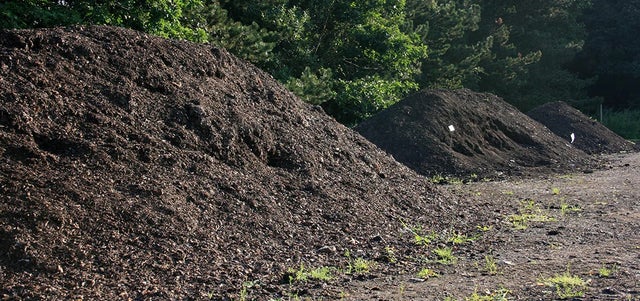
"In 2025, RHS Gardens produced 862 cubic metres of compost – enough to cover 4.8 Wembley Stadium pitches at a depth of 2.5cm."
The RHS is committed to reducing the use of peat, recognising its importance as a vital carbon store and habitat. Peatlands form extremely slowly – around 1mm per year – and play a crucial role in supporting biodiversity and regulating climate.
Across our gardens and retail operations, we are moving towards peat-free growing, supporting the development and use of sustainable alternatives. We continue to work with partners across the horticulturalindustry to drive this transition and encourage gardeners to choose peat-free products.
All RHS Gardens had no new peat from July 2025 and the Garden Centres all went no new peat from January 2026.
In woodland areas we follow a standing deadwood policy‚ leaving trees in place where it is safe to do so. As wood decomposes‚ it provides essential habitat for fungi‚ insects and other wildlife‚ while also enriching the soil. Standing and fallen deadwood support a wide range of species, from nesting birds to ground-dwelling invertebrates.

Turkeytail fungi colonising a log pile, highlighting the value of deadwood as wildlife habitat
Where trees do need to be felled‚ the timber is reused across our gardens for features such as raised beds‚ pergolas and steps‚ particularly at RHS Bridgewater and RHS Rosemoor. Woodchip is also produced on-site and used as for paths and planting beds.
Dead hedges‚ created from garden ‘waste’ such as prunings and branches‚ provide additional habitat for insects‚ birds and small mammals‚ while also acting as natural windbreaks and garden features.

At RHS Garden Wisley, garden prunings are reused to create features such as The Nest dead hedge, which provides valuable habitat for wildlife
At RHS Wisley‚ fast growing willow is cultivated as a renewable source of material for mulching around fruit trees. Producing and processing this material on site reduces its carbon footprint, while the natural antifungal properties of willow due to it containing salicylic acid can help support the health of fruit trees and can help reduce the impact of diseases such as .
Growing food
All five RHS Gardens have edible gardens where we experiment with a wide range of crops‚ exploring what can be grown now and in the future as the climate changes.
At RHS Bridgewater‚ we are pushing the boundaries of what can be grown in the North West. Outdoor figs are being trialled and apricot‚ Prunus armeniaca ‘Tomcot’ ‚ has successfully fruited and ripened for the first time in 2025. At RHS Garden Rosemoor‚ trials include crops such as sweet potatoes.
The World Food Garden at RHS Wisley showcases both familiar crops and less common varieties‚ including those previously considered unsuitable for Surrey.
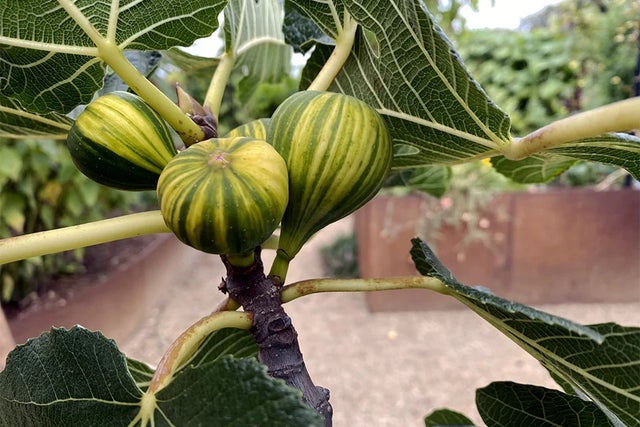
"1,191kg of grapes were harvested at RHS Wisley from 700 vines of ‘Phönix’ and ‘Orion’, producing around 900 bottles of RHS sparkling wine."
Across our gardens‚ we grow food on a domestic scale while carrying out trials in different regions of the UK to compare performance. This helps us understand how crops respond to varying climate and conditions. For example‚ pecan may become a viable crop in the south while remaining less reliable further north. Our Trials Team evaluates edible crops to identify the most suitable cultivars and share this knowledge to support gardeners nationwide.
At RHS Wisley‚ the traditional orchard is being reimagined as the Edibles Landscape. By increasing biodiversity and allowing wildflowers to flourish‚ we encourage a natural balance between pests and predators. This helps support species such as frogs‚ toads and newts which help control pests including the winter moth and codling moth .

At RHS Garden Wisley, the Edibles Landscape combines productive growing with wildlife-friendly planting
Simple interventions also play an important role. Upturned pots filled with straw provide habitat for earwigs‚ which are effective predators of aphids‚ including rosy apple aphid and woolly aphid . Encouraging these natural controls reduced the need for chemical interventions and supports a more balanced ecosystem.
Alongside this work, the Edibles team at RHS Garden Wisley in 2026 are planting a ‘mega hedge’ stretching over 30 metres and made up of more than 30 different species. Located beside the orchard, this hedgerow helps protect young fruit trees by slowing wind speeds, while also providing valuable habitat, shelter and food for wildlife.
At RHS Rosemoor‚ heritage Devon apples Malus domestica are grown using organic methods‚ forming an important living resource. The orchards sit within species rich meadows with populations of self seeded southern marsh orchids ‚ and autumnal displays of fungi such as waxcaps. Both indicate the health of these traditionally managed vibrant and diverse that have declined significantly in the last 100 years nationally. These meadows are a haven for native plants and .

The Devon Orchard at RHS Garden Rosemoor is managed to support both heritage fruit trees and species-rich meadow habitat
Meanwhile‚ RHS Bridgewater is developing a traditional orchard – a once common but now threatened habitat that supports high levels of biodiversity. Alongside heritage fruit trees‚ features such as agroforestry planting‚ deadwood habitats‚ a wildlife pond and species-rich meadows are being introduced. RHS Hyde Hall and RHS Harlow Carr also maintain heritage orchards‚ growing regionally important apple cultivars.
RHS Rosemoor has a great example of a forest garden by the Learning Centre, showcasing an alternative approach to productive growing, focusing more on tree and crops in a resilient and low-input system
Sustainable water use
Across our gardens‚ we prioritise rainwater harvesting ‚ improve irrigation efficiency and increase our capacity to store and reuse water through rain gardens and wetlands.
Projects underway include refurbishing the leat at RHS Rosemoor – a traditional man-made water channel and in the woodlands creating leaky dams, slowing and capturing rainfall in some of our steeper areas. Our scientists are supporting research into grey-water recycling . In 2024‚ of the 43 million litres of rainwater collected from our building roofs and stored in lakes‚ around 18 million litres (42%) was reused for irrigation and toilet flushing.

At RHS Garden Hyde Hall, the Dry Garden demonstrates how climate-resilient planting can help gardens adapt to drier conditions
Our day-to-day gardening practices also help reduce water use. We irrigate only when necessary‚ typically in the early morning to minimise evaporation. Drought-tolerant planting ‚ reducing mowing and irrigation and mulching all help retain soil moisture. Our long-term ambition is to become water neutral .
Climate change and resilience
As the climate changes ‚ seasonal weather patterns are becoming less predictable‚ bringing new challenges for gardens and the wildlife they support.
RHS scientists are studying changes in plant and animal behaviour, including shifts in the timing of seasonal events such as flowering and migration, as well as the spread of new pests and diseases. They are also monitoring the impacts of extreme weather, including heatwaves, drought and heavy rainfall, on plant health and the wildlife that depends on it. Gardens also act as early warning systems for environmental change, with shifts in wildlife populations reflecting wider pressures on the natural world.
Increasing plant diversity is a key strategy for building resilience. By growing a wider range of species and varieties, we reduce vulnerability to pests, diseases and climate extremes, helping our gardens better withstand these pressures and adapt to an uncertain future.
"Building plant diversity is one of the most effective ways to help gardens adapt to climate change."
Recent weather patterns are also reshaping how and where plants can thrive in the UK. A growing contrast is emerging between drier, hotter conditions in the east and wetter conditions in the west.
This has been reflected across the RHS Gardens. Sites such as RHS Garden Wisley and RHS Garden Hyde Hall have experienced prolonged heat and drought, while gardens in the west, including RHS Garden Rosemoor, have remained comparatively greener due to higher rainfall and moisture-retentive soils.
These shifts are influencing what we can grow and where. Some plants that have traditionally performed well in the south and east are becoming harder to sustain, while wetter western conditions present their own challenges. Adapting plant choices and improving soil resilience will be essential as these patterns continue.
At RHS Wisley‚ long-term data from the Weather Station helps us understand how conditions are changing over time and directly informs decisions on plant selection‚ water management and garden design. These insights are shared with the Met Office‚ helping gardeners adapt to a changing climate.

Weather Hill at RHS Garden Wisley has long played a role in recording local conditions, helping inform how gardens adapt to a changing climate
Managing water effectively is increasingly important. Collecting and storing rainwater, improving soil health and designing gardens to capture and reuse water can all help build resilience to both drought and flooding.
Healthy plants and soil
We encourage gardeners to choose the right plant for the right place. Healthy plants are naturally more resilient‚ requiring less water and experiencing fewer pest and disease problems. Across our gardens‚ we use scientifically informed sustainable planting combinations and ensure plants are grown in the conditions where they can thrive.
As climate and conditions change‚ we are rethinking where plants are best suited. In 2022‚ the RHS National Plant Collection of rhubarb was relocated. Originally housed at RHS Wisley‚ the collection struggled in its heat and sandy soil so was moved to the cooler soil of RHS Bridgewater. The 103 different cultivars are planted by region to reflect rhubarb's history of cultivation‚ with areas dedicated to Yorkshire‚ London and North America‚ as well as a few unknowns whose lineage is lost.

Forcing jars in Rhubarb Alley‚ Weston Walled Garden at RHS Bridgewater
At RHS Harlow Carr‚ rhododendron collections thrive in cooler woodland conditions‚ while ongoing propagation work helps secure these important plants for the future we are restoring woodland areas to create more space for rhododendron to grow.
We are also increasing the diversity of trees we grow‚ trialling species that are suited to more variable and extreme weather conditions. At RHS Wisley‚ trials focus on trees that can perform well in more challenging conditions.
In response to the widespread impact of b ox caterpillar ‚ we are trialling sustainable alternatives to box‚rather than relying on chemical controls. At RHS Wisley‚ a range of shrubs is being trialled for use as an alternative to box in hedging and topiary. Among the most successful is Podocarpus nivalis ‚ a shrub native to New Zealand that has performed particularly well.
"80% of gardeners report using no pesticides or weedkillers, helping to protect soils, waterways and wildlife across the food chain."
RHS Rosemoor has been regenerating our traditional Devon hedgerows throughout the gardens through the traditional process of hedgelaying, or steeping as its called in Devon. This is a very old technique used to rethicken the hedges and ensure that they persist for years to come, providing a major habitat for our local fauna.
Plant trials and biosecurity
Plants trials have been central to the RHS since its founding in 1804‚ with the first recorded judging taking place in 1860. Each year‚ around 30 trials assess plant performance‚ resilience and suitability for garden use. Led by the RHS Plant Trials Team‚ supported by around 300 volunteers including members of the RHS Expert Groups . Together‚ they ensure gardeners have access to plants that have been rigorously assessed in real garden conditions.

At RHS Garden Wisley, plant trials help compare the performance and resilience of plants to help gardeners choose plants
The RHS Recommended: Award of Garden Merit highlights reliable‚ high-performing plants. In 2025 there was 7‚718 RHS Recommended: AGM plants‚ spanning ornamental and edible crops. In 2024‚ 163 awards were made and 172 rescinded‚ ensuring the list remains up to date and relevant. Despite this richness, around one in three cultivated plants are at risk in cultivation, highlighting the importance of ongoing trials, conservation and propagation work.
Across our gardens, strict measures help prevent the introduction and spread of pests and diseases. Dedicated Plant Health teams implement best practice‚ supported by quarantine facilities where plants are monitored before planting.
RHS Garden Harlow Carr was the first public garden in England to achieve Plant Healthy certification in January 2023, with all RHS Gardens certified as of 2026.
We take a precautionary approach to emerging risks. For example‚ we have banned the sale‚ display and cultivation of golden oyster mushroom across our gardens, shows and shops due to concerns about its potential.

Research at the John MacLeod Field Research Facility supports the identification and monitoring of pests and diseases affecting garden plants

Green energy and sustainable infrastructure
We are transitioning to renewable energy and low-carbon infrastructure across all RHS Gardens. We have achieved ISO 14001 certification, an internationally recognised standard for environmental management.
"295,000 kWh of energy was generated by solar panels across RHS Gardens in 2025 saving around 1,200kg of carbon dioxide."
This saved carbon emissions equivalent to driving 330,000 miles in an average UK car. This generated more than 5% of our electricity. All energy is sourced from renewable based suppliers. At RHS Rosemoor, we are moving towards energy independence‚ generating more energy than we consume.

Solar panels at the John MacLeod Field Research Facility, RHS Wisley
At RHS Wisley‚ Weather Hill Cottage – one of our heritage buildings – has undergone a low-carbon refurbishment. This improved the building’s EPC rating from G to A while preserving its historic character. Works included replacing an oil boiler with an air source heat pump‚ upgrading windows and doors‚ insulating floors and roof spaces and diverting rainwater from the roof into a nearby water feature to support our water neutrality target .
We continue to assess and improve our buildings‚ including developing plans for low-carbon heating at the Bicentenary Glasshouse . Sustainable design principles are embedded in all new developments. RHS Harlow Carr led the way with the Bramall Learning Centre and Library ‚ followed by innovations at RHS Hyde Hall where specialist glazing reduces solar gain while maintaining clear views. The new propagation glasshouse at Harlow Carr is heated by an air source heat pump.
Across our sites‚ new buildings incorporate features such as ground and air source heat pumps‚ green roofs‚ rainwater harvesting and low energy lighting. Passive design measures including thermal mass‚ building orientation and solar shading are also used to reduce energy demand and improve long-term performance. Hyde Hall has had a ground source heat pump fitted in the Welcome Building.

A green roof on the cycle shelter at RHS Garden Harlow Carr
We are also transitioning our equipment to lower-emission alternatives. Hand tools are now largely electric and all larger diesel machinery runs on hydrotreated vegetable oil (HVO)‚ reducing emissions by up to 95%. As technology advances‚ we aim to move fully to electric machinery.
Sustainable travel
We’re encouraging more sustainable ways to visit our gardens. Since 2021, the proportion of visitors arriving by car has decreased by 5%, while those travelling by bus, on foot or by bike has increased by 368% – an uplift of more than 200,000 visits.
We have worked with local councils and transport operators to extend public bus services to RHS Garden Bridgewater and RHS Garden Harlow Carr. At RHS Garden Wisley, improved cycle storage and a shuttle bus from Woking station – which carried more than 9,700 passengers in 2024, a 13% increase on 2023 – are helping more visitors travel more sustainably. We are also introducing electric vehicle charging across all five RHS Gardens, with more than 90 charging bays being installed to support lower-emission travel.
We are also reducing emissions from our own operations. Garden teams are now using electric cargo bikes as an alternative to diesel vehicles, helping lower carbon emissions while supporting more efficient movement around our sites.

Electric vehicle charging point at RHS Bridgewater
Sustainable catering
We’re improving sustainability across our restaurants and cafés. This includes piloting the UK’s first Regenerative Organic Certified (ROC) coffee, supporting farming practices that restore soil health and enhance biodiversity.
We have removed farmed salmon from menus across all RHS catering outlets and are prioritising seasonal produce grown on site. Surplus crops are used to create preserves, juices and other products, helping to reduce food waste and make the most of what we grow.
We’re also phasing out single-use plastics. Reusable cup deposit schemes are being trialled to support a more circular approach, alongside the increased use of reusable crockery and alternatives where appropriate.

Pan-fried wild caught salmon with herb potatoes‚ asparagus‚ baby turnips and garden peas at RHS Hyde Hall
People first
We’re committed to ensuring our gardens are welcoming and accessible for all visitors. To support this, we offer designated ‘quieter visit’ times, where the use of machinery and vehicles is minimised. Wherever possible, noisier tasks such as strimming, chainsaw work and leaf blowing are carried out before gardens open.
While some essential work may still take place during opening hours, our aim is to reduce background noise and create a calm, restorative environment for all.
Many RHS Partner Gardens , along with RHS Garden Wisley, RHS Garden Harlow Carr and RHS Garden Rosemoor, are part of the Silent Space network, which promotes access to peaceful green spaces for quiet reflection.

At RHS Wisley, Silent Space provides a calm woodland setting for quiet reflection and connection with nature
Together, these approaches ensure RHS Gardens continue to support nature, inspire people and demonstrate how gardening can help shape a more sustainable future.